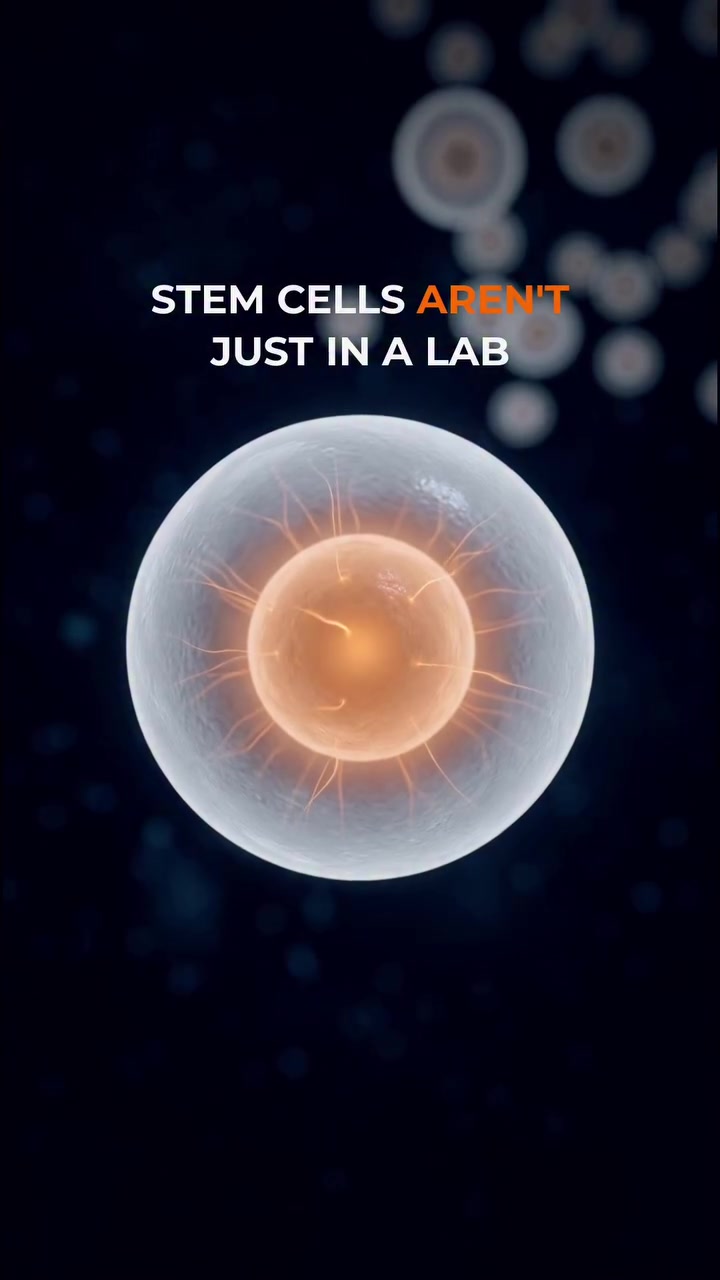
In your body right now, a constant renewal
Stem cells aren’t just a futuristic medical possibility — you have them active in your body as you read this. They’re not confined to laboratories; they’re part of your daily repair and replacement system. Every other cell in your body has a specific role, like being a liver or skin cell. But stem cells haven't committed to a single job. That's their superpower: they can become whatever the body needs, from a new skin cell to a red blood cell.
Unspecialized and indispensable
Stem cells lack the specific function of other cells, which makes them mammals' great Swiss Army knife. They reside throughout the body, tucked away in various reserves. Your bone marrow, skin base, gut wall, and muscle fibers all house these undifferentiated cells. There, they remain ready for duty, copying themselves repeatedly without weakening. Instead of picking a singular job, they remain ready to become the body needs, transforming into new cells every day.
The Fount of Youth
We encounter stem cells within the scope of aging. The body slowly exhausts its stem cell reserves as it ages. Consequently, it takes longer to mend an injury. At 45, a cut heals more slowly than at 15. The ebb of youth, capturing stem cells at their peak, is like a diminishing cache of untapped potential. "Taking advantage of stem cells' regenerative power can mitigate some of the effects of age. Your body keeps a reserve of these cells. You started with many, spread out all over your body. Young children can recover from injuries quickly because the body is able to produce new cells from stem cells. As the body ages, the regenerative power starts to slow down," said some practical guidance.
The Cell Division Dynamo
Cells within the body generate new cells with varying levels of efficiency. In the bone marrow, stem cells create red blood cells at an intense pace of roughly 2 million every second. This enormous production capability underpins the body's ability to continuously generate the cells it needs.
Transformative Power
The Stem Cell Lifecycle
A stem cell takes a journey through the body, making its way to an area that needs it and transforming into a specialized cell. This is a type of cell division called differentiation.
Reserve Capacity
The body's stem cells are stored in various places, like the bone marrow and along the gut wall. They also sit at the base of the skin.
Speed and Efficiency
Stem cells replicate quickly and efficiently, never wearing out. They're the body's renewable resource.
Fatigue and the Aging Body
As people grow older, the body's stem cells slow down. They can't regenerate tissues as fast as they used to. The healing process takes longer.
The Longevity Connection
The body starts as a single cell that multiplies to develop the entire organism. Along the way, it keeps some cells in reserve. Their job is to keep the body working as it ages. They have yet to pick a role, and their body is already spending them on repairs.
Stem Cells: Your personal repair crew
Stem cells are built into your body's natural repair system. When you fell off your bike as a kid, your skin healed from stem cells. When you cut your finger as an adult, those same cells gradually moved to the site of the injury, transforming into new skin cells. If you want to retain your youth and vitality, you must keep track of stem cells.
Questions readers ask
What exactly are stem cells and why are they so important for the body?
Stem cells are unspecialized cells that haven't committed to a specific role yet. They are important because they can transform into whatever type of cell the body needs, making them crucial for repair and regeneration. They are found in various reserves throughout the body, such as bone marrow, skin, and gut, ready to be activated for repairs.
How do stem cells contribute to the aging process?
As we age, the body's stem cell reserves dwindle, which slows down the healing process. This is why injuries take longer to heal as we get older. The body's ability to regenerate tissues declines over time, making stem cells a key factor in understanding and potentially mitigating the effects of aging.
Where in the body can stem cells be found?
Stem cells are distributed throughout the body in various reserves. They are found in the bone marrow, at the base of the skin, along the gut wall, and within muscle fibers. These locations allow them to quickly respond to the body's repair needs.
How do stem cells differentiate and what does that mean for healing?
Differentiation is the process by which a stem cell transforms into a specialized cell type, such as a skin cell or a red blood cell. This process is crucial for healing because it allows the body to generate the specific cells needed to repair damaged tissues. The efficiency of this process can impact how quickly and effectively the body heals.
Can the body's stem cell reserves be replenished or boosted?
The article does not discuss methods to replenish or boost stem cell reserves. However, it does mention that the body's stem cell reserves dwindle over time, which slows down healing and contributes to aging. Therefore, it's a topic of interest for ongoing medical research.
Why do stem cells slow down as we age?
As people get older, stem cells slow down their replication and differentiation processes. They can't regenerate tissues as quickly as they used to, leading to a longer healing process. This is a natural part of aging, but it highlights the importance of stem cells in maintaining the body's overall health and functionality.
Related deep dives
Similar reads based on topic and creator.




Recent articles
Fresh deep dives from the latest Reels we unpacked.



Comments
Be the first to comment.