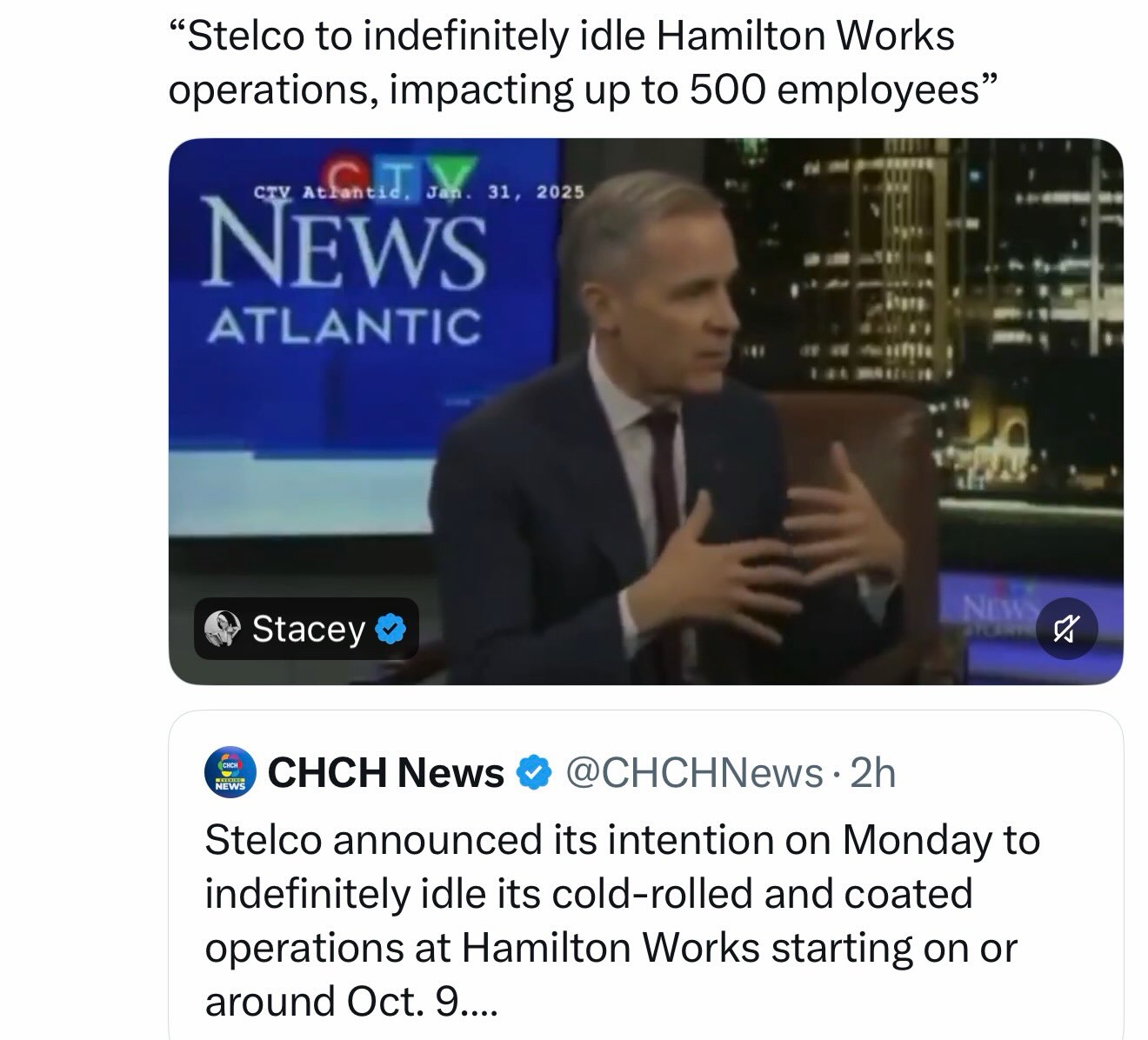
Stelco, a major steel producer, announced on Monday it will indefinitely idle operations at Hamilton Works. The indefinite pause will impact up to 500 employees, a significant workforce displacement that began to unfold around October 9, 2025. The closure affects both cold-rolling and coating processes in a move with large-scale economic and employment implications.
Stelco's Hamilton Works Plant Operations
Idling is a production pause to halt activities. In this case, the decision affects both cold-rolling and coated products. Cold-rolling operations are crucial for producing steel sheets, while coating further treats the steel for durability and corrosion resistance. These processes are central to a variety of industries, including construction, automotive, and manufacturing. The operations at Hamilton Works have been essential to the region's economic health. Steel production is labor-intensive, supporting not just the employees directly involved but also numerous ancillary businesses and services. The cold-rolling and coating processes at the Hamilton Works plant are engineered to handle large volumes of steel and produce a variety of end products. For example, the plant manufactures steel sheets and strips, which are then used in the production of various goods, such as heavy machinery and transportation vehicles. The treated steel products from this facility are renowned for their durability and resistance to environmental conditions, making them a vital component for several critical sectors. Cold-rolling involves transforming hot-rolled steel into thinner, more precise materials. The process reduces the thickness of the steel through a series of rolling mill steps, improving its mechanical properties. The coating process adds a protective layer to the steel, enhancing its resistance to corrosion and extending its lifespan.
The Industrial Shift
Stelco's decision aligns with hints of broader industry trends. Cold-rolled and coated steel products are essential to many sectors, and any changes at a major supplier like Stelco ripple through the economy. These trend shifts impact international trade, manufacturing processes, and local economic stability. Furthermore, the shift to idle operations may be part of a larger pattern of production consolidation or outsourcing. Stelco's decision reflects a pivotal moment in the steel industry. It may signal a transition towards more specialized, less labor-intensive processes, potentially driven by globalization and the reduced cost of labor in other countries. Such trends could lead to restructuring in the Canadian steel industry, with implications for both employment and local economies. The economic consequences of Stelco’s decision reach beyond the immediate workforce. Local businesses relying on the plant’s operations, including vendors, logistics services, and suppliers, will likely feel the impact. This ripple effect underscores the interconnected nature of regional economies and highlights the broader context of Stelco’s decision. For these reasons, the effects of this shutdown extend well beyond Hamilton Works’ employees.
Cold-Rolling and Coating — The Process and Impact
Cold-rolling transforms hot-rolled steel into thinner, smoother sheets, enhancing their mechanical properties. The process involves carefully manipulating the steel’s dimensions and microstructure, leading to a final product with improved tensile strength and flexibility. Cold-rolled steel is used in various applications, such as automotive parts, appliances, and construction materials. Coating, often a subsequent step, shields the steel from environmental degradation. This involves applying a protective layer, typically through processes like galvanization, which adds a zinc coating. The resulting product, known as coated steel, offers superior durability and corrosion resistance, making it ideal for outdoor and industrial use. The closing down of cold-rolling and coating operations at Hamilton Works has left a significant void. This goes beyond immediate job losses; the idling affects the availability of key materials for various industries. Corrosion resistance and durability are critical requirements in many sectors. Manufacturers and suppliers whose production lines rely on coated steel must now seek alternative sources, likely at higher costs and with extended lead times. The shutdown also highlights the need for strategic planning and adaptive measures in response to such developments. Employers, policymakers, and industry stakeholders may need to explore creative solutions, including workforce training for alternative industries. This shift reflects the industry's broader trends and resilience in the face of structural changes in steel production.
The Economic and Social Shadow
In an industrial city like Hamilton, steel production has long been a backbone. The idling of Hamilton Works threatens the city’s economic identity and stability. Driving through Hamilton, you see steel production in signs across town. Visible markers of Stelco’s presence dot the industrial skyline. Once the heart of Hamilton, the idling of operations leaves a vacancy in the city’s economic and cultural fabric. The impact is felt locally in job losses, impacted community support, and altered local dynamics. These job losses are a stark reminder of the economic reliance on steel plants. Each job lost is a story of disrupted lives, relocations, and adjustments. There’s a human cost to structural changes that goes beyond unemployment figures.
Economic Fallout
The shutdown affects not just Stelco employees, but numerous local businesses that rely on the plant’s operations. Suppliers, logistics services, and vendors all feel the ripple effect. Property values, community services, and local economic support also decline. Stelco’s decision forces smaller businesses to adapt. This could mean diversification of suppliers, investing in new technologies, or even relocating to areas with more stable economic conditions. The broader implications reveal how interconnected local economies are. An event like this can trigger a chain reaction of economic adjustments across sectors. Stelco’s idling operations pose challenges and opportunities for the city. There's a chance for the region to embrace economic diversification, moving towards more resilient and adaptable industries. This could be an opportunity for Hamilton to shift towards sustainable and innovation-driven sectors, potentially benefiting from new economic initiatives.
Managing Impact
For those affected, the first step is to understand the extent of the impact and consider immediate and long-term action steps. Keep informed about the status of new job openings, retraining programs, and support services. Stay updated through community resources, job centers, and social networks to access timely information and opportunities. Engage with unions and employee advocacy groups to explore avenues for compensation, health benefits, and reskilling. These organizations can provide support and advocacy for better outcomes during times of transition. Additionally, consider exploring new skill-training options, especially those aligned with emerging industries. Government programs, community organizations, and educational institutions offer resources to transition into new career paths. Join support groups and community initiatives that provide additional coping strategies and resources for navigating job loss and transitions. Seek counseling or other professional services to manage the emotional impact.
Forging Ahead
The idled operations at Hamilton Works mark a crossroads for the steel industry and the region it supports. Since Hamilton has long been defined by its steel industry, the ripple effect has shaken the economic and social fabric of the city. The shutdown brings a chance for reflection on industry changes and adaptability, and forging ahead, these economic shifts will shape the future of both the industry and the city. This pause offers an opportunity for both to redefine their roles in the evolving economic landscape.
Questions readers ask
What exactly does it mean when Stelco says it will 'idle' operations at Hamilton Works?
Idling means Stelco is pausing production activities at Hamilton Works. This affects both cold-rolling and coating processes, which are crucial for producing steel sheets and strips used in various industries. It's not a full shutdown, but a significant pause in operations.
How does the cold-rolling process work, and why is it important?
Cold-rolling transforms hot-rolled steel into thinner, more precise materials through a series of rolling mill steps. This process improves the steel's mechanical properties, making it suitable for a variety of applications, including construction and automotive industries.
What are the broader economic implications of Stelco idling Hamilton Works?
The idling of Hamilton Works affects up to 500 employees and has ripple effects on local businesses that rely on the plant's operations, such as vendors, logistics services, and suppliers. This underscores the interconnected nature of regional economies and the broader context of Stelco’s decision.
Will this idling affect the supply of steel in Canada?
Yes, it will likely affect the supply of cold-rolled and coated steel products, which are essential to many sectors. This could lead to shortages or increased prices for steel products used in construction, automotive, and manufacturing industries.
Will the idling impact international trade and steel production?
Yes, it will impact international trade and steel production. Stelco's decision is part of a broader industry trend towards more specialized, less labor-intensive processes. This could affect global supply chains and the cost of steel products.
What kind of steel products does the Hamilton Works plant produce?
The plant manufactures steel sheets and strips, which are then used in the production of various goods, such as heavy machinery and transportation vehicles. These products are known for their durability and resistance to environmental conditions.
How does the coating process enhance the steel products from Hamilton Works?
The coating process adds a protective layer to the steel, enhancing its resistance to corrosion and extending its lifespan. This makes the steel products from Hamilton Works particularly durable and suitable for use in harsh environments.
Recent articles
Fresh deep dives from the latest Reels we unpacked.




Comments
Be the first to comment.