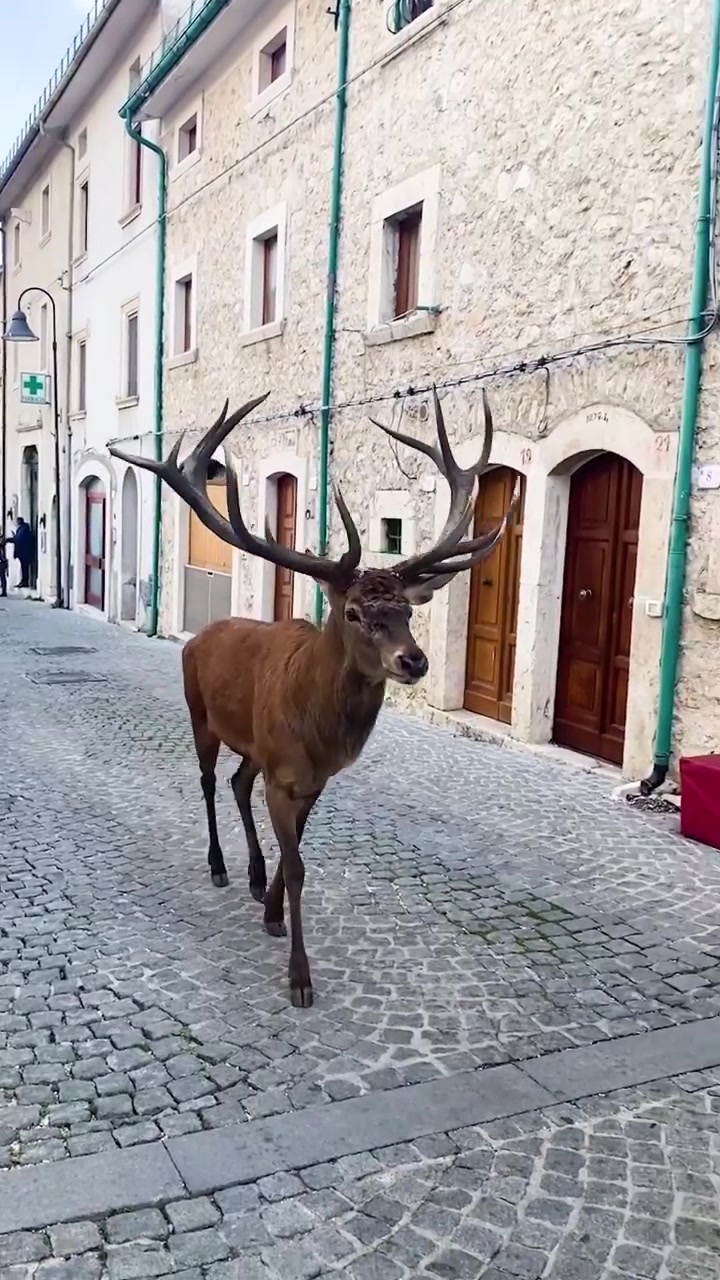
A stag strolled through a quiet street in a European town, unfazed by the buildings lining the cobblestones. The sight seemed surreal, and viewers questioned their reactions.
The Urban Stag (a kind of ramble)
A stag wandering through an urban street is an unusual sight. This particular stag appeared calm, walking leisurely past buildings as if it were in a forest. This is a large wild animal — stags are male deer, the largest members of the deer family. Stags have distinctive antlers, which they shed and regrow each year; this one has an impressive set. The stag in the video appears to be an adult, given the size of its body and antlers. Antlers grow throughout summer. They fall off in winter, then regrow from the base of the pedicle, the bony stub. Stags typically inhabit forests and woodlands, not city streets. They are powerful creatures, capable of running at speeds of up to 30 miles per hour. Their diets mainly consist of grasses, leaves, and twigs, which they forage for during the day. Stags are solitary animals, except during the mating season, when they compete for dominance. They mark their territory with scent glands located between their hooves, which are known as interdigital glands. The stag's behavior in the video—a relaxed, almost nonchalant pace—suggests it was accustomed to the urban environment.
How Urban Wildlife is Emerging
Stags in urban areas indicate an expanding trend of wildlife encroaching on human spaces. With urbanization, eco-friendly practices, and conservation efforts, there are more urban wildlife sightings. Animals adapt quickly to new environments when food and water are readily available, and humans can drive these behaviours. Natural habitats shrink as cities expand, forcing animals to seek refuge in urban areas. Additionally, wildlife corridors, safe passages connecting fragmented landscapes, encourage animals to venture into cities. Public reaction to the urban stag suggests that more people want to coexist with wildlife peacefully. This trend is especially pronounced in European towns, where urban green spaces and wildlife conservation efforts are robust. Poaching, vehicle collisions, and lack of habitat are still threats, but a significant portion of the populace appreciates the wildlife around them.
The Surreal Encounter
The stag’s calm demeanor and the apparent lack of human interference suggest a gradual acceptance of urban wildlife. More expansive and connected urban green spaces are crucial for this acceptance. Public awareness and education also play a vital role. Considerations on how to prevent conflicts between humans and wildlife are critical. Some potential solutions for co-existence include the creation of wildlife corridors, improved waste management, and stricter enforcement of environmental regulations. Understanding the stag’s relaxed behavior in the video suggests a few theories. Closed spaces can reduce animal encounters. “Are we just terrified?” implies fear or surprise. Conversely, in modern times, the urban stag's behavior showcases how humans and animals can share environments. The sight of the stag evokes a range of emotions, from fear, surprise, respect, curiosity, but also a sense of wonder. The stag might be drawn to the urban area due to a lack of predators. Urban environments often have abundant resources, and animals adapt to these conditions. The stag could also be avoiding human activity, foraging for food.
Animal Adaptation
Stags are adaptable creatures. They have evolved to survive in a variety of environments, from dense forests to open fields. Urban areas can offer new challenges and opportunities for stags. For example, the availability of food and water sources can support a stag's survival in an urban environment. In contrast, urban hazards such as vehicles, human disturbance, and pollution pose significant risks.
Wildlife Rehabilitation
If you encounter a stag in a potentially harmful environment, contact local wildlife authorities for guidance. Here are a few tips for handling the sighting:
- Quiet Observation: Remain calm and quiet when you see a stag. This will lessen disturbance.
- Maintain Distance: Keep a safe distance from the animal. Do not attempt to approach or feed it. Remember, the animal might be stressed or injured.
- Contact Authorities: If the stag appears injured or distressed, do not try to assist. Contact local wildlife authorities. They are trained to handle such situations and ensure the animal's safety.
- Provide Shelter or Access: If you see the stag in a potentially dangerous area (like a crowded street or construction zone), try to provide a safe path or access to a nearby green space. However, intervening physically is best left to professionals.
Natural City Relationships
The sight of a large stag walking through a European town exemplifies the delicate balance between nature and urban life. As urbanization continues, co-existing with wildlife will become increasingly important. Encounters like these remind us of the wild world outside of cities, and inspire respect for animals in our midst. Embracing wildlife in urban settings could enrich our urban lives.
Questions readers ask
What kind of deer is a stag, and why was this one so impressive?
A stag is a male deer, and it's the largest member of the deer family. The stag in the video was impressive because it had a large set of antlers, which are distinctive to stags. These antlers are shed and regrown each year, and their size can indicate the age and health of the stag.
Why did the stag seem so calm walking through the town?
The stag's calm demeanor suggests that it might have been accustomed to the urban environment. Stags are typically solitary animals and are powerful creatures, so their behavior can be quite confident, even in unfamiliar surroundings.
How do stags mark their territory, and why is this behavior significant?
Stags mark their territory using scent glands located between their hooves, known as interdigital glands. This behavior is significant because it helps them establish and maintain their territory, especially during the mating season when they compete for dominance.
What factors are driving more wildlife sightings in urban areas?
Several factors are contributing to more wildlife sightings in urban areas. Urbanization and the expansion of cities are shrinking natural habitats, forcing animals to seek refuge in urban areas. Additionally, eco-friendly practices, conservation efforts, and the availability of food and water in urban environments are encouraging animals to adapt and venture into cities.
What can be done to promote peaceful coexistence between humans and wildlife in urban areas?
To promote peaceful coexistence, creating wildlife corridors, improving waste management, and enforcing environmental regulations are crucial. Public awareness and education also play a vital role in helping people understand how to interact with wildlife safely and respectfully. Expansive and connected urban green spaces can provide habitats for wildlife and reduce human-wildlife conflicts.
Related deep dives
Similar reads based on topic and creator.



Recent articles
Fresh deep dives from the latest Reels we unpacked.




Comments
Be the first to comment.