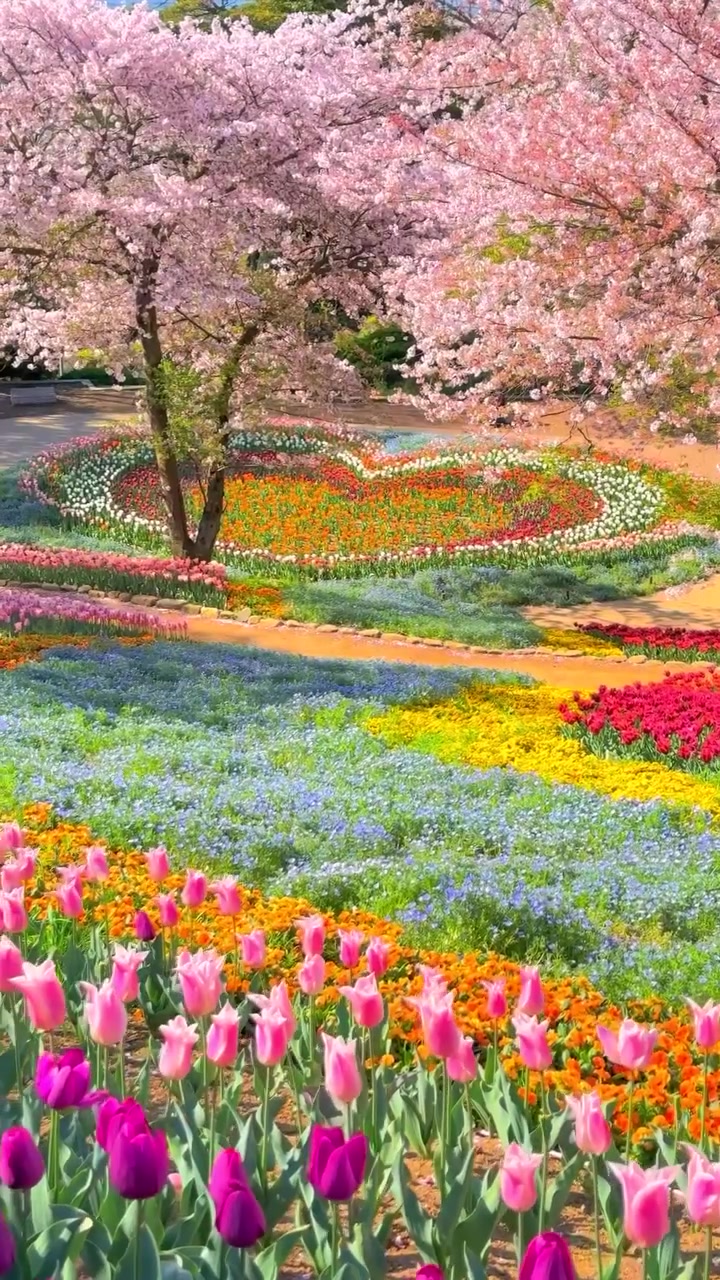
On the Cherry Blossom Bloom of Hinoyama Koen Park
First there's the iconic heart-shaped tulip bed, an intimate space around fifty meters long and fifteen deep. Then there's the cherry blossom tree. The entire landscape is meticulous, with a sense of order and design that is visible from every angle. The garden was established in 2017 as a symbol of international friendship. ::: The serenity of Hinoyama Koen Park in Yamaguchi, Japan, is one of spring's best-kept secrets. Hosting a heart-shaped tulip flower bed and cherry blossoms, it's a little wealthy country against the backdrop of snow-mounted mountains. But Hinoyama Koen Park's origins are a marvel, too. The garden was established in 2017 to signify the friendship between Japan and Turkey. "Did you know that this garden was established in 2017 to celebrate the friendship between Japan and Turkey?" The quote captures how rare and significant this public garden is.
Syllabus of Spring Gardens
Beneath the garden's placid nature rests a deeper significance of cultural harmony. The garden's geometric patterns and cultural significance make Hinoyama Koen Park a fascinating spring destination. It is a canvas of the collaboration of two countries, Japan and Turkey. The tulips peppered in Hinoayama Koen Park are sourced from Turkey, where the flower originates. The cherry trees, native to Japan, are a reminder of the Japanese festoon for Cherry Blossom (Sakura) festivals in the springtime. Japan, in fact, celebrates the blooming of its cherry blossom trees as a national festival for beauty and transience. This reminds the visitors of Japan's many traditional festivals or Matsuri. Turkey’s Tulip Festival and Japan’s Cherry Blossom festivals happen to fall on contrasting ends of the calendar. By planting it, the garden celebrates and unites the two festivals. The tulips are arranged in a heart shape, which is the symbol of the heart of the garden. The tulips symbolize joy, love, and beauty. The cherry blossoms are a reminder of the beauty of spring in Japan. A significant number of Japanese men love the cherry blossom for its beauty and impermanence.
The Garden's Blooming Pathos
Hinoyama Koen Turkish Tulip Garden is designed to fit in perfectly with the surrounding landscapes. The garden's architecture and planning were designed by a Japanese architect, who also designed the garden's irrigation system, so it makes the most of its surroundings. The garden's groundwork and hardscaping were done using the famous Japanese stone and the famous Japanese concrete, giving it a natural foundation. There is a central tulip bed centrally located in the garden. The tulips are arranged in a heart shape, giving it a romantic feel. The tulips are planted in rows, each with a different color. The rows are arranged in such a way that they form a spiral, with the heart-shaped tulip bed in the center. The tulips in the garden are of different colors and shapes, giving it a colorful and vibrant look.
Cherry Blossoms And Turkish Tulips
“Showcases the heart-shaped tulip flower bed and cherry blossoms”, it's a mix of colors in a heart shape in the garden beds for tulips and the cherry blossoms make a visual treat. "Cherry Blossoms and Turkish Tulips" are a sight to see in springtime in the Hinoyama Koen Park. The cherry blossoms bloom in the spring and create a cascade of pink and white flowers. The tulips, however, bloom in the summer and create a vibrant display of red, yellow, and orange. The tulips are planted in rows and are arranged in a heart shape, while the cherry blossoms are planted in clusters. are a visually stunning sight, with their white petals, and the cherry blossoms are a reminder of the beauty of spring. The heart-shaped tulip bed is a garden fixture, and cherry blossoms are the garden's dominant flower. The tulips are often the garden's first flourish and the cherry blossoms are its final touch, bringing spectacle to the garden. The heartbeat of the garden can be seen through cherry blossoms, and the tulip bed forms the soul of the park.
The People's Garden
The garden is a well-kept secret among locals and tourists. They come to the garden to enjoy the beauty of the tulips and cherry blossoms, as well as to enjoy the serenity of the garden. For visitors, the garden is a reminder of the beauty of nature. The garden is a great place to walk around and relax. The tulips and cherry blossoms are a sight to see, and the garden is a great place to take photos. In the tulip garden, there is also a small café where visitors can enjoy a cup of coffee or tea. The garden is also a great place to enjoy a picnic. The garden is a great place to bring a date, friends, or family. There are times when concerts and cultural activities such as music play, dance, and festivals are held in the garden. One of the comments by the visitors said, “I wish this garden would always be in bloom, I love being here, and I feel like a child again”.
The Japan Turkey Connection
Turkey is a significant export destination for tulips, with the majority of tulip exports going to the Netherlands. The connection between Japan and Turkey is a significant one. The two countries share a common history, and the tulip festival is a celebration of this shared heritage. The tulip festival is a reminder of the beauty and richness of the two countries' cultures. By visiting the garden, tourists can enjoy the beauty of both cultures and nature. The cherry blossoms are a reminder of the beauty of spring in Japan, and the tulips are a reminder of the beauty of the tulip festival in Turkey. The garden is a celebration of the beauty of both cultures and nature.
The Perfect Tourist Destination
For tourists, Hinoyama is a must-visit. It’s a beautiful place to visit during spring. It has beautiful tulips and cherry blossoms, which are some of the most beautiful flowers in the world. The garden is also a great place to take photos. It has a heart-shaped tulip bed, which is a great place for selfies and couples. For an ideal visit:
- Best Time To Visit: Mid-March to Early April (Tulips) and Early April Mid-April (Cherry Blossoms). Springtime, however, is ideal.
- How To Get There: You can reach Hinoyama directly by car, bus, or train from the city of Yamaguchi. All you need is to go to Yamaguchi’s train station. Attractions beside the Park: There are many other beautiful spots to enjoy in Yamaguchi. Take a trip to the Imperial Palace. The palace is a stunning building with a rich history. It’s a great place to visit if you want to learn about Japanese history and culture.
- What To Pack: If you plan to spend a lot of time in the tulip garden, you will need to pack a lot of sunscreen and water. It’s a lot of walking, and the sun can be intense, especially in the summer. So bring a hat, sunglasses, and comfortable shoes. Tourism plays a huge role as a source of revenue for Japan. Understanding how to maximize the possibilities of tourism will ensure the economic potential of the country. Hinoyama Koen Park is an addition to the tourist’s sites and potential travelers’ bucket list.
As Japan's tourism industry brightens
Taking a step back, Hinoyama Koen Park Turkish Tulip Garden showcases the interest and the dedication the Japanese hold for their gardens. Hinoyama Koen Park is a garden that holds friendship, beauty, and tradition. The tulips and cherry blossoms are a sight to see, and the garden is a great place to take photos. Visitors can experience both cultures at the same time, making it a unique and memorable experience.
Questions readers ask
What inspired the unique design of Hinoyama Koen Park's tulip bed?
The heart-shaped tulip bed was designed to symbolize joy, love, and beauty. It was inspired by the cultural exchange between Japan and Turkey, with tulips sourced from Turkey, the country of their origin.
Why are cherry blossoms so significant in Japanese culture?
Cherry blossoms, or Sakura, are significant in Japanese culture because they represent the transience of life and the beauty of nature. Their blooming is celebrated nationally as a festival, highlighting their cultural importance.
How does Hinoyama Koen Park celebrate both Japanese and Turkish cultures?
The park celebrates both cultures through its floral displays. Tulips, sourced from Turkey, represent Turkish culture, while cherry blossoms, native to Japan, represent Japanese culture. The park's design and layout also reflect a blend of Japanese and Turkish influences.
What is the significance of the garden's geometric patterns?
The geometric patterns in Hinoyama Koen Park contribute to its overall aesthetic and symbolize the harmony and cooperation between Japan and Turkey. These patterns are visible from every angle, reflecting the meticulous design and planning of the garden.
Can visitors expect to see other types of flowers in the garden besides tulips and cherry blossoms?
The article does not mention other types of flowers in the garden. The focus is on tulips and cherry blossoms, which are the main attractions and hold significant cultural importance.
Related deep dives
Similar reads based on topic and creator.




Recent articles
Fresh deep dives from the latest Reels we unpacked.




Comments
Be the first to comment.