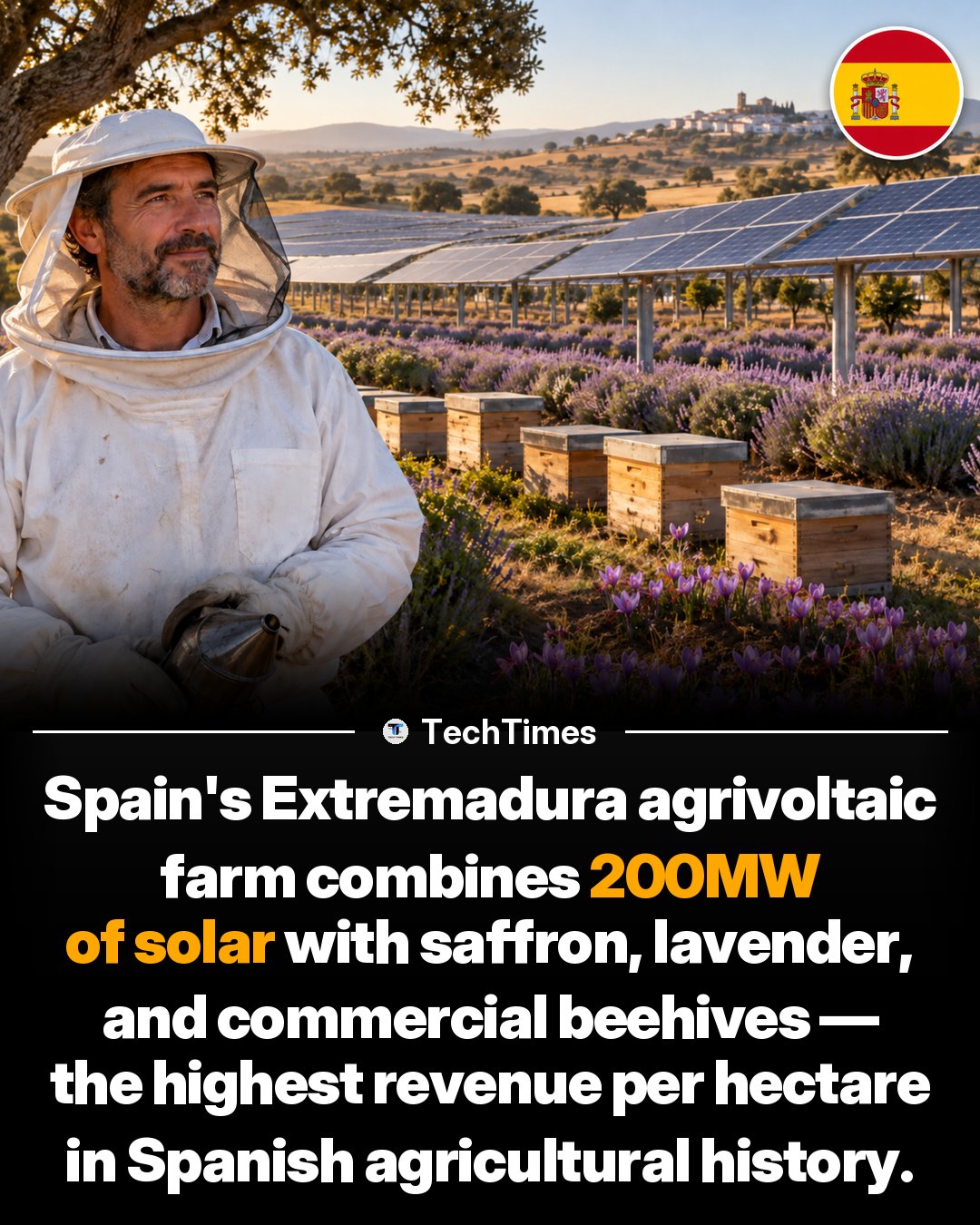
Agricultural power is being redefined in Spain. In the country’s western Extremadura region, an agrivoltaic farm is forging a new path highlighting an unprecedented revenue milestone. Extending over 900 hectares, this initiative integrates solar energy, saffron, lavender, and beekeeping to achieve a record revenue of 20,000 € per hectare.
The Agri-Voltaic Innovation in Extremadura
Extremadura’s agrivoltaic endeavor nestles solar panels over an expansive farmland that cultivates saffron, lavender, and is interspersed with beehives. This unique arrangement harnesses solar energy for electricity, while the crops and beekeeping thrive beneath the panels. The solar panels' design and layout are optimized to allow sufficient sunlight and space for agricultural and apicultural activities, making for an ecosystem that supports climate-resilient crops and pollinators. One of the standout crops on the farm is saffron. It demands precise, labour-intensive cultivation. This valuable spice is vital to Spanish cuisine. The farm also cultivates lavender, which requires delicate care, and supports beekeeping to bolster pollination and produce honey. The agrivoltaic farm produces 200MW (megawatts) of solar power on a large scale. This high-output feat of solar production nets the highest revenue per hectare Spain's history.
Spanish Agriculture: Facing Climatic Challenges and Energy Dependency
Spain's agricultural sector continues to face logistical and environmental challenges. Spanish farmers endure water scarcity, unpredictable weather, land degradation, and climate change, among other challenges, while trying to uphold a sustainable and profitable livelihood. The nation still depends on other countries to supply much of its electricity. The dependency on fossil fuels drives carbon emissions and contributes to climate impact. The demand for renewable energy, sustainable crops, and pollinator-supporting landscapes is rising worldwide. Spain is poised to meet these challenges head-on. Advancements in agrivoltaic systems could make the agrarian landscape more tech-forward and environmentally friendly. This new farm model could present new economic opportunities.
How Solar Panels Enhance Agricultural Output
Lavender has a high-staking profile. Its cultivation requires expert knowledge and precise care. Growing the plants under the partially shaded environment of solar panels ensures there’s sufficient sunlight. The shade provided by the panels also helps reduce evaporation and keeps the plants cool. According to the vision data, saffron, lavender, and beekeeping thrive. The saffron fields benefit from better photosynthesizing, given that the saffron uses sunlight efficiently and minimizes water loss beneath the solar panels.
The Economic Surge
It all comes down to efficiency. When 20,000€ per hectare in revenue is possible, it explodes the concept of farming profitability. This model ensures the crops yield higher revenues, the farm reduces energy costs through on-site solar power production, and the shared land use maximizes the economic output per hectare. The return on investment is compelling. Subsidies for solar energy and grants for agricultural innovation make it more affordable to implement an agri-voltaic system. No wonder this farm has seen a leap in revenue and profitability.
The Environmental Case for Agri-Voltaic Farms
Here's what any skeptical farmers might wonder: "What's the ecological logic?" Agri-voltaic farming is not just a revenue generator; it's also a groundbreaking eco-strategy. The panels' shade minimizes crop water requirements by between 20–40%. Moreover, the solar panels' surface area can be as much as six times as effective for photosynthesizing crops as the area of the land they occupy. The panels keep crops cool, too. They allow the farm to extend its productive years for 30 or 40 years. The system improves not only the crops’ yield but also their quality and environmental resilience. Given the water scarcity, heat stress, and rising temperatures in the Mediterranean region — particularly in Extremadura — this technique enhances agricultural productivity. It helps adapt to the climate changes affecting so many other farms.
How to Harness Solar Energy for Farming
Interested in reaping the dual harvest of renewable energy and profit? Although specifics will vary, the basics for any entrepreneurial enthusiast can be broken down into a step-by-step approach:
- Assess Your Land: Evaluate your land's suitability for solar panel installation. Hire an expert, and choose the best site based on sunlight hours, topography, and soil quality.
- Funding and Subsidies: Research any available subsidies, funding, or tax incentives within your region.
- Plan your solar Panel Design: Select a solar panel design that considers the specific crops' and farm needs. The goal is to find the best balance between solar energy generation, efficient use of space, and adequate sunlight for crops. Ensure it is equipped to offset energy bills and generate extra revenue, while giving the crops enough sunlight.
- Choose the Right Crops and Livestock: Select crops and livestock that complement the agrivoltaics setup, such as saffron, lavender, and beekeeping, as they thrive in the shade.
- Become an Expert in Best Practices. Dedicate time to develop your farming expertise, such as installing solar panels and managing the two harvests.
What the Future Holds
The agrivoltaic farm in Extremadura showcases a groundbreaking evolution for Spain’s agricultural landscape. With the farm able to break revenue records, this model holds the promise of sustainable farming.
Questions readers ask
What exactly is an agrivoltaic farm, and how does it differ from traditional farming methods?
An agrivoltaic farm, like the one in Extremadura, Spain, combines solar energy production with traditional agriculture. Unlike traditional farms, agrivoltaic farms have solar panels installed over crops, allowing the plants to thrive beneath the shade. This dual-use model enhances both energy production and agricultural output. It also creates a more sustainable ecosystem, supporting pollinators like bees, which enhances the overall biodiversity of the farm.
What specific crops are being grown under the solar panels in Extremadura, and why were these crops chosen?
The agrivoltaic farm in Extremadura cultivates saffron and lavender, and also supports beekeeping. Saffron is a high-value crop that requires precise and labor-intensive care, and lavender is delicate and requires expert knowledge. Both crops benefit from the partially shaded environment provided by the solar panels, which helps reduce evaporation and keeps the plants cool. The beekeeping aspect supports pollination and produces honey, adding to the farm's overall productivity and sustainability.
How does the agrivoltaic system in Extremadura generate electricity, and what is the capacity of the power plant?
The agrivoltaic farm in Extremadura generates electricity through solar panels installed over the farmland. These panels harness solar energy and convert it into electricity. The farm produces 200 megawatts (MW) of solar power, making it a high-output solar power plant. This substantial energy production, combined with the revenue from crops, makes the farm highly profitable, achieving a record revenue of 20,000 euros per hectare.
What are the main benefits of using solar panels in agriculture, as demonstrated by the agrivoltaic farm in Extremadura?
The main benefits of using solar panels in agriculture, as seen in the agrivoltaic farm in Extremadura, include enhanced agricultural output, increased energy production, and improved sustainability. The solar panels provide shade and reduce evaporation, helping crops like lavender and saffron thrive. Additionally, the farm produces a significant amount of solar power, reducing energy costs and dependence on fossil fuels. The system also supports pollinators, contributing to a more diverse and resilient ecosystem.
Can this agrivoltaic model be replicated in other regions, and what challenges might they face?
Yes, the agrivoltaic model can be replicated in other regions, especially in areas with similar climates and agricultural needs. However, challenges such as initial investment costs, technological know-how, and regulatory support may need to be addressed. Regions with water scarcity, unpredictable weather, and land degradation might find this model particularly beneficial, as it can enhance crop resilience and reduce energy dependency, contributing to a more sustainable agricultural landscape.
How does the agrivoltaic farm in Extremadura address the challenges faced by Spanish agriculture, such as water scarcity and climate change?
The agrivoltaic farm in Extremadura addresses challenges like water scarcity and climate change by optimizing water use and creating a more resilient ecosystem. The solar panels provide shade, reducing evaporation and helping crops like lavender and saffron thrive in a more water-efficient environment. Additionally, the farm's integration of beekeeping supports pollination, which is crucial for maintaining biodiversity and crop productivity. This model also reduces the farm's dependence on external energy sources, contributing to lower carbon emissions and a more sustainable agricultural practice.
What economic benefits does the agrivoltaic farm in Extremadura offer, and how does it contribute to the local economy?
The agrivoltaic farm in Extremadura offers significant economic benefits, achieving a record revenue of 20,000 euros per hectare. This high revenue is due to the efficient use of land, where crops and solar energy production coexist, maximizing economic output. The farm also reduces energy costs through on-site solar power production, further enhancing profitability. This model can create new economic opportunities and contribute to the local economy by providing jobs, supporting local businesses, and promoting sustainable agricultural practices.
Related deep dives
Similar reads based on topic and creator.


Recent articles
Fresh deep dives from the latest Reels we unpacked.




Comments
Be the first to comment.