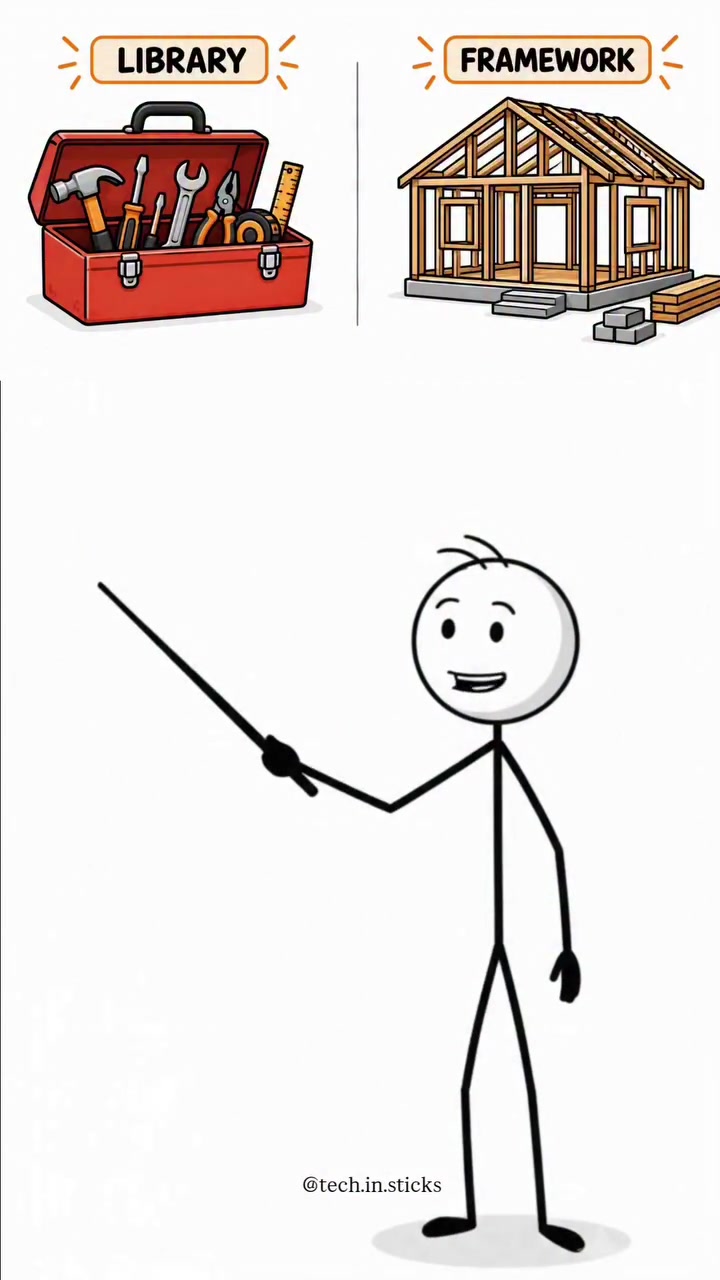
In the world of software development, the distinction between a library and a framework can be as daunting as understanding the difference between a toolbox and a set of blueprints. Both are essential but serve distinct purposes.
What Makes a Framework a Framework?
A framework in software development is a pre-built, often comprehensive, structure designed to organize and manage a specific type of application's development. Unlike a toolbox of disjointed tools, a framework provides a structured approach to development, complete with established rules and a defined workflow. To visualize this, consider the analogy of building a house. Imagine a framework is the blueprint or the skeleton of your house, providing the structure, layout, and pre-determined slots for different rooms and utilities. A library, on the other hand, is more akin to a toolbox filled with various, independent tools. You pick and choose what you need, keeping control over how it is used.
Control: Who Calls Whom?
In a framework, the developer generates specific building blocks that fit into predefined slots. Business logic, core utilities, and database connections are all governed by the framework's structure. A framework dictates the flow, telling the pieces where to fit, which simplifies the development process, but gives up some flexibility. This is a unique feature: a framework calls your code at predefined points, such as for route handling or asset management. Libraries, in contrast, offer you this flexibility. The developer has to initiate the call to a library, choosing when and where to use its code. Whether it’s for core utilities, database connections, or business logic, you are the one in control.
Complexity & Simplification
Software frameworks simplify complex architectures by breaking them down into recognizable, modular components. Components like "route," "business logic," and "user authentication" are made simple by the framework, making software development more structured. It would otherwise be a daunting task to manage the architecture, let alone utilize it. This modular design empowers developers to solve intricate issues while providing a structured approach.
Understanding Frameworks and Libraries
Software frameworks organize development processes with pre-defined structures and rules. Predefined components like routes and business logic slots give a clear blueprint for where everything goes. Libraries, however, offer you tools to use when needed, but without the structure. Libraries offer flexibility, whereas frameworks offer control.
The Core Difference
The core difference between a library and a framework is control. Libraries give you the control to call specific pieces of pre-written code when needed. Frameworks, however, provide the structure and dictate the flow of your application, where to place specific pieces of code. Simplified, frameworks control the developers, whereas libraries give control to them.
Why Clear Definitions Matter
Distinguishing between a library and a framework clarifies the approach to development. Understanding that libraries offer control and frameworks structure helps developers choose the right tool for their project. The importance of this distinction is amplified as software development continuously evolves. With new technologies and methodologies emerging, frameworks have become a cornerstone of complex development, enabling the creation of robust, scalable applications with a focus on structure and organization.
The Trick to Remembering the Difference
The best way to remember the difference is to go back to the construction. Frameworks are to houses as libraries are to toolboxes. Frameworks like Angular, React, and Django provide a structured approach to development, offering predefined rules and organizing the application. Libraries like ReactDOM, Node.js, and Express offer ready-made code to be called when needed.
Navigating Software Frameworks
If you're a new developer looking into frameworks, understanding the flow and structure of your project is the first step. Here are some tips to get you started: Start with the basics: Understand what each framework offers; which problem it solves, and how. Start with popular ones like Angular, React, or Django. Understand flexibility vs. structure: Frameworks offer structure but less flexibility. Make sure the project you’re working on requires more structure than flexibility. Experiment: Understand the core utilities of libraries like Node.js, Express, and ReactDOM. See which tools offer the control you need. Documentation is key: Most frameworks come with extensive documentation. Use them to understand the rules and directives.
Getting Started with Frameworks and Libraries
Unpacking the difference between libraries and frameworks is vital for understanding the core concepts of software development. Whether you choose the control from the former or the structure from the latter, both are crucial in their own ways. Searching for frameworks? Start with the big ones — Angular, React, or Django. Searching for libraries? Core utilities like Node.js, Express, and ReactDOM are a great place to begin. Frameworks define the structure and control, while libraries offer flexibility and control. With a clear understanding, you can build a house that is both simple and complex, controlled and flexible all at the same time.
Questions readers ask
What is the primary difference between a software framework and a library?
The primary difference lies in control and structure. A framework provides a pre-defined structure and dictates the flow of your application, telling you where to place specific pieces of code. In contrast, a library offers you tools to use when needed, giving you the control to call specific pieces of pre-written code as you see fit.
How does a framework simplify the development process?
A framework simplifies complex architectures by breaking them down into recognizable, modular components. This makes it easier to manage and utilize the architecture, providing a structured approach to development. It also helps developers solve intricate issues by offering a clear blueprint for where everything goes.
Can I use libraries and frameworks together in a project?
Yes, you can use both libraries and frameworks together in a project. While a framework provides the overall structure and flow, you can use libraries to add specific functionality or tools that the framework might not cover. This allows for a more customized and efficient development process.
If I use a framework, do I lose all control over my code?
Using a framework doesn't mean you lose all control over your code. While the framework dictates the overall structure and flow, you still have control over the specific pieces of code you write to fit into the framework's predefined slots. It's more about working within a structured environment rather than having complete free rein.
Are there any downsides to using a framework?
One potential downside of using a framework is the loss of some flexibility. Since frameworks dictate the flow and structure of your application, you might find it limiting if you need to implement something that doesn't fit neatly into the framework's design. However, this trade-off is often worth it for the simplicity and structure it provides.
How do I know when to use a library versus a framework?
The choice between a library and a framework depends on your project's needs. If you need a structured approach with predefined rules and components, a framework is the way to go. If you need more flexibility and control over when and how to use specific pieces of code, a library is more suitable. Often, projects benefit from a combination of both.
Related deep dives
Similar reads based on topic and creator.


Recent articles
Fresh deep dives from the latest Reels we unpacked.



Comments
Be the first to comment.