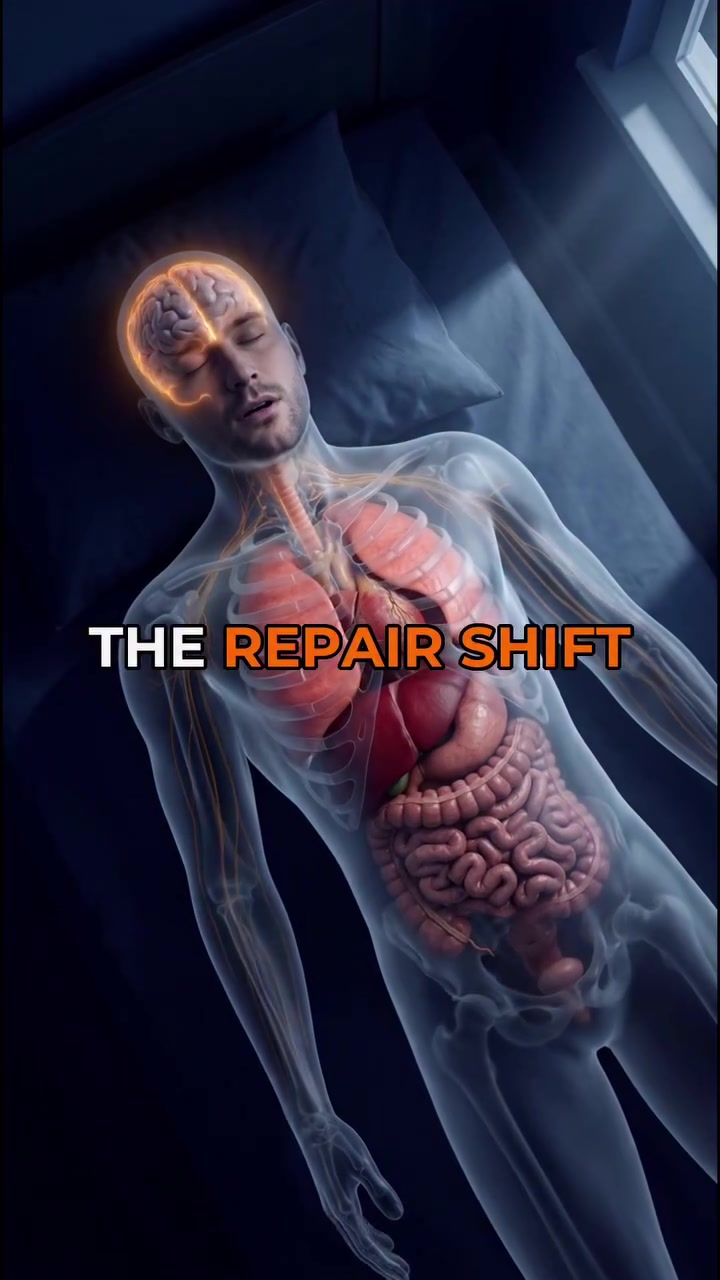
At night, your body launches into a crucial repair process. How crucial? Up to 70% of your daily growth hormone release happens in that first deep sleep window, while the body's cells are rebuilt, and skin repairs itself. The brain also undergoes significant changes as well. Missing this "repair shift" can make you wake up looking and feeling older than you should.
The Repair Shift
It is a crucial window of sleep — effective rejuvenation. During deep sleep, the body produces up to 70% of its daily growth hormone. This is key for many cellular functions, like cell rebuilding and skin repair. You are never asleep but they’re indeed working very hard. During this stage, the brain “flushes out the day’s waste.” The brain and its cells are waste – bacteria, viruses, and waste protein – that get accidentally produced by the body. This is an important window for the brain to clear out all this trash. The body relies on this repair shift to prevent itself from aging faster. Any disturbances can lead to this necessary shift being affected. Even if you do sleep for eight hours, but still wake up wrecked, you are missing out on deep sleep which is when most of the repairing happens. But there are some significant challenges.
An increasingly stressed and restless world
The problem is that it’s increasingly difficult to achieve deep sleep. One in four Americans do not get enough sleep. But it's not just about quantity. Phone screens emit blue light, which tricks the brain into thinking it's still daytime. Drinks like nightcaps further hinder progressing into deep sleep. Additionally, stress can operate as a disruptor. Even if you're getting eight hours of sleep, you could still wind up feeling as though you've barely slept at all. And when this pattern repeats over years, it triggers rapid cellular aging. Research shows poor sleep quality over extended periods contributes to accelerated cellular aging. But how can you ensure that you are getting enough sleep and deep sleep?
The importance of a consistent sleep schedule
Maintaining a consistent sleep schedule is crucial for ensuring that you are getting enough deep sleep. Set a regular bedtime and wake-up time. With a fixed sleep schedule, your body will become accustomed to the pattern, catching up on sleep on its own.
How blue light affects your sleep
Late-night device use is another common problem. The blue light emitted by phones, tablets, and computers suppresses the production of melatonin, a hormone that regulates sleep. To mitigate this, you should put all your devices down at least an hour before bedtime and invest in a pair of blue-light-blocking glasses if necessary.
Sleeping at the right temperature
Keeping your bedroom cool and dark is important for getting a good night’s sleep. The ideal temperature for sleep is between 60 and 67 degrees Fahrenheit. A dark room signals to your body that it’s time to sleep. Investing in blackout curtains or a sleep mask can help block out any unwanted light. Keeping your room cool is necessary for falling asleep and staying asleep. If your bedroom is too warm, you may struggle to fall asleep or stay asleep. If the problem persists, consider consulting a sleep specialist. They can provide targeted advice and strategies to improve your sleep quality.
The final word on sleep
When it comes to sleep, it is a hard process and that’s normal. Studies show that deep sleep can be disturbed by a myriad of factors, but the key is not to worry too much. Fret about it today, and you’ll end up sleeping less and less. Work on it systematically if you feel you are losing sleep. Sleep is a multifactorial process. So making small, targeted changes to your sleep routine can go a long way.
Questions readers ask
What exactly is the 'repair shift' and why is it so important for my health?
The 'repair shift' refers to the period of deep sleep when your body produces up to 70% of its daily growth hormone. This hormone is crucial for cellular repair, skin rejuvenation, and overall bodily maintenance. Missing out on this shift can accelerate aging and leave you feeling less rested.
How does blue light from devices affect my sleep quality?
Blue light from phones, tablets, and computers tricks your brain into thinking it's still daytime, suppressing the production of melatonin, a hormone that regulates sleep. This can make it harder to fall asleep and achieve deep sleep, which is essential for the body's repair processes.
What role does stress play in disrupting my sleep and aging process?
Stress can significantly disrupt sleep, particularly the deep sleep phase. When you're stressed, your body might struggle to reach the deep sleep stage, where most of the cellular repair happens. This can lead to accelerated cellular aging over time.
What are some practical steps to ensure I get enough deep sleep?
Maintaining a consistent sleep schedule, avoiding blue light from devices before bed, and keeping your bedroom cool and dark are key steps. Using blue-light-blocking glasses and investing in blackout curtains or a sleep mask can also help.
If I'm getting eight hours of sleep but still feel tired, what might be the issue?
Even if you're sleeping for eight hours, you might not be getting enough deep sleep, which is when most of the body's repair work happens. Factors like stress, blue light exposure, and an inconsistent sleep schedule can interfere with deep sleep, leaving you feeling unrefreshed.
What is the ideal temperature for a good night's sleep and why does it matter?
The ideal temperature for sleep is between 60 and 67 degrees Fahrenheit. A cooler room helps your body relax and prepares it for sleep. If your bedroom is too warm, it can disrupt your ability to fall asleep and stay asleep, affecting the quality of your rest.
How does the brain clear out waste during sleep, and why is this process important?
During deep sleep, the brain flushes out waste products like bacteria, viruses, and waste proteins that accumulate throughout the day. This cleansing process is crucial for maintaining brain health and preventing accelerated aging. Disruptions to this process can lead to long-term health issues.
Related deep dives
Similar reads based on topic and creator.



Recent articles
Fresh deep dives from the latest Reels we unpacked.




Comments
Be the first to comment.