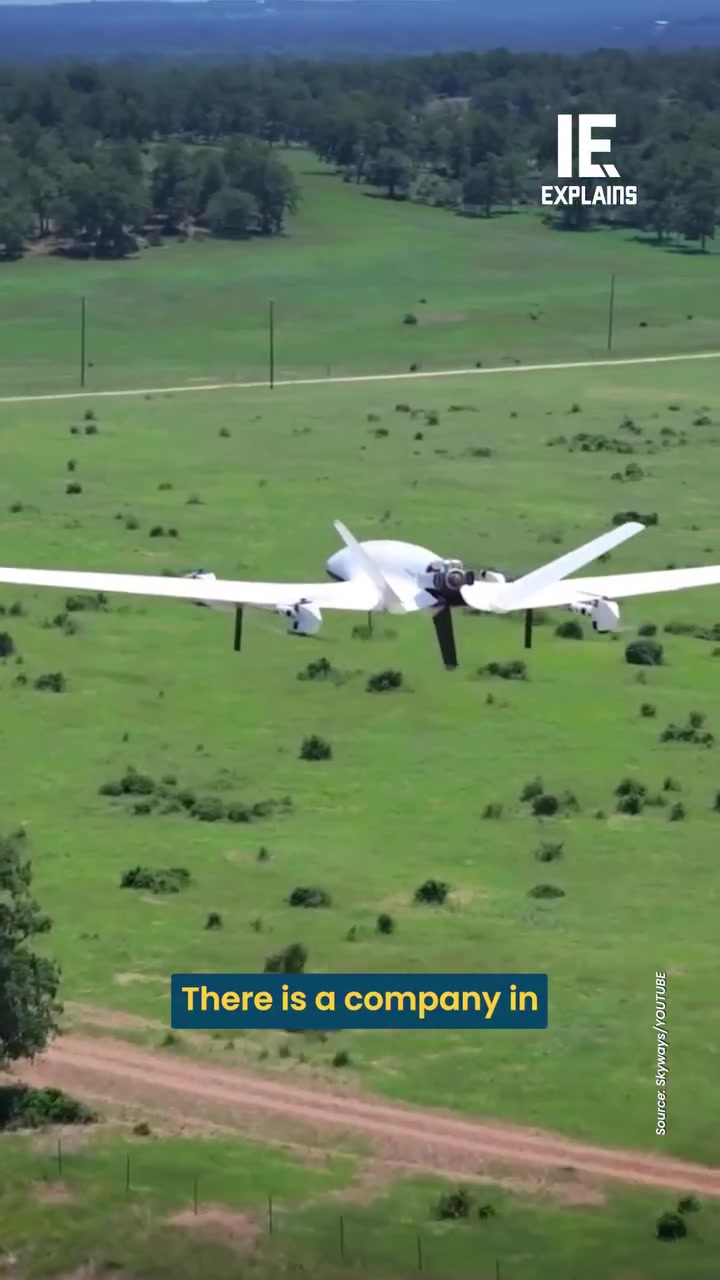
The Skyways Electric Aircraft: Cargo Flown Autonomously
Skyways, a startup in Austin, Texas, operates electric aircraft that carry cargo without pilots. Using a blend of electric propulsion and heavy fuel engines, the V2 aircraft lifts off vertically and cruises like a small plane. Skyways, which wants to create the largest fleet of unmanned aircraft, attracts attention from entities ranging from energy firms to the US Air Force, and ANA Holdings Inc. Ideally, the US Air Force spends around $30,000 an hour on a resupply run and these aircraft might accomplish that for about a thousand dollars. whoever
The future is electric
Skyways' aircraft operate autonomously, lifting off vertically on electric power and switching to a heavy fuel engine for extended flight. The aircrafts' specs allow it to fly for about a thousand miles, stay in the air for 20 hours, and it can even be used for long-distance transportation. The aircraft handles flight navigation, as engineers upload the coordinates. While traditional aircraft require real-time remote control during operation, Skyways' aircraft do an auto-pilot, reducing the need for human oversight. In early testing the aircraft was flown to Okinawa and carried prescription medicines and blood samples. What happens is the aircraft starts with vertical takeoff, and once it has reached a certain altitude and leaves the rotors, it switches to a small plane.
Operating in High Winds and Hostile Environments
In September of 2022, the Navy and Marine Corps conducted their largest exercise since the Korean War. They wanted to test their ability to quickly move large amounts of material over open water, so they used the Skyways aircraft. The aircraft flew for around 26 minutes, and landed on the Arcona Wind Farm in the Baltic Sea. While a crew boat would have taken about two hours, the aircraft did the same task in 26 minutes. Skyways has been testing the aircraft in Okinawa, Japan, carrying prescription medicines and blood samples across approximately 100 kilometers of open water. The aircraft has been tested in winds close to 30 knots, demonstrating its ability to operate in harsh conditions. Doing this is of interest to the US Air Force, which is heavily interested in cost effective resupply, and to energy firms looking for ways to quickly move materials to remote locations.
Training Artificial Intelligence
The next iteration will be a major step up for Skyways. The next aircraft, the V3, is built for a longer distance, and a higher altitude. The new aircraft will even be launched by a larger aircraft. The V3 will be able to carry a heavier payload, and is capable of staying in the air for 20 hours. The V3 is more complex than the V2, and the company is currently raising $37 million to help push the V3 into full production. Skyways wants to create the largest fleet of unmanned aircraft, and the company is working towards that goal. While every company wants to be the first to market, not every one is able to do it. Skyways, however, has made progress in the enterprise of building the largest fleet of unmanned aircraft—an achievement nobody has done yet.
Advanced Crafts and Crafty Testing
The world's first cargo drone is a marvel of electric propulsion and heavy fuel efficiency
Autonomous Flights and Electric Rotors
Using a vertical takeoff system, the aircrafts can quickly move materials in environments that have no available landing strips. The aircraft will switch to standard engines for most of the time, so there are no trouble holding fuel, but, in the future, Skyways is aiming to create a design which allows it to charge mid-flight. The Autonomous flight technology is a marvel of technology. The aircraft travels to the specified destination, unloading its cargo and returning home—but the engineers upload the coordinates, the aircraft handles the flight itself.
The V3: A Long Range and Endurance Aircraft
The Skyways aircrafts can stay in the air for 20 hours, and will be able to carry 100 pounds for over a thousand miles. The next aircraft, V3, is more efficient and complex than the V2. The company is currently raising $37 million to help push the V3 into full production. Skyways wants to create the largest fleet of unmanned aircraft, and the company is working towards that goal. The next aircraft, V3, doesn't have a pilot on board, but it will have a larger range, and a higher altitude. The V3 will be able to carry a heavier payload, and is capable of staying in the air for 20 hours. This aircraft is being built for £100, over 1,000 miles, 20 hours in the air.
Flying Parts to Wind Turbines
In September of 2022, the Navy and Marine Corps conducted their largest exercise since the Korean War. During the operation, the Navy and Marine Corps utilized the Skyways aircraft to demonstrate the ability to quickly move large amounts of material over open water. The aircraft was used to move parts for wind turbines to Arcona Wind Farm. Landing on the Arcona Wind Farm in the Baltic, winds close to 30 knots, the aircraft spent three weeks dropping parts onto turbines. Skyways has been testing the aircraft in Okinawa, Japan, carrying prescription medicines and blood samples across approximately 100 kilometers of open water. The aircraft has been tested in winds close to 30 knots, demonstrating its ability to operate in harsh conditions.
Restocking Supplies in Remote Places
The aircraft is a marvel of engineering: capable of flying 20 hours and coasting around a thousand miles. What happens is the aircraft starts with vertical takeoff, and once it has reached a certain altitude and leaves the rotors, it switches to a small plane, there is room for the cargo. This is also the reason the US Air Force is interested. In many cases, the aircraft can quickly deliver supplies to troops in remote locations, and can do so without the need for a ground crew.
How to Fly Like a Pro: Practical Tips for Aircraft Operation
If you would like to try your hand at flying an aircraft, the Skyways aircraft will not require any pilot training. While some aircraft have a pilot in the cockpit, Skyways aircrafts fly autonomously. The aircraft will fly to the specified destination, unload its cargo, and then return home. The navigation system is a marvel of technology and it's easy to use. There are a few steps that you’ll have to follow when you want to operate an aircraft.
- Upload the coordinates: Before the aircraft can fly, you will need to upload the coordinates of the destination. The system is easy to use and you will be able to fly to the specified destination.
- Press go: Once you have uploaded the coordinates, the aircraft will fly to the specified destination. The aircraft flights are autonomous, so you will not need to worry about navigating.
- Load the cargo: While the aircraft is capable of flying with no onboard pilot, the aircraft can carry 100 pounds.
- Check for wind: The aircraft is capable of flying in high winds, but you should still be aware of the conditions. The aircraft can fly in winds close to 30 knots, but it should be taken into account in the flight plan.
Questions readers ask
How does the Skyways electric aircraft manage to fly for such long distances and durations?
The Skyways aircraft uses a combination of electric propulsion for vertical takeoff and heavy fuel engines for extended flight. This hybrid system allows it to stay in the air for up to 20 hours and cover distances of around a thousand miles.
Can the Skyways aircraft operate in extreme weather conditions?
Yes, the aircraft has been tested in winds close to 30 knots and has successfully completed missions in harsh conditions, such as flying over open water during a major naval exercise.
How does the Skyways aircraft navigate its flights?
The Skyways aircraft handles flight navigation autonomously. Engineers upload the coordinates, and the aircraft follows them without needing real-time remote control, reducing the need for human oversight.
What kind of payload can the Skyways aircraft carry, and how does it compare to traditional methods?
The aircraft can carry various types of cargo, including medical supplies and blood samples. For the US Air Force, the cost of a resupply run using Skyways aircraft is around $1,000, compared to around $30,000 per hour for traditional methods.
What are the plans for the next iteration of the Skyways aircraft, the V3?
The V3 is designed for longer distances, higher altitudes, and heavier payloads. It will be launched from a larger aircraft and can stay in the air for up to 20 hours. Skyways is currently raising $37 million to push the V3 into full production.
How does the Skyways aircraft switch from vertical takeoff to horizontal flight?
The aircraft starts with a vertical takeoff using electric power. Once it reaches a certain altitude, it disengages the rotors and switches to a small plane mode, using a heavy fuel engine for extended flight.
What kind of entities are interested in Skyways' technology, and why?
Entities ranging from energy firms to the US Air Force and ANA Holdings Inc. are interested in Skyways' technology. The US Air Force is interested in cost-effective resupply, while energy firms are looking for ways to quickly move materials to remote locations.
Related deep dives
Similar reads based on topic and creator.


Recent articles
Fresh deep dives from the latest Reels we unpacked.



Comments
Be the first to comment.