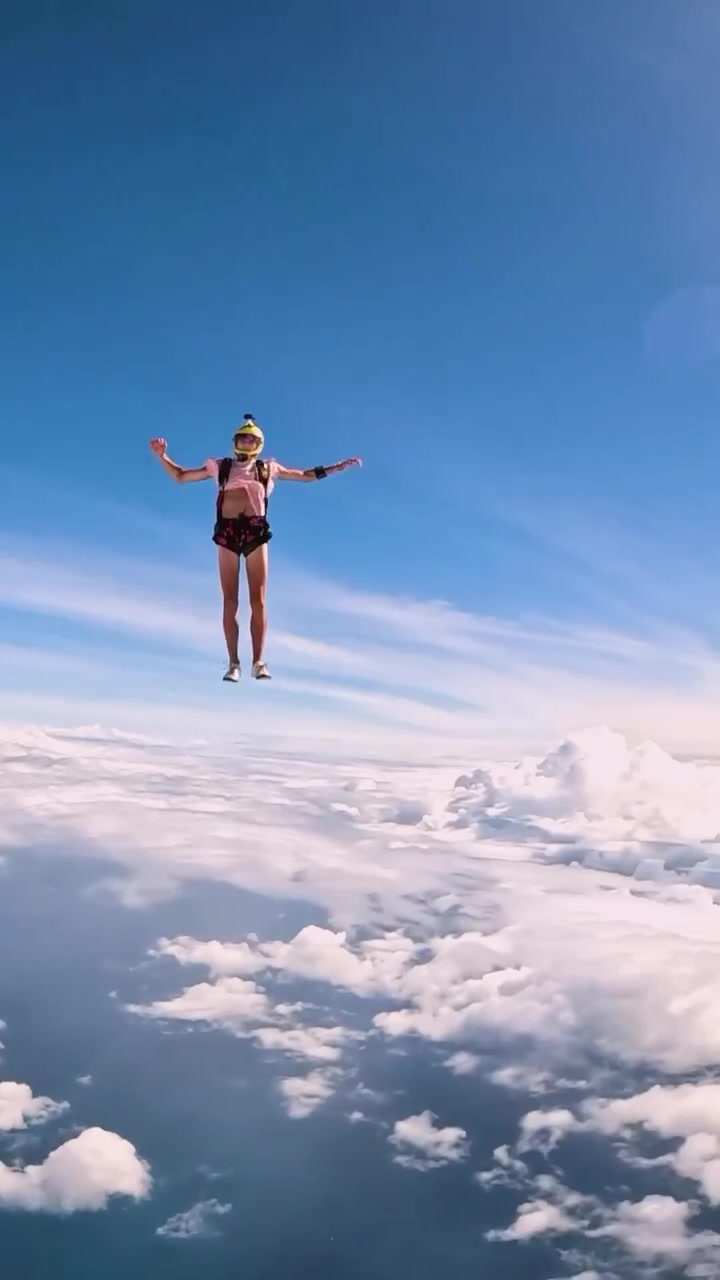
Plummeting Through the Clouds
The thrill of skydiving is hard to describe. But when you see it, you may feel the urge to leap yourself. A recent social video captures the essence of this. Even as the subject tumbles through a sky filled with fluffy white clouds, the expressions convey the same joy any freefall enthusiast might. Freefalling at over 100 miles per hour, skydiving is a rush. The person in the video is a skydiver. The skydiver wears a helmet and a specialized suit to protect against wind and temperature. The video captures the entire experience in vivid detail. But how does this extreme sport work, and what drives people to leap into the open sky?
Soaring Without Wings
Skydiving involves jumping from an aircraft, usually from an altitude of 10,000 to 14,000 feet, and freefalling for about a minute before deploying a parachute to safely return to the ground. The sport combines the rush of extreme heights and speeds with the tranquility of floating under a sky full of clouds. The skydiver in the video is one of the most distinctive parts of this experience. The person's aim is to stretch out their body and leap head first. Experts stress this position is crucial for achieving maximum speed and stability. The skydiver controls the motion with adjustments to their body and by employing body parts. Despite the high speeds that can cause nausaea, the person's demeanour appears entirely content.
The Gravity of Modern Adventure
The skydiving video is a testament to the growing trend of extreme sports. Freefall has gained popularity for its adrenaline rush, exhilaration, and challenge. Skydiving, once a niche activity, has evolved into a mainstream pastime enjoyed by enthusiastic individuals worldwide. This trend is partly due to the boom in social media, which has made such dazzling feats accessible. The passion for thrills reflects a shift in how people seek excitement. In urban settings, thrills are often confined to indoor activities, or even sports which are not the same. But when you see the image of a person who jumps into the open sky, there is a feeling that many would-be skydivers would feel. Although the initial experience has a steep learning curve, this feeling is worth the effort.
Human Canopy in the Sky
Freefalling, Freefall Butterfly
Freefalling goes beyond a simple drop. The skydiver, harnesses the force of gravity and utilises it for more than getting back to the ground. The person in the video uses different poses. But the most notable is the belly-to-earth position, which helps them maintain stability and achieve a faster speed. The skydiver’s arms are folded in the below picture.
Climb and Freefall
Before freefalling, skydivers climb to a height of 10,000 to 14,000 feet. Despite this seemingly extreme altitude, it reaches no higher than the ground. Competition allows the skydiver to jump from a low level of only 600 feet. A fall of this height is still quite dangerous. As they ascend, the skydiver and the pilot prepare for the skydiver’s leap. Once they reach the jumping point, the skydiver moves to the door so they may jump out, and as they do, the aircraft will continue to fly horizontally, while the skydiver falls and continues to fall until they pull the parachute, which is opened by their own theory.
The Discovery of Music on the Ground
The skydiver has tuned into music from the ground. This music is a technique to help the skydiver, known as the "ground track". It allows the skydiver to better navigate the descent. The skydiver also must navigate the descent. To help with this, the skydiver activates a tracking device. The skydiver receives information about the wind and altitude to navigate the descent.
The Clouds that Witness Adventurers
Roaring Wings
When the parachutist reaches a safe altitude, they pull the ripcord, deploying the parachute. Imagine the skydiver's canopy suddenly fills with blue. This is the canopy’s secret weapon: the parachute is designed with a steerable harness, allowing the skydiver to control their descent and maneuver. One type of parachute is the square canopies, which is more manageable. Their design allows for faster and more dynamic maneuvers. But the square parachutes are also more sensitive to the weather. The canopy is not only functional, but it is also designed for aesthetic purposes.
Grab a Parachute
Finding the Right Gear
If you’re considering a skydive, gear is crucial. Firstly, you'll need a parachute system. Most skydiving operations provide these, but if you're serious about the sport, you might want to invest in your own. Types of parachutes available include the increased distance ram-air canopy and the newer hybrid canopy, as well as the ram-air canopy. Don’t forget the helmet, goggles, and a skydiving suit. These are critical for safety and comfort.
Sourcing Your First Jump
- Choose a Reputable Drop Zone: If you've decided to make the leap, the first step is finding a reputable drop zone near you. The United States Parachute Association has a helpful directory. Look for an accredited drop zone with experienced instructors and a good safety record. Make sure you check the drop zone's equipment record and feedback from previous customers.
- Get Certified: Before you can solo skydive, you'll need to complete a certification course. This involves both ground and in-air training. Expect to spend a few hours learning the basics before you even step near a plane. The journey to becoming a certified skydiver offers various levels of skydiving.
- Static-Line Jump: This involves a static line attached to the airplane, which automatically deploys your parachute.
- AFF (Accelerated Freefall) Jumps 15,000 feet: This method involves jumping with an instructor, who will guide you in proper body position and deploy your parachute to stear you to the ground.
- Solo Jump: Once you’re certified, you can go solo and explore the sky at your own pace The sport has a learning curve. Becoming a licensed skydiver will take some effort. However, once obtained, you are ready for your first skydive.
Skydiving in the Future
The sport continues to innovate, with new technologies and techniques like wingsuit flying. As a more advanced form of skydiving, wingsuit flying allows skydivers to glide through the air, adding a whole new dimension to the experience. It requires even more advanced training and equipment. But the cost of the equipment is high. Skydivers can perform these stunts at different heights, but they may also crash. The sport of skydiving is a testament to the human spirit. The sport has gone from the battlefield to a recreational activity. Skydiving could become a more mainstream activity. The sport could see more innovation and modernization in the future. Skydiving will continue to be a source of thrill and excitement for many.
Questions readers ask
What kind of equipment do skydivers typically use to protect themselves during a jump?
Skydivers use specialized gear, including a helmet and a suit designed to protect against wind and temperature. The helmet helps shield the head from high winds and impacts, while the suit is tailored to minimize drag and maintain body heat during the freefall.
How do skydivers control their movement during freefall?
Skydivers control their movement by adjusting their body position and using their limbs. For example, stretching out the body and leaping headfirst helps achieve maximum speed and stability. They also use their arms and legs to make small adjustments, allowing them to maneuver through the air.
What is the typical altitude from which skydivers jump, and how long does the freefall last?
Skydivers usually jump from an altitude of 10,000 to 14,000 feet. The freefall itself lasts about a minute before the parachute is deployed, allowing the skydiver to safely return to the ground. Some competitive events allow jumps from as low as 600 feet, but these are much more dangerous.
Why has skydiving become more popular in recent years?
Skydiving has gained popularity due to several factors, including the thrill of the experience and the adrenaline rush it provides. Social media has played a significant role in making such feats more accessible and visible, inspiring more people to try the sport. Additionally, the trend reflects a broader shift in how people seek excitement, moving away from indoor activities and towards more extreme outdoor experiences.
What are the different positions a skydiver can take during freefall, and what are their purposes?
Skydivers can take various positions during freefall, with the most notable being the belly-to-earth position. This position helps maintain stability and achieve a faster speed. Other positions, such as the headfirst leap, are used to maximize speed and control. Each position serves a specific purpose in managing the skydiver's movement and stability during the fall.
What kind of preparation is involved before a skydiver makes a jump?
Before a jump, skydivers and their pilots prepare by ascending to the designated altitude, usually between 10,000 to 14,000 feet. Once they reach the jumping point, the skydiver moves to the door of the aircraft, ready to leap out. The aircraft continues to fly horizontally as the skydiver jumps, ensuring a smooth and controlled exit from the plane.
What is the significance of the belly-to-earth position in skydiving?
The belly-to-earth position is crucial for maintaining stability and achieving a faster speed during freefall. By lying flat on their belly, skydivers can control their body better, reduce drag, and experience a smoother, more stable flight. This position is often used to enjoy the thrill of freefall while ensuring safety and control.
Related deep dives
Similar reads based on topic and creator.



Recent articles
Fresh deep dives from the latest Reels we unpacked.


Comments
Be the first to comment.