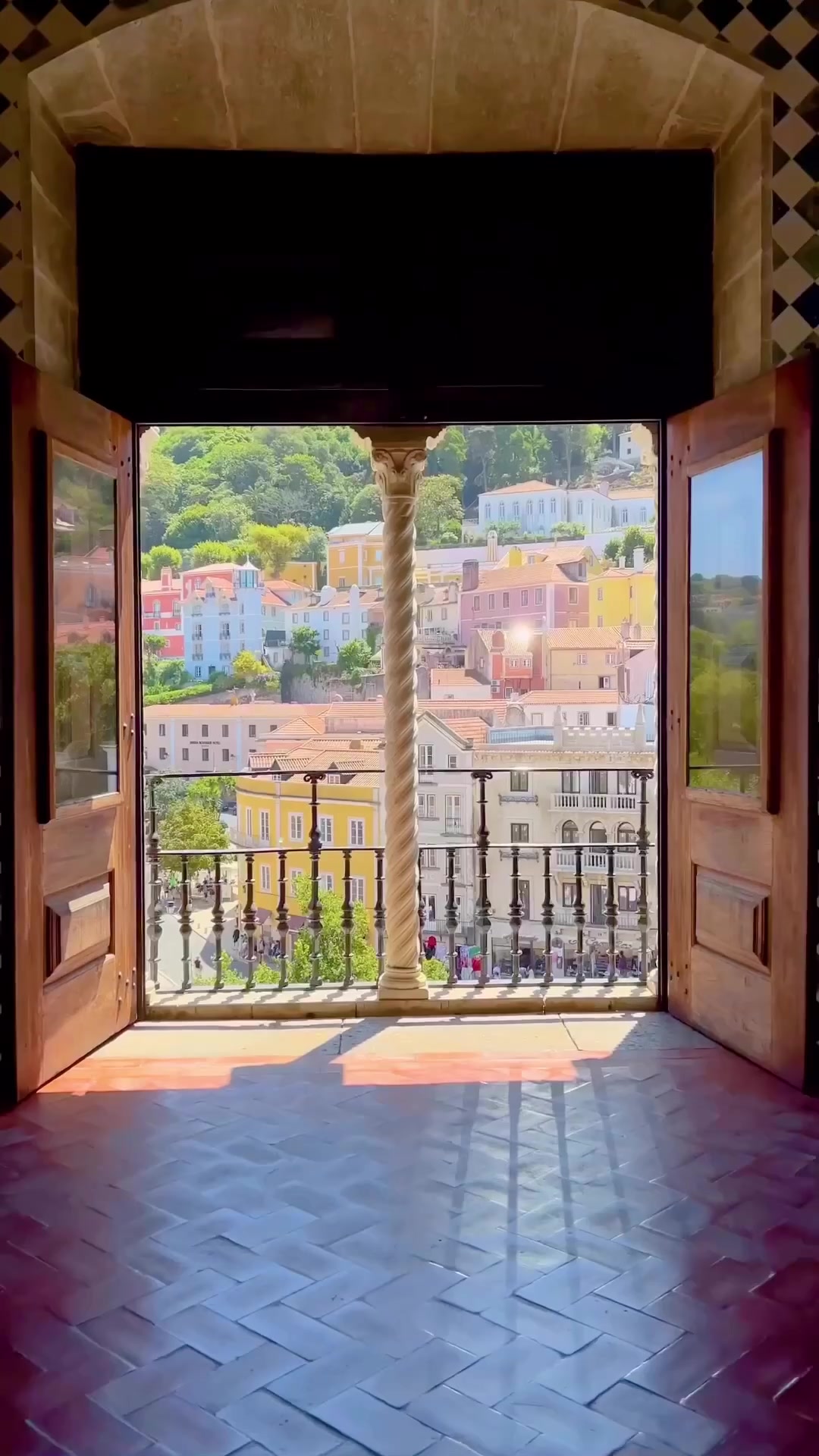
Sintra National Palace is a medieval royal palace in Portugal, noted for its rich history and intricate decorative art. The interior showcases extensive tilework with detailed scenes, intricate ceilings with painted panels, and architecturally significant features like arches, columns, and decorative fountains.
Sintra's Historic Jewel
Sintra National Palace is distinctive in its combination of Gothic, Manueline, and Mudéjar architectural elements, reflecting its centuries-long evolution. Throughout the centuries, royal occupants have added their own decorative influences, evident in the extensive tilework and painted panels on the ceilings. Built on a massive scale, the palace boasts an iconic conical chimney and unique “sawtooth” roofs. The tile art forms a visual chronicle of Portugal’s past, with depictions of scenes from its history. It is also known for its intricate carvings, graceful arches, and surprisingly well-preserved state rooms. Arches and columns support elaborate painted panels. The main hall is adorned with a striking chessboard-style floor. The extensive tilework of Sintra -- is a distinctive feature of the palace, also known as Azulejos. The Azulejo tiles are meticulously crafted with rich colors and detailed designs. These intricate tilework patterns bring the historical records of Portugal's eras to life. The ceiling decorations feature geometric patterns and intricate details. The swirling patterns in its painted ceilings, in conjunction with the tilework, create a vibrant mosaic that tells the history in every room. Decorative fountains line the corridors and gardens, serving both functional and aesthetic purposes. The fountains have intricate carvings and designs that add to the overall beauty of the palace. They were designed to provide water to the inhabitants, particularly important in a region with a high risk of water shortages. The fountains’ role in historic and modern gardens augments the palace’s visual charm.
Crucial to Sintra's tourism
Sintra is an important destination for tourists coming to Portugal, due in large part to the UNESCO World Heritage Site status. The palace itself is a crucial bridge to the medieval past of the country, offering visitors a unique and immersive experience. It has become a must-visit location for many tourists, famous for its colorful fairytale aesthetic and rich history. The palace is surrounded by lush gardens and verdant hills. The surrounding area, known as the Pena Park, is a national treasure that offers stunning views. The palace’s intricate design and vivid displays welcome tourists to immerse themselves in Portugal’s rich cultural heritage. Located at the heart of Sintra, it serves as the perfect starting point for exploring the rest of the town, which itself is a UNESCO World Heritage Site. The area is famous for its lush forests and well-preserved medieval architecture, and the palace is a focal point of the town. Tourists can stroll around Sintra and enjoy the small shops and local restaurants. Stretching from stone walls carved into the mountainside, Sintra's National Palace offers a visual art and history lesson, unlocking the region’s story. Visitors can explore the palace’s many chambers, each with its own unique tiles and paintings.
The Art of Portuguese Royal Living
Many of the rooms in the palace are large and adorned with ornate decorations, as befitting a royal dwelling. The Swirling intricate chimneys and sawtooth roofs of Sintra are unique architectural features, giving the place a distinctive personality. The tilted roofs give the palace a unique and picturesque silhouette. The tile work is not only limited to the walls and ceilings: it extends to the floors of several rooms. The tiles often depict scenes from Portuguese history, such as its maritime explorations. The grandeur of the palace is evident in every room, with elaborate carvings and ornate decorations. The floors of some rooms are decorated with intricate tilework, creating a distinctive visual impact, and serving as a reminder of the palace’s long and rich history.
Tile Work Showcases Portuguese History
The tilework at Sintra National Palace evokes Portugal's centuries of exploration. These tile designs tell the story of the country’s rich maritime history, showcasing the voyages of discovery and the capture of Ceuta. The scenery depicted is often intricate and detailed. The tiles depict ships, sea battles, and other scenes from Portugal’s maritime history, making the palace’s tilework a vivid visual narrative. The tilework is not simply a decorative element, it is a historical document. The historic stories and themes depicted include the Portuguese rule of Goa and the Battle of Aljubarrota.
The Palace's Lush Gardens
Much of the palace’s charm lies in its surrounding gardens, which complement and enhance the architectural beauty. The gardens offer stunning views of the surrounding landscape, including the Pena Park and its many castle spires. The gardens are equally rich in historical significance, providing a contrast to the ornate interior. The expansive gardens offer a serene escape, framing the palace’s exterior.
Visit the Palace
Begin your trip at the palace entrance for a panoramic view. You’ll have to enter the ticket window. If you are a tourist who plans to see many historical sites, consider an annual entry pass to the Sintra parks. Take a guided tour for a deeper dive into the history and art. Be sure to listen closely to the guide — each room and piece has a narrative about Portuguese history, art, and culture. Explore the towers and terraces during the day for panoramic views and photo-ops. But keep an eye on the sun and the season — the palace's white paint and reflective surfaces can be hot, and a camera bag can be burdensome in either summer or winter.
Questions readers ask
What makes Sintra National Palace's architecture unique?
The palace is unique because it combines Gothic, Manueline, and Mudéjar architectural styles. This blend reflects its long history, with each style adding its distinctive touch to the overall design. The combination of these styles is evident in the arches, columns, and tilework throughout the palace.
How do the decorative elements in Sintra National Palace tell the story of Portugal's history?
The tilework, known as Azulejos, is intricately designed with scenes from Portugal's past. These tiles tell a visual story of the country's history, making the palace a living history lesson. They are rich in color and detail, creating a vibrant mosaic that brings history to life.
What is the significance of the decorative fountains in the palace?
The decorative fountains in Sintra National Palace serve both functional and aesthetic purposes. They were designed to provide water, which was crucial in a region prone to water shortages. Additionally, their intricate carvings and designs enhance the palace’s overall beauty, adding to its allure.
Why is Sintra National Palace a must-visit destination for tourists?
The palace is a must-visit for tourists due to its rich history and unique architectural features. Its colorful fairytale aesthetic and vivid displays offer an immersive experience into Portugal’s cultural heritage. Additionally, its UNESCO World Heritage Site status and location in the heart of Sintra make it a perfect starting point for exploring the town and its surrounding lush gardens and forests.
Are there guided tours available at Sintra National Palace to understand the tilework better?
While the article does not specify guided tours, it is common for such historic sites to offer guided tours or audio guides to help visitors understand the intricate tilework and the history behind it. It would be a good idea to check the palace’s official website or contact them directly for more information on available tours.
Related deep dives
Similar reads based on topic and creator.




Recent articles
Fresh deep dives from the latest Reels we unpacked.




Comments
Be the first to comment.