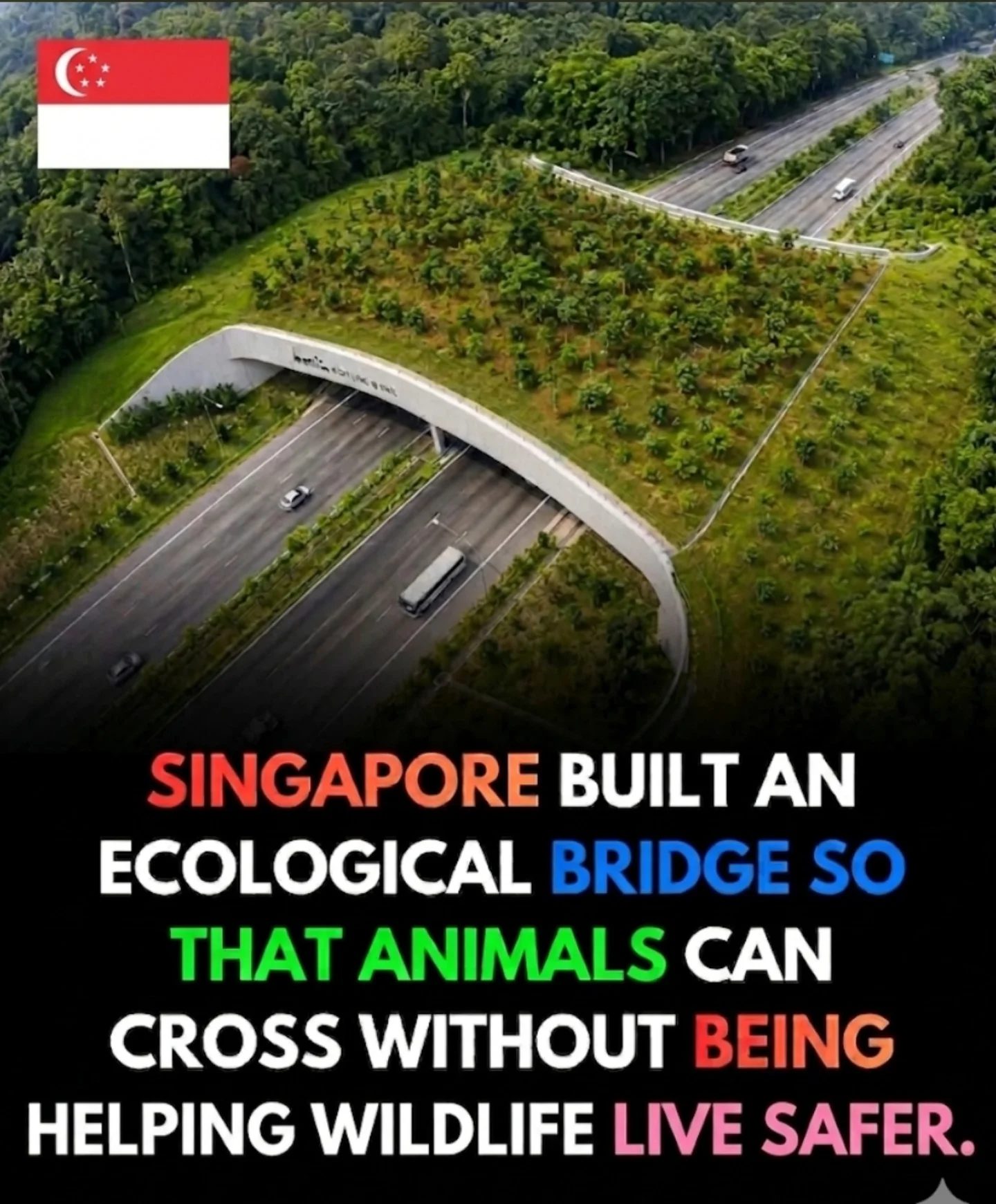
Ecological Bridge in Singapore: A Vital Wildlife Corridor
Singapore's ecological bridge, spanning the Bukit Timah Expressway (BKE), is a groundbreaking infrastructure project. Completed in 2013 at a cost of $16 million, this lushly vegetated structure is Southeast Asia’s first purpose-built wildlife crossing. Its primary goal is to reconnect the Bukit Timah Nature Reserve and the Central Catchment Nature Reserve, two crucial rainforest habitats that were divided by the expressway's construction in 1986. By reestablishing this natural corridor, the bridge plays a pivotal role in preventing habitat isolation, facilitating genetic exchange among native species, and significantly reducing wildlife casualties from vehicular collisions.
Context / Why this matters
The ecological bridge in Singapore is more than just a crossing; it is a lifeline for various wildlife species. The Bukit Timah Nature Reserve and the Central Catchment Nature Reserve were once continuous habitats, but the construction of the Bukit Timah Expressway in 1986 fragmented them. This fragmentation posed significant challenges for wildlife, including habitat isolation and increased risks of roadkill. The bridge aims to mitigate these issues by providing a safe passage for animals, ensuring the continuity of their natural habitats, and promoting biodiversity.
Main Discussion
The Design and Construction
The ecological bridge is not just a simple structure; it is meticulously designed to mimic the natural habitat of the surrounding forests. The bridge is lushly vegetated, which helps to attract and guide wildlife across the expressway. This design minimizes the disruption to the animals' natural behavior and ensures that they feel safe using the crossing. The bridge spans the Bukit Timah Expressway, providing a continuous corridor for wildlife to move between the Bukit Timah Nature Reserve and the Central Catchment Nature Reserve.
The Impact on Wildlife
The ecological bridge has had a profound impact on various wildlife species. Animals such as the critically endangered Sunda pangolin, the common palm civet, and various rare bird and insect species have been documented actively utilizing the crossing to safely traverse the landscape. The bridge has successfully reduced wildlife casualties resulting from vehicular collisions, thereby ensuring the survival and well-being of these species.
The Role in Biodiversity Conservation
The ecological bridge plays a crucial role in biodiversity conservation. By preventing habitat isolation, the bridge allows for the necessary genetic exchange among native species. This genetic exchange is vital for maintaining genetic diversity, which is essential for the long-term survival and adaptability of species. The bridge also helps to restore the natural ecosystem balance by allowing animals to move freely between the two reserves, thereby promoting a healthier and more sustainable wildlife population.
Practical Tips
-
Understand the Importance of Wildlife Crossings: Recognize the role that wildlife crossings like the ecological bridge in Singapore play in maintaining biodiversity and ensuring the survival of various wildlife species.
-
Sustainable Development Practices: Embrace sustainable development practices that consider the impact on local wildlife and habitats. This can include integrating wildlife crossings into infrastructure projects, especially in areas with significant wildlife populations.
-
Community Engagement: Engage the local community in conservation efforts. Educate them about the importance of wildlife crossings and encourage their participation in wildlife monitoring and habitat restoration projects.
-
Support Conservation Initiatives: Support and contribute to conservation initiatives and organizations that work towards the protection and restoration of natural habitats. This can include donating to wildlife conservation funds, volunteering for habitat restoration projects, and advocating for policies that promote biodiversity conservation.
Important Takeaways
The ecological bridge in Singapore is a testament to the positive impact that thoughtful infrastructure can have on wildlife and biodiversity conservation. By reconnecting fragmented habitats, the bridge not only ensures the survival of various wildlife species but also promotes a healthier and more sustainable ecosystem. The success of this project highlights the importance of integrating wildlife considerations into modern development practices, emphasizing the need for a harmonious relationship between infrastructure and nature.
Conclusion
The ecological bridge in Singapore stands as a beacon of hope for wildlife conservation and sustainable development. It serves as a model for future infrastructure projects that aim to minimize their impact on local ecosystems while promoting biodiversity. As urbanization and infrastructure development continue to expand, it is essential to adopt similar initiatives that prioritize the well-being of wildlife and the conservation of natural habitats. By doing so, we can ensure a more sustainable future for both humans and wildlife.
Questions readers ask
What is the primary purpose of Singapore's Wildlife Bridge?
The primary purpose of Singapore's Wildlife Bridge is to reconnect fragmented rainforest habitats across the Bukit Timah Expressway, enabling safe passage for native species and reducing roadkill incidents.
Which habitats does the wildlife bridge in Singapore connect?
The wildlife bridge connects the Bukit Timah Nature Reserve and the Central Catchment Nature Reserve, two critical rainforest habitats that were separated by the expressway's construction.
How does the design of Singapore's Wildlife Bridge support its purpose?
The wildlife bridge is purposefully designed to mimic the natural habitat, with lush vegetation that ensures a safe and familiar passage for various animals, encouraging their use of the crossing.
What is the significance of the Wildlife Bridge in reducing roadkill risks?
By providing a safe passage for wildlife, the bridge significantly reduces the risk of wildlife casualties from vehicular collisions, helping to preserve local biodiversity.
When was the Wildlife Bridge in Singapore constructed and what was the cost?
The Wildlife Bridge was completed in 2013, at a cost of $16 million, making it a substantial investment in wildlife conservation and infrastructure.
What makes Singapore's Wildlife Bridge unique in Southeast Asia?
Singapore's Wildlife Bridge is unique because it is Southeast Asia’s first purpose-built wildlife crossing, serving as a model for eco-friendly infrastructure in the region.
Related deep dives
Similar reads based on topic and creator.




Recent articles
Fresh deep dives from the latest Reels we unpacked.




Comments
Be the first to comment.