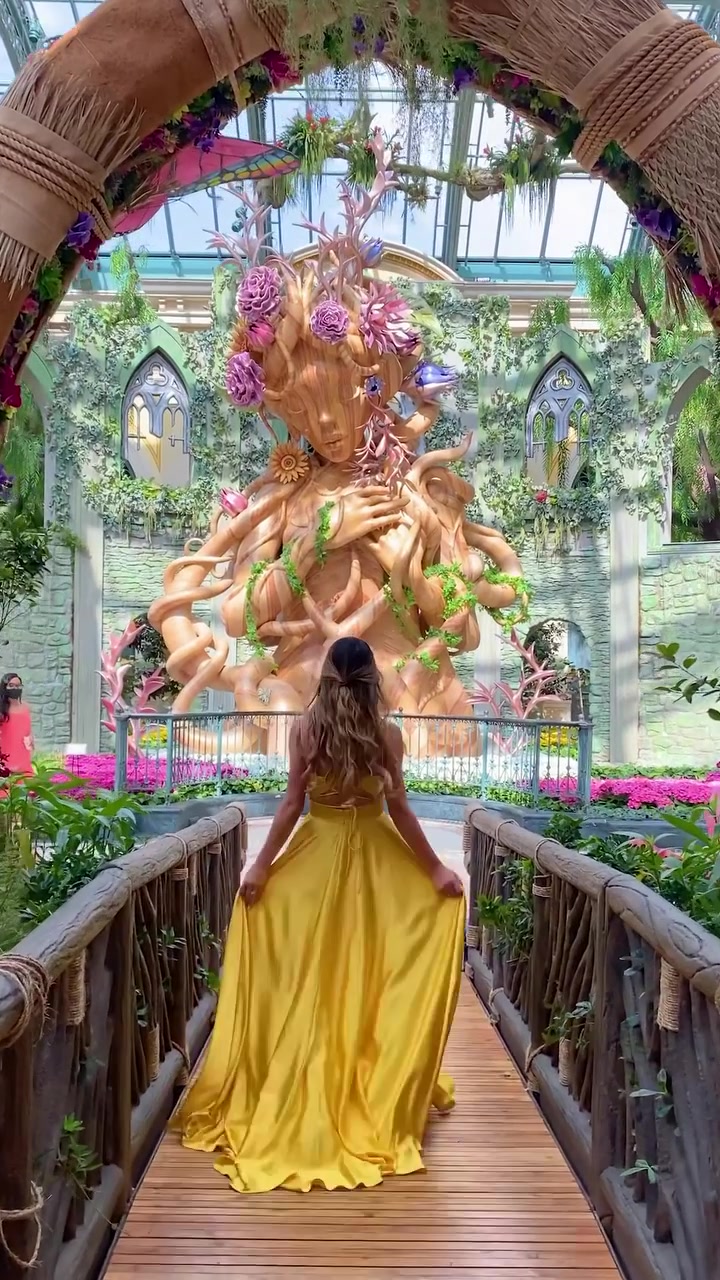
Her dress flows as she walks. A garden’s airy path, all green and rich, leads to a floral sculpture. The most striking feature? The sculpture is made of flowers.
The marriage of floral sculpture and summer couture.
Floral sculptures—artfully crafted arrangements of flowers, vines, and branches—are a delightful blend of artistry and botany. These are not mere flower arrangements; they are intricate structures designed to tell a story or evoke a particular feeling. Often named as floral installations, garden sculptures, or living sculptures, artists create these to combine nature and beauty to a captivating extent. The flowers, vines, and leaves create detailed faces and figures. Creating a sculpture from organic material offered a challenge — the artist must ensure the sculpture remains intact and looks fresh for a few days. The woman’s dress in a warm, sunny shade of yellow adds a playful, unhurried dimension to her surroundings. The colors and patterns of the sculpture contrast but complement the yellow dress.
Why indulge in floral couture?
The interplay between fashion and nature is not new — biophilic design has been a popular trend in interior design for years. The synergy of elements strikes a deep resonance for us. The rise of environmentally conscious design sees a sustained interest in incorporating organic materials. Floral sculptures merge beauty and sustainability, two key values of the present day. A botanic garden today features a floral sculpture — the wide appeal of this blend may reflect broader cultural shifts. As a form of gardening and floral art, it demands a sense of patience and persistence. This demands and combines botanical knowledge. Artistry is involved, too. The results are a testament to the artist’s creativity and dedication. But, the creation isn’t just a display in a physical space; it also represents a commitment to authenticity and the love of nature.
Floriography
Floriography, is the language of flowers and has a history that dates back to the 18th century. Each flower has a distinct meaning. The symbolic language of flowers has been used to convey emotions, sentiments, and messages for centuries. In some floral sculptures, the choice of flowers can tell a story, or convey a specific message.
The Art of Arrangement
Presenting a purely organic sculpture is a challenge. The challenge of creating a floral sculpture involves a delicate balance of artistic vision, botanical insight, and technical skill. Artists must consider the types of flowers and plants they can use, their durability, and how they will interact with one another. The artist must also consider the environment where the sculpture is going to be presented. The sculptures are often built in the actual garden, so making sure of the environment is paramount — as sunlight, wind, and rain can affect the piece.
The Impacts
A study by researchers at NASA on the benefits of nature on human mood revealed that natural environments significantly reduce negative emotions. That’s why many people enjoy gardening or visiting gardens. Floral sculptures therefore are beautiful not just to look at, but they also hold psychological benefits. They elevate the garden experience from a visual feast to an immersive one.
A garden experience
The sculpture is an art all by itself. The design brings a whole new world of fantasy. It is a beautiful example of what happens when the world of flowers and fashion collide. The large, ornate floral sculpture showcased in the video. The woman’s dress complements the sculpture and the surrounding environment. The sculpture is more than just a decoration; it is a central piece to the setting of the scene.
The art of floral couture
A floral sculpture experience is accessible to everyone, whether as a spectator or a participant. Here are some practical steps to make sure you are part of this experience:
- Seek Local Gardens: The first step is to visit a local garden to enjoy the beauty of flowers. Look at their twitter or Instagram pages. If you are lucky, they may have a floral sculpture exhibit. You will get to enjoy the scenery. You are looking at a unique, well-produced piece. You will also get to enjoy the company of other people who like the outdoors.
- Visit Art Fairs: Art fairs are a place to see a unique piece. They also have workshops for beginners. You will get to enjoy the scenery and meet the artist who made the piece. You could also take a class to learn about the process.
- Buy a Book: If it is hard to leave the house, another option is to grab a book. There are several books on the market that describe how to make a floral sculpture. Some are for beginners, while others are for advanced artists. Go for the one that best suits your skill set.
- Find a Photographer: A floral sculpture experience is incomplete without a proper photographer. You want someone who has experience taking pictures in the great outdoors. If you have a friend who is good with a camera, you can ask for assistance. The photo will be the keepsake of the experience.
- Utilize Social Media: There are many online communities where you can find people who love floral sculptures. It's a great way to learn about new exhibits, connect with artists, and share your own photos.
Questions readers ask
What exactly is a floral sculpture and how is it different from a regular flower arrangement?
A floral sculpture is an intricate, three-dimensional structure made from flowers, vines, and branches. Unlike regular flower arrangements, these sculptures are designed to tell a story or evoke specific emotions. They often feature detailed faces and figures, making them a blend of artistry and botany. Regular arrangements are generally simpler and more decorative, while sculptures are more complex and thought-provoking.
How do artists manage to keep floral sculptures intact and fresh for a few days?
Creating a floral sculpture from organic materials is challenging. Artists must carefully select flowers and plants that are durable and can withstand environmental factors like sunlight, wind, and rain. They also need to consider how different elements will interact with one another. The sculpture is often built in the actual garden, so the environment plays a crucial role in its longevity and freshness.
What is the significance of biophilic design in floral sculptures?
Biophilic design, which integrates nature into spaces, has been a popular trend in interior design for years. Floral sculptures embody this concept by merging beauty and sustainability. They reflect a growing interest in environmentally conscious design and resonate deeply with people's connection to nature, making them a meaningful addition to any garden exhibit.
Can you explain the concept of floriography and its role in floral sculptures?
Floriography is the language of flowers, where each flower has a distinct meaning. It dates back to the 18th century and has been used to convey emotions and messages. In floral sculptures, the choice of flowers can be intentional to tell a story or convey a specific message, adding a layer of depth and symbolism to the artwork.
What kind of skills and knowledge are required to create a floral sculpture?
Creating a floral sculpture requires a blend of artistic vision, botanical knowledge, and technical skills. Artists need to understand the types of flowers and plants that can be used, their durability, and how they will interact with one another. They must also consider the environment where the sculpture will be displayed, as factors like sunlight, wind, and rain can affect the piece.
Related deep dives
Similar reads based on topic and creator.


Recent articles
Fresh deep dives from the latest Reels we unpacked.
Comments
Be the first to comment.