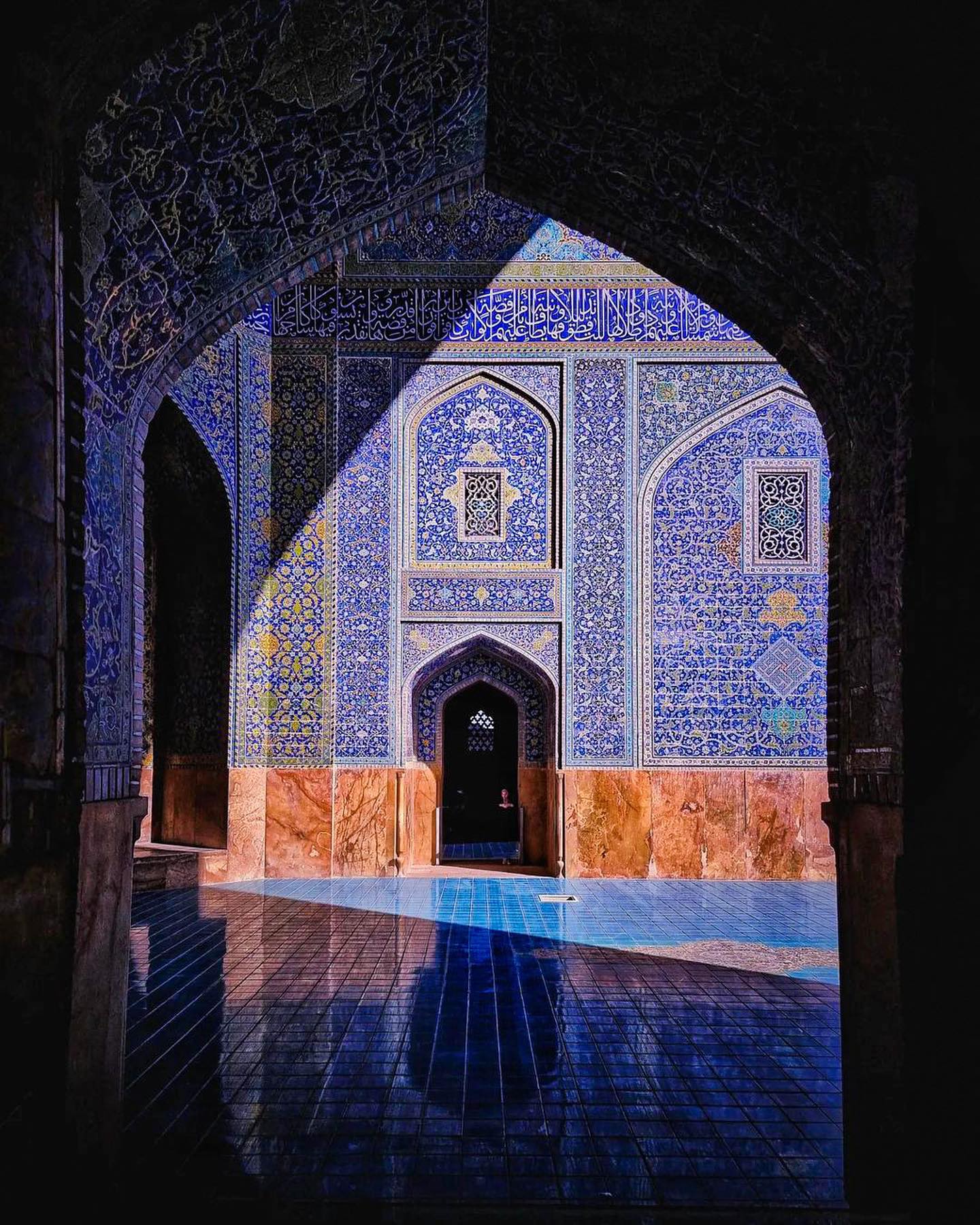
Breathtaking Tilework
The Sheikh Lotfollah Mosque, nestled in the heart of Isfahan, Iran, is an architectural marvel. Commissioned in the 17th century, it is known for the intricacy of its tilework and the vibrancy of its blues and turquoise hues. These visual elements converge to capture an unrivaled sense of grandeur. The mosque was constructed during the reign of Shah Abbas II, a period marked by a flourishing of arts, culture, and architecture in Iran. This structure ranks among the most architecturally significant, attracting visitors and architecture enthusiasts from around the world. At the heart of this mosque, this exquisite tilework takes center stage, and the most prominent color is the vibrant blue and turquoise, creating a mesmerizing sight. This mosque stands out from other 17th-century mosques by centering this blue color palette. Due to this palette and intricate tilework, the overall grandeur of the mosque is highlighted. These details make it one of the most stunning and significant mosques in Iran and beyond.
Unique among Iran's architectural marvels
Tourists flock to Iran to explore its ancient mosques and palaces. Notable destinations include the Naqsh-e Jahan Square, also referred to as Imam Square, which features other iconic buildings such as the Shah Mosque. However, the Sheikh Lotfollah Mosque stands out among these historical and architectural landmarks. It differs from many of its counterparts due to its stunning tilework, intricate decorations, and the centering color palette. Unlike mosques that are often noted for their vastness or monumental scale, the Sheikh Lotfollah Mosque is renowned for the intricate artistry of its interior. While most mosques from the same era were designed for grand public prayers, this one has a more private feel. This makes it one of Iran's most unique architectural marvels.
Architectural Splendor
The mosque's design showcases the height of 17th-century Persian architecture. Its exterior features a grand dome and intricate arches, while the interior showcases the fine tilework that the mosque is famous for. Shah Abbas II commissioned the mosque and the inclusion of intricate tilework. This mosque's blue and turquoise tilework are as famous as the mosque itself. Some shapes used in the tilework are geometric, while others are abstract. This creates a visual harmony that makes the interior of the mosque a sight to behold. The mosque's grand dome, a hallmark of Persian Islamic architecture, also draws the eye. Decorated with vibrant tilework, the dome showcases the intricate design and craftsmanship found throughout the mosque. The dome's size and grandeur make it a standout feature
The Grand Tile Design
At the interior and exterior, the intricate tilework is the star of the show. The tile compositions are vibrant blue and turquoise, with intricate patterns and designs. These tiles serve as more than just decoration; they enhance the spiritual experience and create a peaceful atmosphere, creating a distinct feel. The tilework is often created in order to give a stunning, colorful view to the visitor. Seeing this in person gives the viewer a new perspective on the tilework, enhancing the view and grandeur of the mosque. The design of the tilework and the color also have a practical function, traditionally contributing to the coolness of the mosque. They keep the air relatively cooler, which is a unique feature of the building.
A Timeless Masterpiece
The Sheikh Lotfollah Mosque is more than just an ancient mosque with intricate tilework; it is a timeless masterpiece. Despite having been constructed 330-400 years ago, this mosque continues to attract visitors from around the world, making it a landmark of the 17th-century Persian Empire. The mosque continues to captivate visitors with its artistry. The detail and craftsmanship are outstanding, and it is often used as a learning experience to understand 17th-century Persian art.
What to Watch for at Sheikh Lotfollah
Plan a trip to Isfahan, Iran, to explore the stunning Sheikh Lotfollah Mosque. To ensure you get the most out of your visit, you need to know what to look out for. * Interior: Start by exploring the mosque's interior, where you will be mesmerized by its intricate tilework. * Exterior: Take a walk around the mosque to see its stunning dome and arches, which are the exterior's standout features. * Tilework: The tilework is made of vibrant blue and turquoise. Watch out for the intricate decorations, geometric shapes, and abstract patterns that make the mosque's tilework a sight to behold. * Color: Pay attention to the vibrant colors used in the mosque's design, including the vibrant blue and turquoise tilework. * Time: The mosque can be warm, and the best visiting experience is during the colder months.
How to approach Sheikh Lotfollah
The Sheikh Lotfollah Mosque's splendor can be a stirring experience, especially for those interested in history and architecture. Although the intricate tilework creates a stunning interior, it doesn’t hold the feel of a typical mosque. The mosque’s interior design is unique, with the deliberate centering of the color palette and intricate tilework. Since this mosque was traditionally meant for private prayers, the intimate feel might surprise some tourists. Additionally, exploring the mosque's exterior, with its stunning dome and arches, provides a different perspective on the mosque. Visitors must also plan their trip to avoid the overwhelming crowds. The best time to visit is during the cooler months, as the mosque can get very warm, as the tilework can hold heat.
Questions readers ask
What makes the Sheikh Lotfollah Mosque unique among other 17th-century mosques in Iran?
The Sheikh Lotfollah Mosque stands out due to its vibrant blue and turquoise tilework, intricate decorations, and a more intimate, private feel compared to other mosques from the same era. While many mosques are known for their vastness and monumental scale, this mosque is renowned for its exquisite interior artistry, making it a unique architectural marvel.
Who commissioned the Sheikh Lotfollah Mosque, and why is it significant?
The mosque was commissioned by Shah Abbas II during the 17th century, a period known for its flourishing arts, culture, and architecture in Iran. Its significance lies in its architectural grandeur and the intricate tilework, which has made it a major attraction for visitors and architecture enthusiasts worldwide.
What is the significance of the blue and turquoise color palette in the mosque's design?
The blue and turquoise color palette is central to the mosque's design and sets it apart from other 17th-century mosques. This color scheme, along with the intricate tilework, creates a mesmerizing sight and enhances the overall grandeur of the mosque, making it one of the most stunning architectural marvels in Iran.
Can visitors explore the interior of the Sheikh Lotfollah Mosque, and what can they expect to see?
Yes, visitors can explore the interior of the mosque. They can expect to see breathtaking tilework with vibrant blue and turquoise hues, intricate patterns, and a grand dome decorated with stunning tilework. The interior design creates a peaceful and spiritual atmosphere that is truly awe-inspiring.
How does the Sheikh Lotfollah Mosque compare to other notable landmarks in Isfahan, such as the Shah Mosque?
While the Shah Mosque is also a significant landmark in Isfahan, the Sheikh Lotfollah Mosque stands out due to its unique tilework, intricate decorations, and more private, intimate feel. The Shah Mosque is known for its vastness and grandeur, while the Sheikh Lotfollah Mosque is celebrated for its exquisite interior artistry, making it a distinct architectural marvel.
What kinds of tiles and patterns are used in the mosque's design, and what do they represent?
The mosque features vibrant blue and turquoise tiles with intricate patterns and designs. These tiles are not only decorative but also enhance the spiritual experience and create a peaceful atmosphere. The patterns are a mix of geometric and abstract shapes, contributing to the visual harmony and grandeur of the mosque.
How does the mosque's grand dome contribute to its overall architectural splendor?
The grand dome is a hallmark of Persian Islamic architecture and a standout feature of the mosque. Decorated with vibrant tilework, it showcases the intricate design and craftsmanship found throughout the mosque. The dome's size and grandeur make it a focal point, drawing the eye and adding to the mosque's overall architectural splendor.
Related deep dives
Similar reads based on topic and creator.




Recent articles
Fresh deep dives from the latest Reels we unpacked.


Comments
Be the first to comment.