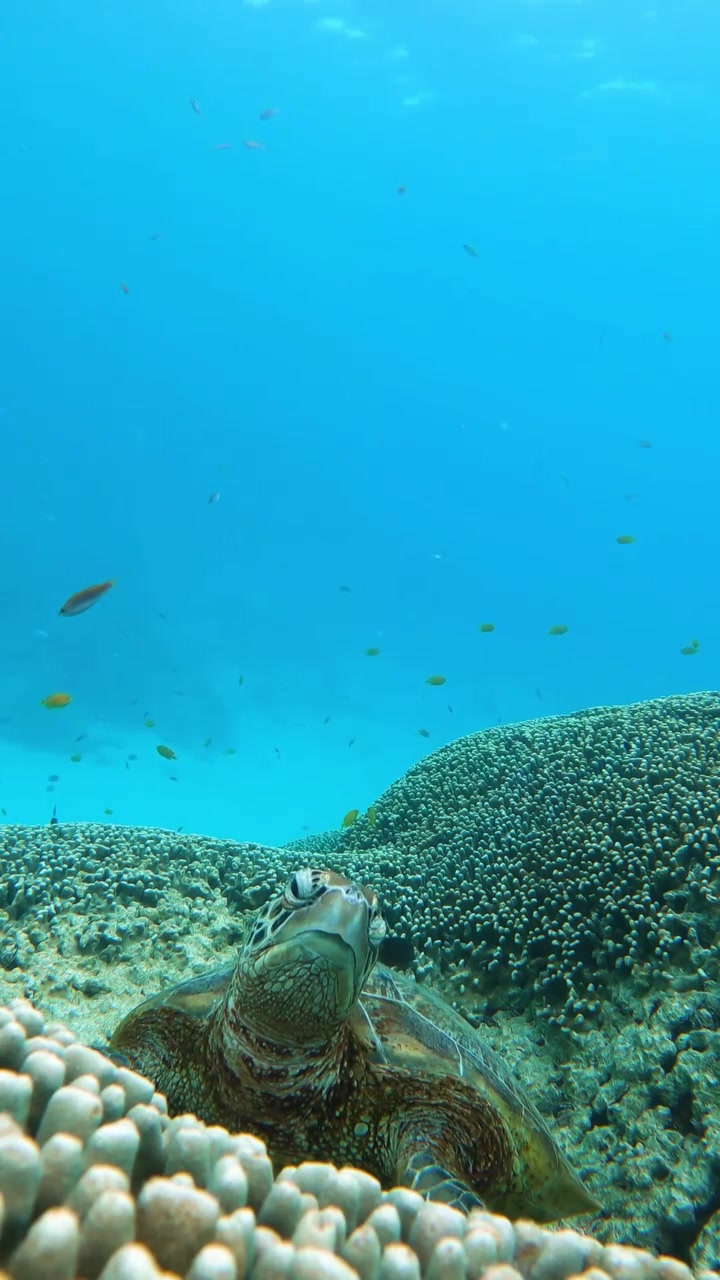
The Silent Majesty of the Coral Reef Visitor
Marine life is a popular source for exquisite visual delights. In underwater realms, sea turtles are elegant creatures, embodying resilience and grace. There is little that compares to the gentle presence of a sea turtle amidst the vibrant hues of a coral reef. This focal point illustrates a marine scene that invites curiosity and respect. Given the scarcity of information, this article focuses on the allure and ecological importance of sea turtles.
Aquatic Grace in a Fragile World
Sea turtles are large, slow-moving marine reptiles with unique shell structures, front flippers, and fin-like hind legs. There are seven species of sea turtles. These creatures can vary significantly in size and appearance, from the ginormous the leatherback turtle to the diminutive Kemp's ridley. Sea turtles are incredibly well-adapted to life in the ocean. Their streamlined bodies, powerful flippers, and the ability to hold their breath for extended periods allow them to navigate both shallow coastal waters and the deep open sea. Sea turtles play a crucial role in maintaining the health of marine ecosystems. Their grazing on seabed vegetation helps to control sea grass and algae which keeps the reef clean. The feeding habits of sea turtles help to maintain the health of coral reefs. These marine giants are also essential to beach ecosystems, as their nesting activities help to aerate the sand and support dune vegetation. Some turtle species, such as the hawksbill turtle, have specialized diets that contribute to coral reef health by feeding on sponges and other organisms that might otherwise overgrow and smother coral.
The world beneath the waves
Sea turtles hold a special place in human culture and conservation priorities. Like whales, they are some of the most recognizable marine animals. Turtle shells and eggs have long been part of human diets and medicines. Vintage stories have often celebrated the turtle's symbolism, from its longevity to its association with wisdom. It is impossible to know when humans first began to marvel at the grace of sea turtles. Modern culture references also draw from the symbolism of sea turtles. The animal is prevalent in marine-themed literature, movies, and art. It also appears in some cartoons and kids' shows. Across these mediums, sea turtles are often portrayed as wise, friendly creatures.
The Green Sea Turtle
Green sea turtles, known as Chelonia mydas, are one of several species of sea turtles. These reptiles display some intriguing traits. First, these turtles have a distinctive serrated or saw-edged shell, on which the upper shell and the lower shell have five lateral scutes and four costa scutes. Green sea turtles are also notable for their diet, which is mostly herbivorous. Despite their name, green sea turtles are not always green. Instead, their shell and skin colour is typically brown or olive. In some contexts, green sea turtles can be called black turtles, particularly when seen on the western coast of Latin America. Their scientific name refers to the greenish fat seen in these turtles.
The Threats Turtles Face
The lives of sea turtles are at risk due to human activity. Both in and out of water, these creatures face many obstacles. Among the most pressing threats are:
- Accidental catch (bycatch) in commercial fishing gear. Entanglement in fishing nets and longlines, and ingestion of hooks and other fishing gear often kill or injure sea turtles.
- Loss and degradation of marine and coastal habitats, especially coral reefs, mangroves and nesting beaches, which are vital for sea turtle survival and reproduction.
- Over harvest of eggs and adult turtles, often illegally.
- Climate change which impacts nesting beaches and habitats, and alters ocean currents and food availability.
- Boating and shipping activity causing collisions with ships and other vessels.
- Stranding on debris such as fishing gear can also harm turtles.
- The ingestion of marine debris can cause internal blockages and death.
- These turtles can become trapped or entangled in discarded plastic.
- Water pollution can cause illness to turtles, especially in coastal areas which receive high levels of fertilizers, pesticides, and other contaminants.
- Corals are threatened by rising water temperatures, which cause bleaching events. Bleaching can lead to the death of corals, as well as the destruction of habitats for other marine life.
Bringing The Coral Reef Visitor To Life
Venturing to see sea turtles in their environments offers a unique experience. There are several ways to encounter sea turtles. Here are some tips to see these wonders responsibly.
- Visit in the Right Season: Timing your visit right can boost your chances of seeing sea turtles. However, turtle nesting and migration patterns can vary drastically by species and location. Researching the optimal time of year to see turtles is important.
- Choose the Right Location: Sea turtles exist in waters all over the world, and choosing the right location is important. Some of the most popular spots include:
- Akumal Beach in Mexico. This is popular and home to many species.
- Australia's Great Barrier Reef. This reef is a diverse coral reef which houses one of the most diverse marine life in the world, and provides a good habitat for turtles.
- Hawaii. The islands provide for many species such as the hawksbill and the green turtle. The islands' beaches are also prominent nesting sites for some green turtles.
- Florida and the Caribbean Sea. The high population of green and loggerhead sea turtles also provides a great environment for sea watching.
- Costa Rica. This country is known for both the conservation efforts it makes and its nesting and habitat sites.
- Seychelles. These islands are famous for their turtle breeds.
- Book a Recommended Tour Guide: When you arrive at your destination, look for reputable tour operators who prioritize sustainability and animal welfare. Be sure to choose an ethical tour that prioritizes the welfare of the turtles and the environment over profits. Check that the tour is safe for turtles, and that your guide is knowledgeable and experienced. You should avoid tours that involve touching or feeding sea turtles, as these activities can harm these animals.
- Easing the Impact on Turtles: Activities such as snorkeling can be considered. However, if this is the choice, please approach these animals from as far a distance as possible, to avoid disturbing them. If this is an underwater experience, be sure to swim slowly and avoid sudden movements. Use eco-friendly sunscreen. When you dive, avoid using environmentally harmful sunscreen. Choose reef-safe products that do not contain octinoxate or oxybenzone, which can damage corals and marine life. Be sure to follow guidelines and guidelines for turtle conservation.
The Enduring Enchantment of Sea Turtles
Brush off the nonchalance of seeing sea turtles in nature. It is exquisite to spend time swimming with these giants. It’s a delicious visual and emotional experience, swimming in sunset-lit water. One memorable surge of water gives a split-second glimpse of the turtle's elegant form.
Questions readers ask
What are the seven species of sea turtles mentioned in the article?
The article mentions seven species of sea turtles, although it only names two: the leatherback and the Kemp's ridley. The other five species are not specified, but they include well-known types like the green sea turtle, hawksbill, loggerhead, olive ridley, and flatback.
How do sea turtles contribute to the health of coral reefs?
Sea turtles help maintain coral reef health in a couple of ways. Their grazing on seabed vegetation controls sea grass and algae, keeping the reef clean. Additionally, some species like the hawksbill turtle feed on sponges and other organisms that could otherwise smother coral.
What makes sea turtles so well-adapted to life in the ocean?
Sea turtles have several adaptations that make them well-suited to marine life. Their streamlined bodies and powerful flippers allow them to navigate various ocean environments. They can also hold their breath for extended periods, enabling them to dive deep and stay underwater for long durations.
Why are sea turtles important to beach ecosystems?
Sea turtles play a significant role in beach ecosystems through their nesting activities. When they nest, they aerate the sand, which helps support dune vegetation. This process is crucial for maintaining the health and stability of coastal dunes.
What is unique about the green sea turtle's shell and diet?
The green sea turtle, or Chelonia mydas, has a distinctive shell with a serrated or saw-edged appearance. Unlike many other sea turtles, the green sea turtle is primarily herbivorous, feeding mainly on sea grass and algae. Their name comes from the greenish color of their fat, not their shell or skin, which are typically brown or olive.
How have sea turtles been depicted in human culture?
Sea turtles have been celebrated in various forms of human culture for centuries. Historically, they have been part of human diets and medicines, and their symbolism often represents longevity and wisdom. In modern times, sea turtles appear in marine-themed literature, movies, art, cartoons, and kids' shows, often portrayed as wise and friendly creatures.
Related deep dives
Similar reads based on topic and creator.




Recent articles
Fresh deep dives from the latest Reels we unpacked.


Comments
Be the first to comment.