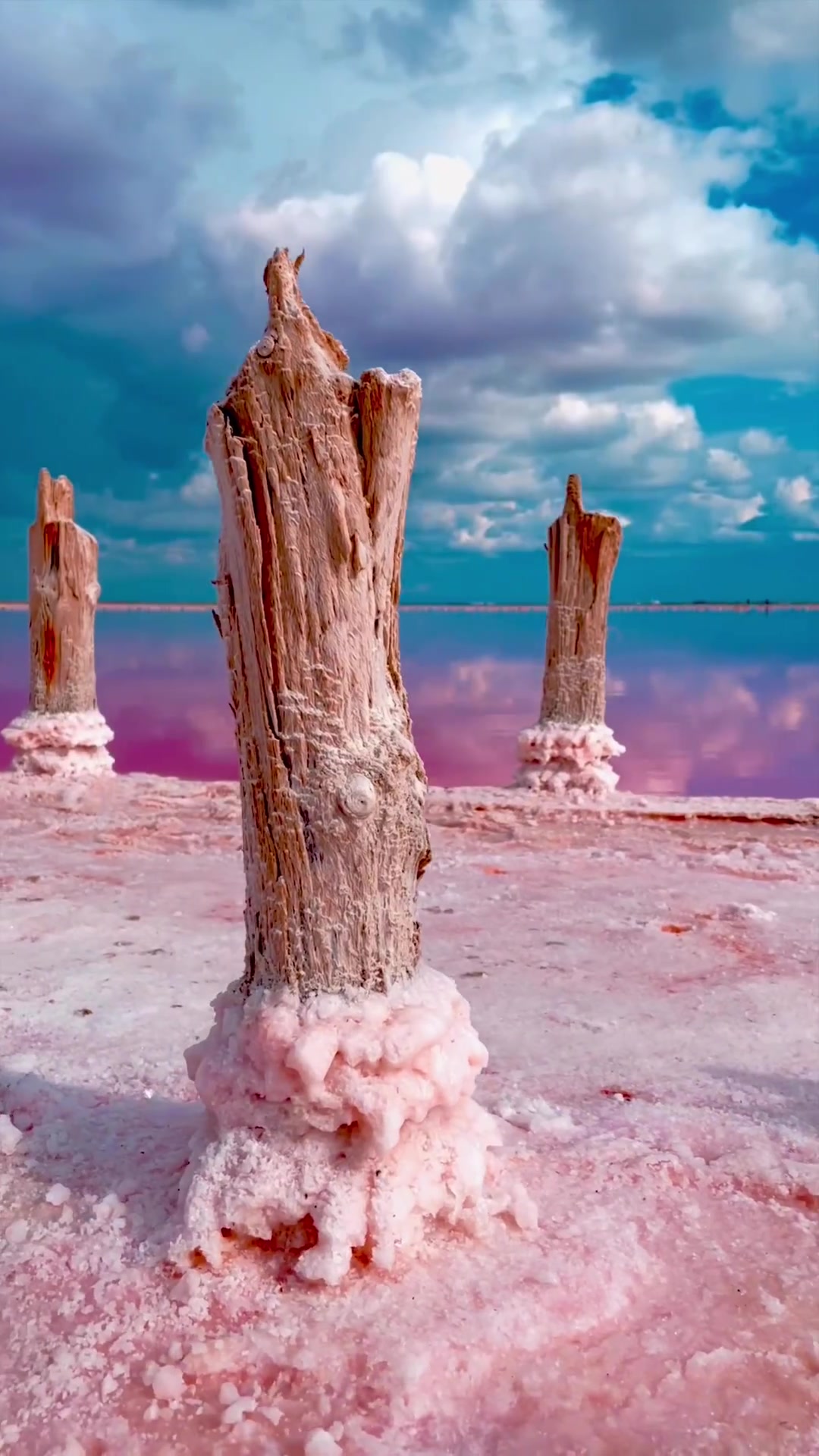
The pink lake at Sasyk-Sivash, Crimea, looks like a mirage. That vibrant color wasn't always visible. "To catch these colors, you need to arrive at the end of summer or early September," revealed @dem_ev, who shared his experience. The place is a shallow pink saltwater lagoon sits on the shores of the Black Sea. Unique geological and biological processes paint the lagoon pink. The color comes primarily from a microorganism (a type of Dunaliella salina) that thrive in its saline environment, producing a reddish-orange pigment. The unique microbe creates a stunning contrast, the pink water and blue sky give the place a surreal appearance. The white salt that forms the lake's bed adds to this ethereal setting. When sunlight reflects off the celestial blue, it creates a picturesque view — a palette only nature could paint.
Crystallizing at Sasyk-Sivash
The Sasyk-Sivash lagoon is home to one of the world's rare natural phenomena. The lake formed in the past due to the accumulation of salt from the evaporation process. Today, its unique ecosystem and striking landscape make it a unique destination. The lake is a shallow body of water, which is why this body of water remains pink. The salt concentration in the lagoon creates an environment — a natural filter — where the pink microorganisms can thrive. The lake's natural water level fluctuates. Periods of drought and high evaporation rates cause the lagoon to take on a deeper pink hue.
The Chromatic Allure of Salt Lakes
Excessive salt and minerals in the water create the vivid hue. Although it seems unusual: Sasyk has other saltwater lakes too. These rich ecosystems are also known for their mineral-rich mud and therapeutic benefits. Many visitors to the pink lagoon will drive past Sivash Salt Lake, which is home to a unique variety of salt formations. The salt formations have a naturally-occurring salt crust that looks like white, powdery snow stretching across the landscape. A diverse range of salt formations also appear at the pink shore. More than 1,500 lakes of various sizes are scattered across the area. Sasyk-Sivash is one of 500 salt lakes in a region leading to globally-recognized tourist destinations like Lake Hillier. Despite the robust mineral hues across these lakes, they vary in their pigmentation.
Gradations of Pink
Not all salt lakes are the same. The color hues of the lakes can vary, depending on specific factors such as water depth, salinity, and, of course, the concentration of alkaline and salt-loving microorganisms. The Sasyk-Sivash lagoon can come in several hues of pink, and even be a rusty red color depending on the time of day and amount of rainfall. The color can often reflect the light and change to an orange, or even even white when the horizon casts direct beams upon the salt. With the proper weather, in the right humidity, the pink salt lake can appear to be a deep shade of crimson.
Wooden Structures
The sight may be a natural phenomenon, but the polished wooden structures are an interesting addition. The wooden structures protrude from the salt crust, the egalitarian remnants of past activity. The debris of old wooden boats and poles, used for fishing and navigation, have a rustic look, adding to the eerie serenity of this unearthly landscape. The sight itself, like a mysterious, tranquil shipwreck, makes the pink lake even more enchanting.
Photo-Worthy Views
The contrast of the vibrant pink color from the water, with the white of the salt bed, and the blue sky, all make for surreal and picturesque scenery, which are perfect for those looking for an ideal backdrop to frame a picture. A photograph of it looks like a movie scene, which is why many visitors find themselves unwittingly snapping pictures and capture their memory of the ethereal landscape.
Living Entities and Deadly Depths
The water's high salinity and mineral content give it therapeutic benefits. Some even swear that the waters there can help with skin conditions. The saltwater of the lagoon contains a complex blend of minerals, including magnesium, potassium, and sodium. The Sasyk-Sivash lagoon's saline water can actually be harmful and toxic — human or animal discovering this would fall ill — poisoned by the huge amount of salt. Swimming in the lagoon will handle all your skin problems, but more importantly will leave you feeling sunburned and dehydrated.
Navigating the Pink Lagoon
Get acquainted with the area's weather and safety precautions. The unique pink water of Sasyk-Sivash is an extraordinary natural phenomenon. The weather changes quickly and can make the journey seem like weather in the wild and unpredictable, especially in the dusty, arid region. It's best to explore the lagoon during the dry months, from August to October. This period makes it easier to see the pink water and the contrasting white salt bed. Temperatures hover around a comfortable 68 degrees.
- Plan Your Trip: The best time to catch the vibrant pink coloration is in late summer or early September. The sight is especially beautiful during the early morning or late afternoon, when the light casts a warm glow over the landscape.
- Stay Hydrated and Protected: Ensure you bring plenty of water and wear protective clothing, including a hat, sunscreen, and sunglasses, to shield yourself from the intense sun.
- Weather Considerations: Be aware of the desert weather conditions, including wind and temperature fluctuations. It’s always good to check local weather forecasts before your visit.
Questions readers ask
What causes the pink color in the Sasyk-Sivash lake?
The pink color in the Sasyk-Sivash lake is primarily due to a type of microorganism called Dunaliella salina. These microbes thrive in the highly saline environment and produce a reddish-orange pigment that gives the water its vibrant pink hue. The unique geological and biological processes in the lagoon create the perfect conditions for these microorganisms to flourish.
Why is the best time to visit the Sasyk-Sivash pink lake?
The best time to visit the Sasyk-Sivash pink lake is at the end of summer or early September. During this period, the lake's color is most vivid, thanks to the high concentration of the pink microorganisms and the optimal weather conditions that enhance the visual contrast between the pink water and the blue sky.
What other natural features can be found near the Sasyk-Sivash pink lake?
Near the Sasyk-Sivash pink lake, you can find other natural wonders like Sivash Salt Lake, which is known for its unique salt formations that resemble white, powdery snow. The region is also home to over 1,500 lakes of various sizes, each with its own unique characteristics and hues. These lakes are part of a globally-recognized tourist destination.
How does the color of the Sasyk-Sivash lake change throughout the day?
The color of the Sasyk-Sivash lake can change throughout the day due to factors like sunlight and weather conditions. During certain times, the pink hue can deepen to a rusty red or even appear orange or white, depending on the angle of the light and the amount of rainfall. These changes create a dynamic and ever-changing landscape.
Can visitors swim in the Sasyk-Sivash pink lake?
Swimming in the Sasyk-Sivash pink lake is not recommended due to its high salinity and the presence of microorganisms. The lake is primarily a natural wonder to be observed and appreciated from a distance. Visitors should enjoy the unique landscape and the colorful water without attempting to swim in it.
What are the wooden structures found in the Sasyk-Sivash lake?
The wooden structures found in the Sasyk-Sivash lake are remnants of past activity, including old wooden boats and poles. These structures protrude from the salt crust, adding an interesting and historic element to the landscape. They serve as a reminder of the area's past uses and the natural processes that have shaped the region over time.
Related deep dives
Similar reads based on topic and creator.



Recent articles
Fresh deep dives from the latest Reels we unpacked.


Comments
Be the first to comment.