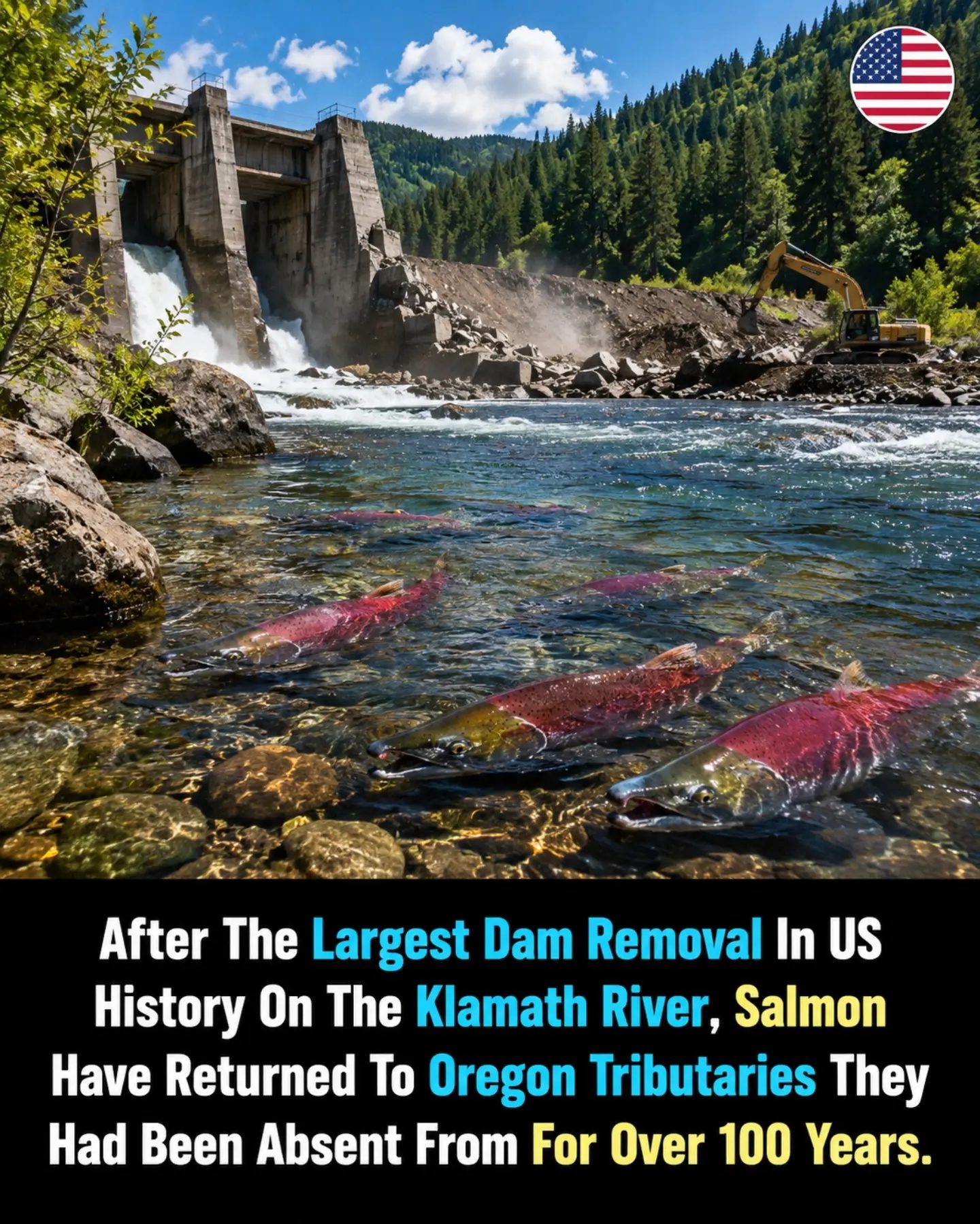
Salmon Return to the Klamath River
The Klamath River, a vital waterway in the Pacific Northwest, has recently witnessed a remarkable ecological event: the return of salmon to Oregon tributaries after over a century of absence. This significant occurrence is a direct result of the largest dam removal in U.S. history, which has opened up new habitats for these migratory fish.
Why This Matters
The return of salmon to the Klamath River is more than just a local ecological story; it's a testament to the power of large-scale environmental restoration projects. Salmon play a crucial role in the ecosystems they inhabit, and their presence can indicate the overall health of a river system. The Klamath River's situation highlights the interconnectedness of ecosystems and the profound impacts that human interventions, both positive and negative, can have on natural habitats.
The Largest Dam Removal in U.S. History
The dam removal project on the Klamath River is unprecedented in its scale and ambition. Four large dams—Copco 1, Copco 2, Iron Gate, and J.C. Boyle—have been targeted for removal, a process that began in 2022. This initiative aims to restore the river's natural flow, improve water quality, and re-establish vital habitat for anadromous fish species, including salmon, steelhead, and lamprey.
The Ecological Impact
The ecological benefits of this dam removal are multifaceted:
-
Habitat Restoration: Dams often fragment habitats, preventing fish from accessing critical spawning and rearing grounds. By removing these barriers, salmon can once again reach historical spawning sites upstream.
-
Water Quality Improvement: Dams can alter water temperatures and flow patterns, negatively impacting the health of aquatic ecosystems. Removing dams allows for more natural water flow and temperature regulation, which is essential for salmon survival.
-
Ecosystem Connectivity: The Klamath River supports a diverse array of plant and animal life. By restoring connectivity, the dam removal project will benefit not just salmon but a wide range of species that rely on the river's health.
The Role of Salmon in Ecosystems
Salmon are keystone species, meaning they play a disproportionately large role in their ecosystems relative to their abundance. Here’s how they contribute:
-
Nutrient Cycling: Salmon migrate from the ocean to freshwater streams to spawn, and when they die, their nutrient-rich carcasses provide a vital source of nutrients for the ecosystem. This process, known as nutrient cycling, supports the health of forest and river ecosystems.
-
Food Web Support: Salmon serve as a critical food source for a wide array of predators, including bears, eagles, and other fish. Their presence supports a complex food web, contributing to the overall biodiversity of the ecosystem.
-
Economic and Cultural Significance: Salmon have long been a vital resource for indigenous communities in the Pacific Northwest, providing both sustenance and cultural significance. The return of salmon to the Klamath River is not just an ecological victory but also a culturally meaningful event.
Practical Tips for Supporting River Health
While the dam removal project is a major step toward ecosystem restoration, individual actions can also make a difference in supporting river health:
-
Reduce Water Usage: Conserving water helps maintain natural flow patterns in rivers, essential for fish habitats.
-
Support Local Conservation Efforts: Participate in local clean-up events, volunteer for river restoration projects, and support organizations dedicated to river health.
-
Sustainable Fishing Practices: Follow local regulations and use sustainable fishing practices to ensure fish populations remain healthy.
Important Takeaways
The return of salmon to the Klamath River is a significant milestone in the ongoing efforts to restore damaged ecosystems. The dam removal project serves as a powerful example of how large-scale interventions can have profound positive impacts on river health and biodiversity. However, it's also a reminder that sustaining these benefits requires continuous effort and community involvement.
Conclusion
The Klamath River's transformation underscores the importance of ecosystem restoration and the critical role that salmon play in these environments. As we continue to face environmental challenges, projects like the Klamath River dam removal offer hope and a model for how we can work together to restore and protect natural habitats.
Questions readers ask
What prompted the return of salmon to the Klamath River?
The return of salmon to the Klamath River was primarily due to the removal of four dams, the largest dam removal project in U.S. history. This project opened up over 400 miles of habitat for salmon to migrate and spawn, reversing over a century of blockage.
How does the return of salmon benefit the Klamath River ecosystem?
The return of salmon to the Klamath River reintroduces a critical component to the ecosystem. Salmon provide nutrients to the river and surrounding forests when they die after spawning. This process supports insect populations and feeds other wildlife, fostering a vibrant and diverse habitat.
What is the significance of salmon migration in the Pacific Northwest?
Salmon migration is a vital process in the Pacific Northwest, as it indicates the health of river systems. Salmon require clean, cold water to survive, so their presence suggests that the ecosystem is thriving. Additionally, salmon support local economies through fishing and tourism.
What challenges did the Klamath River face before the dam removal?
Before the dam removal, the Klamath River faced significant challenges, including habitat fragmentation and water quality issues. These challenges made it difficult for salmon to migrate and spawn, leading to a decline in salmon populations.
What are the potential impacts of dam removal on river scenery and fishing?
The removal of dams along the Klamath River has led to improved water quality and clearer water, enhancing scenic views. Additionally, the return of salmon has opened up new fishing opportunities, attracting anglers to the area and boosting local economies.
What other wildlife might benefit from the return of salmon to the Klamath River?
The return of salmon to the Klamath River can benefit a variety of wildlife, including bears, eagles, and other birds that feed on salmon. Additionally, the nutrients that salmon provide when they die can support insect populations, which in turn feed other wildlife.
Related deep dives
Similar reads based on topic and creator.


Recent articles
Fresh deep dives from the latest Reels we unpacked.




Comments
Be the first to comment.