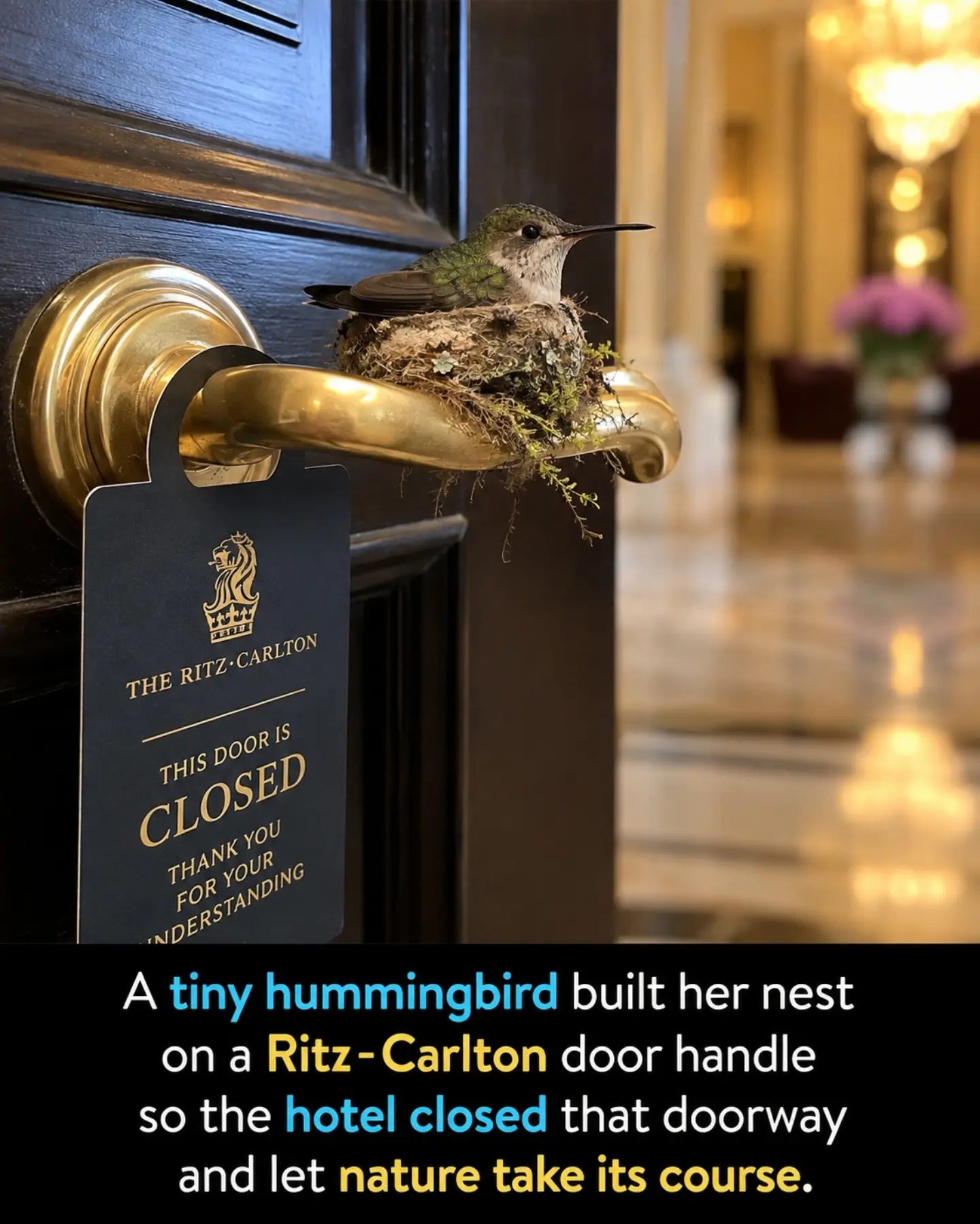
Hotel Door Handle Becomes Hummingbird Nest
A tiny hummingbird nest perched on a door handle at The Ritz-Carlton hotel has captivated onlookers, leading to a thought-provoking encounter between hospitality and nature. This unusual situation showcases how hotels can balance their duties with environmental stewardship and guest accommodation.
Why This Matters
Hotels are a vital part of tourism and travel. They often are as crucial for making a lasting first impression on guests as they are for the safety and care of the surrounding ecosystems. The encounter of a hummingbird with The Ritz-Carlton highlights a crucial aspect of how hotels can navigate balancing guests' needs with respect for the environment.
A Close Encounter with Nature
Hotels, by their nature, are meant to be a quiet retreat from the outside world. But when nature itself turns up at your door handle, a delicate balance must be struck. This scenario is a poignant reminder of the importance of wildlife conservation and the role that hotels can play. The Ritz-Carlton's decision to close off the doorway to protect the hummingbird nest demonstrates a commitment to sustainability and environmental responsibility.
The Ritz-Carlton's Response
A sign posted at the doorway read, "THIS DOOR IS CLOSED THANK YOU FOR YOUR UNDERSTANDING". The hotel's response speaks volumes about the commitment to sustainability and conservation. It highlights the importance of creating guest experiences that respect the environment. The Ritz-Carlton's handling of this situation showcases how hotels can navigate unexpected encounters with nature.
A Hummingbird’s New Home
The hummingbird nest built on the door handle serves as a poignant reminder of the delicate balance between human activities and natural ecosystems. This encounter at The Ritz-Carlton was a testament to how even the smallest of creatures can have a significant impact on our daily lives. The decision to let nature take its course is a reflection of the hotel's commitment to preserving local flora and fauna.
Practical Tips for Hotels
Embracing Wildlife
Hotels can incorporate wildlife-friendly practices in their operations. This includes creating designated areas for wildlife, such as bird sanctuaries or butterfly gardens. This could also mean offering eco-friendly amenities and encouraging guests to participate in conservation efforts. The Ritz-Carlton’s approach to the hummingbird nest is a shining example of how hotels can embrace wildlife and create a harmonious environment.
Educating Guests
Providing guests with information about local wildlife and conservation efforts can enhance their stay. Hotels can offer guided nature walks, educational materials, and workshops. This not only enriches the guest experience but also fosters a deeper appreciation for nature. The Ritz-Carlton's decision to let the hummingbird nest continue undisturbed can serve as an educational opportunity for guests, highlighting the importance of preserving wildlife habitats.
Sustainable Practices
Adopting sustainable practices in daily operations can make a significant difference. This includes using eco-friendly products, conserving water and energy, and reducing waste. The Ritz-Carlton's approach to the hummingbird nest underscores the importance of sustainable practices in creating a harmonious environment. By incorporating these practices, hotels can contribute to a more sustainable future.
Important Takeaways
Understanding the Impact
The hummingbird nest at The Ritz-Carlton highlights the significance of understanding the impact of our actions on the environment. By embracing wildlife and adopting sustainable practices, hotels can create a harmonious environment that benefits both guests and local ecosystems. The Ritz-Carlton’s decision to let the hummingbird nest continue undisturbed showcases how hotels can navigate unexpected encounters with nature.
Creating a Sustainable Future
Hotels play a crucial role in shaping the future of tourism. By embracing wildlife and adopting sustainable practices, they can create a more sustainable future for generations to come. The Ritz-Carlton's handling of the hummingbird nest is a testament to the importance of sustainability and conservation in the hospitality industry. This encounter serves as a poignant reminder of the delicate balance between human activities and natural ecosystems.
Conclusion
The encounter of a hummingbird with The Ritz-Carlton is a poignant reminder of the importance of wildlife conservation and the role that hotels can play. By embracing wildlife and adopting sustainable practices, hotels can create a harmonious environment that benefits both guests and local ecosystems. This encounter at The Ritz-Carlton showcases how hotels can navigate unexpected encounters with nature and contribute to a more sustainable future.
Questions readers ask
Why did The Ritz-Carlton close the door with the hummingbird nest?
The Ritz-Carlton closed the door to protect the hummingbird nest and ensure the safety of the birds. By minimizing disturbance, the hotel aimed to support the natural nesting process and demonstrate their commitment to environmental stewardship.
How does The Ritz-Carlton balance guest needs with environmental stewardship?
The Ritz-Carlton balances guest needs with environmental stewardship by making informed decisions that respect both guests and the environment. In this case, they closed the door to protect the hummingbird nest, showing that they prioritize wildlife and the ecosystem.
What can other hotels learn from The Ritz-Carlton's hummingbird nest encounter?
Other hotels can learn the importance of being prepared for wildlife encounters and finding creative solutions that respect both guests and the environment. This encounter highlights the significance of environmental awareness and adaptability in the hospitality industry.
How do hotels typically handle bird nests on their premises?
Hotels typically handle bird nests by following local regulations and guidelines, often relocating the nest if necessary and safe. However, for active nests with eggs or young birds, hotels may close off the area to minimize disturbance and support the nesting process.
What signs might guests see at a hotel to protect wildlife?
Guests might see signs indicating areas where wildlife is present or nesting, advising them to approach with caution or avoid certain areas altogether. These signs help guests understand the hotel's commitment to protecting wildlife and maintaining a safe environment.
Related deep dives
Similar reads based on topic and creator.

Recent articles
Fresh deep dives from the latest Reels we unpacked.


Comments
Be the first to comment.