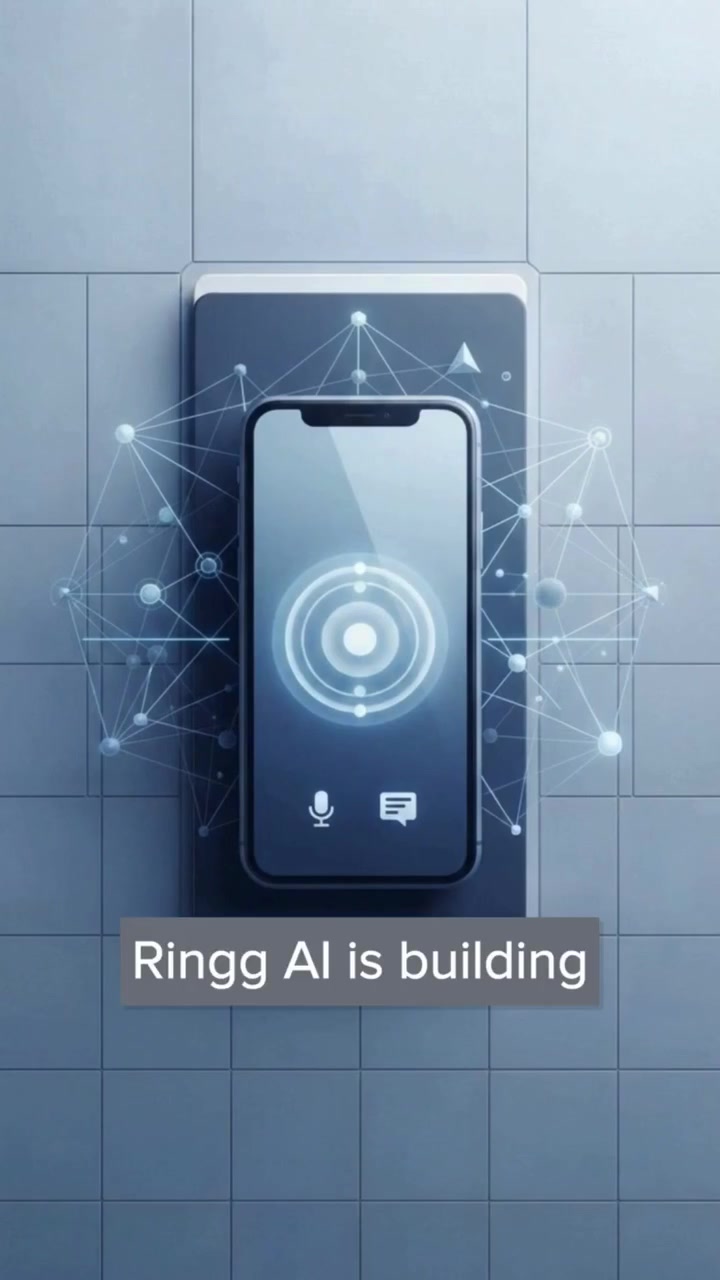
Raised $15.5M from investors after a digital agent successfully recovered an abandoned cart without human interference. But Ringg AI's innovation spans far beyond ecommerce — it's tackling the communication disconnect that often separates companies from their customers. It's not just about answering questions, but doing so in a way that feels human and uninterrupted. So, what is this system, and how exactly does it work?
The Communication Network That Knows You
Founders Siddharth Tripathi, Udkar Shukla, and Kali Charan Vemuru launched Ringg’s "context graph" — a seamless communication platform connecting voice, web, and chat in one shared memory layer. This platform grows more useful as conversations develop. The key is its ability to maintain context across all communication channels. When a customer engages, Ringg’s AI agent weaves personal data from the customer’s cart, browsing history, and previous chats, enabling the agent to provide tailored, coherent responses. Ringg’s focus on context sets it apart. Traditional chatbots often serve as rigid script-readers, unable to adapt to specific questions. But Ringg’s AI doesn’t stay in the vortex of scripted replies. Instead, it’s designed with a customer-centric approach, actively weaving context into the conversation. By bridging the divide between voice, web, and chat, Ringg can maintain continuity, which means less time lost relearning the same information.
AI Assistance Enters the Digital Marketplace
This platform stands out most in the realm of customer service. Consider the frustrated shopper, manually abandoning their cart over a nagging product query. With Ringg AI’s communication channels converging, the AI launches a call, and it’s already aware of the high-end camera within the shopper’s cart. That knowledge isn’t plucked from thin air — it’s drawn from data and interactions. The personal digital assistant then seamlessly delivers the answers, processes the transaction, and follows up with the receipt and support via WhatsApp. This ability to restore the abandoned cart sees the customer journey through to the end without human interference.
The Convergence of Channels in a Unified System
Integrating all communication channels in a single layer isn't simple, but it's necessary for a fully-responsive smart AI. Ringg's "context graph" serves as a blueprint for linking — traditionally siloed — systems: voice, web, chat, and WhatsApp. The result is a seamless platform where all interactions are aware of each other, preventing that frustrating repeat of the same data. This unified memory layer, particularly useful in e-commerce, allows Ringg to understand and respond to queries more effectively.
The Visualization Behind the Name
The "context graph" isn't just a catchy name — it's a visual representation of the multi-channel integration. It's a real-time map of connections, charting the knowledge flow across voice, web, and chat. Each data point, whether it's a customer query or an abandoned cart, is a node on the graph, with the lines between them tracing the interaction trajectory. This visualization shows the complexity of the system and how it functions in real-time.
Developing the Shared Memory Layer
Creating this memory layer involved careful planning and technical precision. Ringg needed a system that wouldn’t just connect channels, but do so in a way that was coherent and real-time. They succeeded in creating a platform where the AI can recall the context of a conversation and respond appropriately. The layer allows Ringg to retain customer data, past transactions, and preferences, and leverage this information across all communication channels. Essentially, it's a unified memory layer that seamlessly transitions within the conversation, making the AI more customer-centric and effective.
Understanding the Problem At Hand
To comprehend the potential of Ringg, look at the gap it fills. Traditionally, a phone AI and a website database operate in distinct silos, making integration a complex endeavor. By solving this with a shared memory layer, Ringg ensures that a customer doesn't have to wait for a live agent to resolve a simple transaction. The AI can seamlessly navigate customer histories, answer specific questions, and process the transaction immediately.
Automating Customer Experience
E-commerce has long been an arena for embracing automation, yet solutions like Ringg offer a new layer of sophistication. The e-commerce space is competitive, and customer frustration, often triggered by unanswered specific questions, can be detrimental. Ringg’s ability to automatically recover an abandoned cart — and even update the entire business system in real-time — streamlines the customer journey. Without human intervention, the digital agent steps in, ensuring the abandoned cart is recovered and the system is updated. This level of automation is unprecedented, benefiting both the customer and the business. Eliminating the need for repetitive questions and navigating the complexities of multiple communication channels ensures that Ringg AI is not only efficient but also highly responsive. In the end, Ringg AI closes the loop — from frustrated shopper to satisfied customer.
Ringg AI’s AWS Deployment Strategy
Interested in implementing Ringg AI's communication capabilities in your business? Look at AWS, the backbone that powers Ringg's platform. AWS provides the foundational cloud computing services which ensure fast, reliable, and scalable deployment. The seamless deployment via AWS enables Ringg to maintain context across its AI agents, offering uninterrupted support cycles. AWS also ensures a secure and scalable platform, making it suitable for businesses of all sizes to integrate Ringg AI into their communication strategies.
- Know Your Customer Base: Understand what frustrates your customers and how your support can be more customer-centric.
- Seek Clear Communication: Identify the communication gaps between your voice, web, and chat channels.
- Integrate Smart AI Support: Integrate Ringg AI into your existing communication channels for a responsive and cohesive customer experience.
- Monitor Customer Queries: Regularly review customer queries to identify patterns and optimize your AI support.
- Train your AI: Invest in training your AI to handle complex queries and provide accurate, context-aware responses.
Questions readers ask
What exactly is a 'context graph' and how does it improve customer service?
A 'context graph' is a visual map of connections between different communication channels, like voice, web, and chat. It's a real-time system that tracks and integrates interactions, allowing Ringg's AI to provide tailored, coherent responses. This means the AI can understand and respond to customer queries more effectively, making the customer journey feel seamless and uninterrupted.
How does Ringg AI handle abandoned shopping carts differently from traditional methods?
Ringg AI uses its 'context graph' to integrate data from a customer's browsing history, cart, and previous chats. This enables the AI to proactively address the reasons for cart abandonment, such as answering product queries and processing transactions, without any human intervention. Traditional methods typically rely on static reminders, which can be less effective.
Can Ringg AI assist in industries beyond e-commerce?
Yes, while the article highlights e-commerce, Ringg AI's technology can be applied to any industry where customer service and communication are critical. Its ability to maintain context across different communication channels makes it versatile for various sectors.
What makes Ringg AI stand out from traditional chatbots?
Traditional chatbots often rely on scripted responses and can't adapt to specific questions. Ringg AI, however, uses a context-centric approach, actively weaving context into conversations. This allows it to provide more personalized and coherent responses, making interactions feel more human and less robotic.
How does Ringg AI ensure a seamless customer experience across different communication channels?
Ringg AI integrates all communication channels—voice, web, chat, and WhatsApp—into a single, unified system. This means that data and interactions are shared across all channels, so customers don't have to repeat information or feel interrupted. The AI can maintain continuity, ensuring a smooth and uninterrupted customer journey.
What kind of data does Ringg AI use to provide personalized responses?
Ringg AI uses a variety of personal data points, including a customer's cart, browsing history, and previous chats. This data is woven into the conversation, allowing the AI to provide tailored, coherent responses that feel personal and relevant to the customer's needs and interactions.
How does Ringg AI's approach to customer service differ from having a human representative?
Ringg AI aims to mimic the best parts of human interaction while eliminating the potential for human error or delay. The AI can provide 24/7 support, maintain context across multiple interactions, and deliver consistent responses without the need for breaks or shifts, ensuring a continuous and seamless customer experience.
Related deep dives
Similar reads based on topic and creator.



Recent articles
Fresh deep dives from the latest Reels we unpacked.




Comments
Be the first to comment.