In the Heart of Vietnam, an Incense Legacy
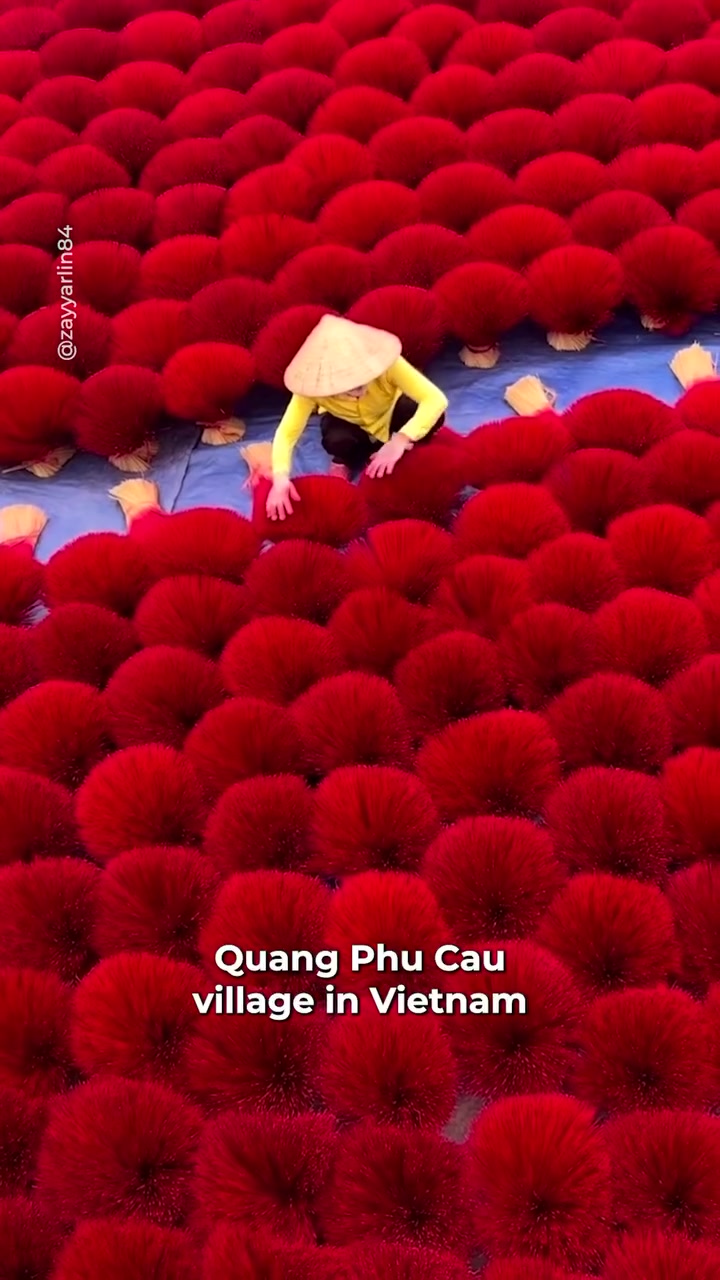
Quang Phu Cau is more than a village. Here, Vietnam’s centuries-old incense-making tradition is alive and vibrant, as the fragrant magic of the incense fills the air, a blend of scent and history that is quintessentially Vietnamese. The village is coloring the country for over a century; 35 kilometers from bustling Hanoi, it is a sensory experience. The incense sticks are iconic: vivid, evocative, and steeped in ritual and tradition.
The Colorful, Fragrant Craft of Quang Phu Cao Incense
In Quang Phu Cao, incense isn't just a sensory delight. It's a tradition, deeply ingrained in the culture and everyday life. Crafting here is a meticulous process, a well-orchestrated dance of color and scent, that involves several steps. The process begins with the selection of the most suitable bamboo. Fresh bamboo stalks are cut and dried, then shaved into thin, even slivers of wiry mesh. These bamboo slivers are then dyed vibrant colors. The resulting sticks are arranged in distinctive shapes — often round or wheel-like — before being dipped in aromatic incense and left to dry, filling the air with an enchanting scent. The result is a visual feast. The sticks are dyed vibrant red and arranged in a distinctive round shape. Over 80% of Vietnam’s incense is made in Quang Phu Cao. The vibrance of the incense has become integral to Buddhist rituals and local traditions— used in temples, homes, and for ancestor offerings. Villagers pride themselves on the scent being “nothing like what you can buy off the shelf”.
What makes Quang Phu Cao so vibrant?
The incense village offers visitors a deeply immersive experience, connecting them with the village's rich cultural heritage and its people — some of whom have been crafting incense for generations and have a deep sense of pride and purpose. Aside from the colorful incense, the village and its history are equally enchanting. The incense village has been recognized by the Vietnam Record Organization, and UNESCO recognitions have been pending for years. It is said that for every 1 kilometer of incense purchased, equivalent green cover is equal to 500 hectares. The workers, the artisans, and the entrepreneurs behind the incense are wonderfully well-versed with the process. Generations are continuing the tradition.
Red and Round for Rites
The fight against hunger and malnourishment in Vietnam was historic and infamous. The effort was kicked off by the Vietnamese Red Cross in 1994, and with the support of many international organizations, great progress has been made. The round and red incense sticks have a lot to do with this — as the production and farming of red mandarins were promoted. Subsequently, there has been an increase in the number of local and international tourists and a rise in the local economy. The village has been known for fostering a sense of community — some workers have been working for years and are extremely proud of the craft. The artisans are often praised for their "precise measuring" techniques, the smell of the incense and its ability to ward off insects.
For Local’s and Visitors Alike, The Craftsmen’s Wisdom
Every visitor is treated to an experience of seeing the various stages of incense production, from the initial drying of bamboo to the final product. The villagers, including the local artisans and craftspeople, are proud to share their techniques and knowledge, inviting visitors to watch and even partake in the process. For just 2 to 4 US dollars, visitors can immerse themselves in the craft, learn about the tradition, and even try their hand at making the incense sticks themselves. If you're going to Vietnam, here’s a mantra — don’t miss this.
- Visit in the early morning: The air is fresh, the ambiance is pristine, and the smell of the freshly cut bamboo and the incense is exhilarating. Most tourists visit Quang Phu Cao early in the morning to watch the craftspersons at work, as the craftspeople are the most productive.
- Bring a light lunch: There are local vendors with mouth-watering street food. You will want to spend the afternoon tasting it all, so make sure you have a light lunch.
- Practice patience: While the process of making incense sticks may seem straightforward, it is much more intricate and detailed. The craftspeople may not stick to your schedule, and the process may take longer than you expected. This is part of the experience, so enjoy the patience and learnings.
- Breathe it all in: Be sure to take in the scent of the bamboo, the drying process, the aroma, and the entire experience. Listen to stories about the village, the people, and the traditions.
Rituals and Reverence
If you find yourself in Hanoi, do not miss the gentle, fragrant, and inviting village. It's almost magical when you walk through the streets. This village is also an example of harmony and balance, with a unique system of craftsmanship, community, and traditions. If you're interested in the therapeutic process, you're going to find this village to be perfect.
Questions readers ask
How do craftsmen in Quang Phu Cao select and prepare the bamboo for incense sticks?
The process begins with selecting the most suitable bamboo. Fresh bamboo stalks are cut, dried, and then shaved into thin, even slivers. These slivers are dyed vibrant colors and then arranged in distinctive shapes, often round or wheel-like, before being dipped in aromatic incense.
What's the significance of the vibrant red color and round shape of the incense sticks in Quang Phu Cao?
The vibrant red color and round shape of the incense sticks are iconic and deeply rooted in local traditions. They are used in Buddhist rituals, temple ceremonies, and ancestor offerings, making them a vital part of the village's cultural heritage. The design also helps in warding off insects and enhancing the local economy.
How has the incense-making tradition in Quang Phu Cao contributed to the local economy and community?
The incense-making tradition has significantly boosted the local economy by attracting tourists and promoting the farming of red mandarins. It has also fostered a strong sense of community, with many artisans and workers taking pride in their craft and contributing to the village's cultural heritage.
What is the process of making incense in Quang Phu Cao?
The process involves selecting and preparing bamboo, dyeing it vibrant colors, and arranging the sticks in distinctive shapes, usually round or wheel-like. The sticks are then dipped in aromatic incense and left to dry, creating a visual and olfactory delight.
What makes Quang Phu Cao's incense unique compared to other incense products?
Quang Phu Cao's incense stands out due to its vibrant colors, distinctive shapes, and the unique, aromatic scent that is deeply ingrained in local traditions. Villagers pride themselves on the scent being “nothing like what you can buy off the shelf”
Can visitors to Quang Phu Cao participate in the incense-making process?
The article doesn't mention direct participation, but visitors can immerse themselves in the rich cultural heritage and observe the meticulous process firsthand. The village offers a sensory experience, connecting visitors with the artisans and the craft.
How has the incense-making tradition in Quang Phu Cao impacted the local environment?
The incense-making tradition has a positive environmental impact, with the production and farming of red mandarins that support the village's green cover and contribute to the local ecosystem. For every 1 kilometer of incense purchased, equivalent green cover is equal to 500 hectares.
Related deep dives
Similar reads based on topic and creator.


Recent articles
Fresh deep dives from the latest Reels we unpacked.


Comments
Be the first to comment.