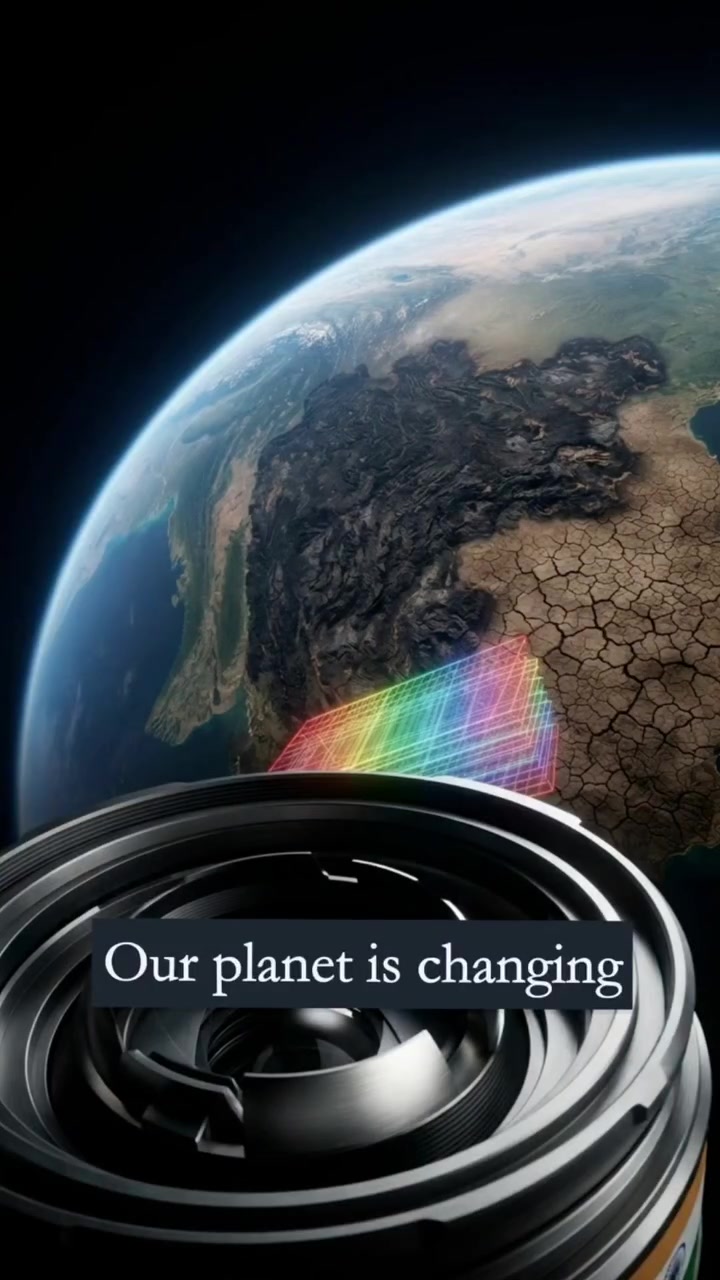
Our planet’s environmental changes are outpacing human tracking efforts, leaving critical chemical data overlooked by standard satellite imagery. Indian space tech startup Pixel is deploying revolutionary imaging technology to fill this gap.
Spectral imaging: the Pixel advantage
Pixel’s satellite technology stands out in a field previously dominated by surface-level imagery. Hyperspectral imaging, employed in their Firefly satellites, captures 135 bands of light. This technique, vastly more complex than regular cameras, can detect subtle chemical data, convert them to visible markers, and relay crucial information about the planet’s health. Pixel’s capabilities include detecting hidden chemical signatures, like oil spills and stressed crops, which are imperceptible to the human eye. Regulatory oversight benefits from its ability to reveal environmental changes and infrastructural damage before they become catastrophic. Building an AI platform called Aurora, Pixel has a full-stack infrastructure capable of managing and interpreting vast spectral data sets. This AI platform is a powerful tool for transforming raw data into actionable insights. Aurora instantly converts these spectral datasets into strategic decisions for agriculture, public safety, and mining operations. Pixel’s vision extends beyond monetary gains; They're engineering what appears to be the first-ever independent, real-time health monitor for the Earth.
The modern space race
Against the vast backdrop of global warming, data-driven solutions have become critical. Pixel operates out of Bengaluru where founders Awas Ahmed and Kshitich Khandalwal are rapidly expanding their facilities against the backdrop of a historic $100 million Series C investment. This funding reflects the burgeoning importance of hyperspectral imaging in science and industry. Pixel’s goal is lofty: transforming geospatial intelligence through a new 12-satellite constellation. By producing independent defense and civil data, Pixel is positioning itself as India’s leading sovereign space technology.
The transformation pipeline
Through their full-stack pipeline, Pixel converts raw data to practical insights in a timely fashion. The technology pipeline goes beyond imagery to provide real-world, actionable insights for farmers, miners, and policymakers. Pixel’s technology allows imaging systems to capture 135 bands of light, which are then interpreted through the Aurora AI platform, and converted into insights that drive decision-making.
The Aurora advantage
The Aurora platform is Pixel’s crown-achievement, demonstrating where their capabilities as an AI hub truly shine. Aurora is responsible for taking the raw spectral data from the Firefly satellites and converting it into actionable insights. The platform’s advanced AI not only interprets but also contextualizes the data, providing concise, practical information to agriculture, mining, and other fields. This technology is what makes Pixel’s systems more than photography — it’s an entire ecosystem.
A sovereign leap forward
By building a constellation that can provide real-time data independently, Pixel is securing India’s position as a global leader in space technology. Pixel’s role is strategic. They’re potentially securing data that was once in the hands of foreign tech companies. The reliance on foreign technology has long been a sticking point for India's space tech capabilities, so the end goal of a sovereign satellite network that provides independent defence and civil data is understandable.
The hope for the planet
Pixel’s venture is not just about the technology but the potential to transform how humanity interacts with and monitors its planet. Recent investments into Pixel reflect the growing importance of accurate, real-time data to climate change, public safety, and disaster management. $100 million grants not only support this startup but also mark a significant milestone for the planet. Pixel could be both a financial boon and a transformative technology. Pixel's mission to create a real-time health monitor for the planet ensures a significant leap forward in sustainable, data-driven policy and disaster management.
Questions readers ask
What exactly is hyperspectral imaging and how does it differ from regular satellite imagery?
Hyperspectral imaging captures a vast number of light bands, 135 in Pixel's case, far more than regular cameras. This allows it to detect subtle chemical data that regular satellites miss, making it invaluable for tracking environmental changes and infrastructure damage.
How does Pixel's Aurora AI platform work with the hyperspectral data collected by the Firefly satellites?
The Aurora platform takes the raw spectral data from the Firefly satellites and processes it using advanced AI. It not only interprets the data but also contextualizes it, turning it into actionable insights for various industries like agriculture, mining, and public safety.
What kind of environmental changes can Pixel's technology detect that traditional methods can't?
Pixel's technology can detect hidden chemical signatures, such as oil spills and stressed crops, which are imperceptible to the human eye and traditional satellite imagery. This early detection helps in preventing larger environmental issues.
What is the significance of Pixel's 12-satellite constellation and how does it enhance their capabilities?
The 12-satellite constellation allows Pixel to provide real-time, independent data, enhancing their ability to monitor the Earth's health. This positions India as a leading player in sovereign space technology, capable of producing data for both defense and civil purposes.
Can other industries besides agriculture and mining benefit from Pixel's technology?
Yes, Pixel's technology can benefit a wide range of industries. For example, public safety can use the data to monitor and respond to environmental changes, and regulatory oversight can benefit from early detection of infrastructural damage.
Related deep dives
Similar reads based on topic and creator.




Recent articles
Fresh deep dives from the latest Reels we unpacked.




Comments
Be the first to comment.