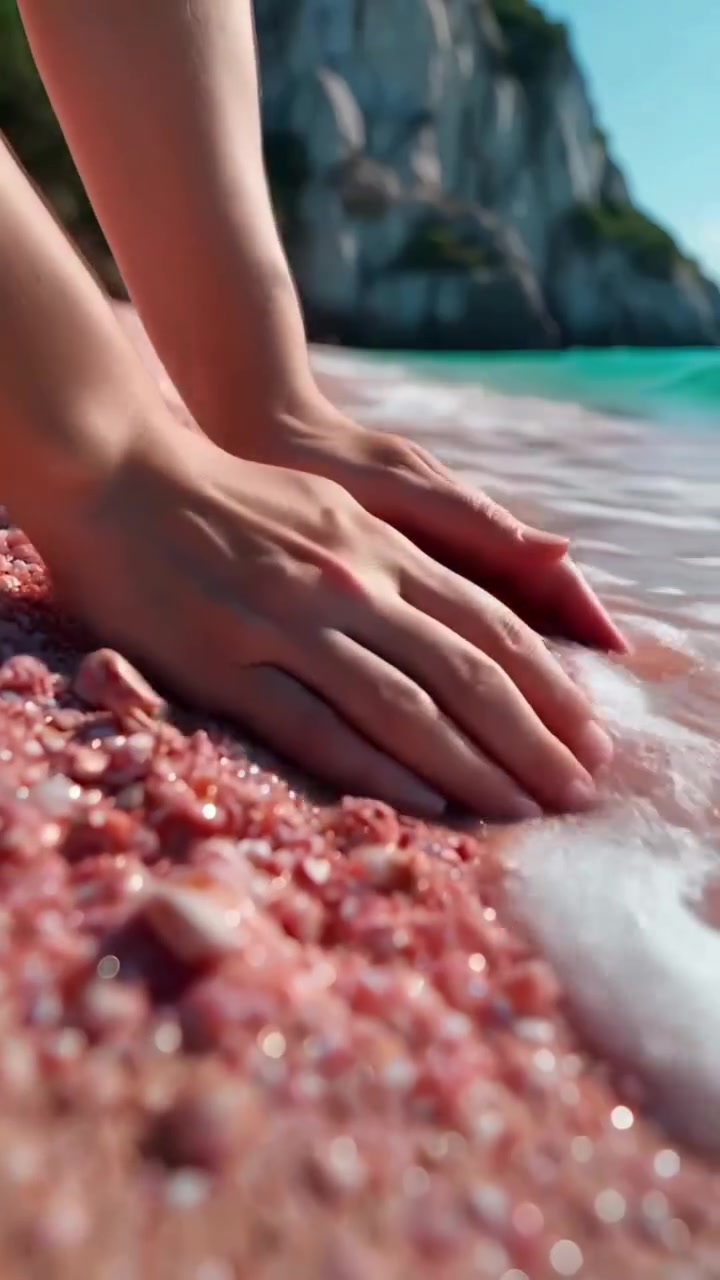
Harbor Island in the Bahamas is home to one of the most captivating beaches in the world — Pink Sands Beach. At first glance, this pink expanse appears to be a whimsical dream, reminiscent of a Barbie world. Yet, the sand’s vibrant color is entirely natural and that makes it a living, breathing marvel.
The Pink Sands Beach Miracle
The beach, which stretches over three miles along the Atlantic Ocean, stands out for the unusual hue of its sand. This isn’t a trick of the light. The pink hue is the result of tiny marine organisms. These organisms, known as Foraminifera, have reddish shells. These shells blend with coral and sand particles in the ocean, creating the distinctive color. When waves wash over the beach, the wet sand appears even more intensely pink. This vibrant landscape isn’t just about the sand. The view also includes colorful colonial houses, turquoise water, and quiet island roads. Nearby, Eleuthera Island boasts a unique geological feature: the Glass Window Bridge. This natural bridge separates the deep blue Atlantic from the turquoise Caribbean Sea, making it a point of interest. It feels as though an artist designed this island and made it real, complete with pink sand and turquoise water.
Islands of Intrigue and Natural Marvels
Pink Sands Beach stands as a testament to the uniqueness of our planet. Its vivid pink hue and mighty turquoise ocean is a natural phenomenon that is far from rare. However, it is an extraordinary sight that is worthy of its status among the world’s most beautiful beaches. As the voice in the video affirms, it isn’t solely about beaches. Harbor Islands also display lush greenery and hilly terrain that provides a serene yet picturesque natural paradise. Pink Sand Beach is a natural marvel for several reasons. Firstly, its pink hue is a rare occurrence. Secondly, the beach is three miles long, making it an ideal place for a leisurely stroll or a lengthy beach day. Lastly, the beach offers a sense of tranquility and natural beauty. This is attributed to its location. Pink Sands Beach is accessible from Eleuthera Island in the Bahamas. Pink Sands Beach isn't the only natural marvel in Harbor Island. A few miles away, Eleuthera Island features the Glass Window Bridge. This natural bridge is a point of interest for tourists. The bridge separates the deep blue Atlantic from the turquoise Caribbean Sea. Essentially, it is an opportunity to experience two vibrant seas at once. This vista is so unique, it is easy to imagine the island as a fantasy world that has been made real. The stunning landscape does indeed make it a perfect destination for a beach holiday.
The science behind the pink hue
The sand’s pink hue comes from tiny organisms — reddish shells of Foraminifera. These shells break down in the ocean and mix with coral and sand, creating an unique color. The process is natural, the outcomes are striking. When the waves wash over the sand, the wet sand seems even more intensely pink. This is a testament to the beauty of science. The marine organisms that cause the pink hue are called Foraminifera. They are protists with a shell that ranges in size from 0.2 to 10 mm. They mostly exist in the open ocean and some species are so small that they can only be viewed through a microscope. Foraminifera are known for their role in ocean ecology and are also used in studying ocean currents and climate change. Some species of Foraminifera are also known for their ability to produce bioluminescence. These are glowing marine organisms that emit light, which is useful for attracting prey and confusing predators. However, Foraminifera aren't the only organisms that give the sand its pink hue. The sand is also made up of coral, crushed shells, and minerals. Some of the minerals that contribute to the pink hue are clays and quartz particles that are naturally occurring in the Bahamas. The unique combination of marine organisms, coral, and minerals gives the sand its vibrant pink hue. This makes the beach a natural marvel that attracts many tourists every year.
From Color to Culture: The Allure of Pink Sands
The pink beaches of Harbor Island are more than just a natural marvel. They are a cultural icon that has been celebrated in various forms of media. The beach has been featured in several films, television shows, and music videos. It has also been the subject of numerous paintings and photographs. The pink hue of the sand has been used as a backdrop for various events, including fashion shows and photo shoots. The allure of the pink sand beach goes beyond its natural beauty. It is also a symbol of the beauty and diversity of the Bahamas. The beach is a popular destination for tourists from all over the world, who come to experience the unique landscape and culture of the island. The pink sand beach is also a source of pride for the locals, who take great care to preserve the natural beauty of the island. The sandy pink hues also serve as a source of joy for visitors who get to witness such a sight.
Finding Pink Sand Beyond the Bahamas
The pink sand beach isn’t the only pink sand beach in the world. Pink sand beaches are a rarity, but they do exist in other parts of the world. One such beach is in Bermuda. This pink sand beach is called Horseshoe Bay Beach and is located on the island of Bermuda. Horseshoe Bay Beach is known for its stunning pink sand and clear blue waters. The beach is also a popular destination for tourists and locals alike. The pink hue of the sand is a result of the tiny marine organisms, Foraminifera, that live in the ocean. However, what sets Horseshoe Bay Beach apart is its accessibility. The beach is accessible by car, making it an ideal destination for those who want to experience the natural beauty of the island without having to travel too far. The island of Bermuda is also known for its rich culture, delicious food, and vibrant nightlife. This makes it a popular destination for tourists from all over the world.
Where to find it
The Bahamas is home to a number of pink beaches, but Pink Sands Beach on Harbour Island stands out. It is located in the northern part of the island, and is accessible by car or boat. The beach is a popular destination for tourists, and there are several hotels and resorts located nearby. To visit, take a ferry from Nassau, the capital of the Bahamas, or fly to North Eleuthera, where you can then ferry over. Here are the steps to take in order to visit.
- Make plans to visit the Bahamas: The best time to visit the Bahamas is during the winter months, from December to April. During this time, the weather is pleasant, and the beaches are less crowded.
- Book a ferry ride or flight to North Eleuthera: If you are planning to travel by ferry, you can book a ferry ride from Nassau, the capital of the Bahamas, to North Eleuthera. The ferry ride takes about 45 minutes. Alternatively, you can travel by plane from Nassau, which takes approximately 20 minutes. From North Eleuthera, you can take a ferry to Harbour Island, where Pink Sands Beach is located.
- Take a taxi to the beach: Once you arrive in Harbour Island, you can take a taxi to Pink Sands Beach. The beach is about a 15-minute drive from the ferry terminal. Where to stay: The beach is located in the outskirts of North Eleuthera, so it's best to stay in a nearby hotel or resort. The island is home to a number of hotels and resorts, including the iconic Pink Sands Resort, which is located on the beach. Some of the other hotels and resorts on the island include the Captain's Cove Resort, the Pink Sands Resort, and the Paradise Harbour Marina. If you have the time, combine your visit to Pink Sands Beach with a trip to the nearby Glass Window Bridge. It’s a unique geological feature that separates the deep blue Atlantic from the turquoise Caribbean Sea. This visit only requires a short ferry ride to Eleuthera, from Harbour Island.
Pink Sands Beach: The Ultimate Reality Test
It is possible to imagine Pink Sands Beach as a fantasy world. However, it is a real phenomenon. A place where hard science and natural beauty coexist. This beach is a testament to the stunning landscapes on Earth. The pink sand beach in Harbor Island isn't just a place for vacation but is a place where science and nature meet to create a marvelous landscape.
Questions readers ask
What exactly are Foraminifera and how do they contribute to the pink sand?
Foraminifera are tiny marine organisms, specifically protists, with reddish shells. These shells break down and mix with coral and sand in the ocean, creating the unique pink hue seen at Pink Sands Beach. The process is entirely natural, and the vibrant color is more intense when the sand is wet.
Is Pink Sands Beach the only beach with pink sand in the world?
No, there are other pink sand beaches around the world, but Pink Sands Beach in the Bahamas is particularly notable for its vibrant color and the unique natural features that surround it. It’s a destination within itself, offering a surreal sight with its three-mile stretch of pink sand.
Can I visit Pink Sands Beach and what can I expect to see besides the pink sand?
Yes, you can visit Pink Sands Beach. It’s located on Harbor Island in the Bahamas and is accessible from Eleuthera Island. Besides the pink sand, you can expect to see colorful colonial houses, turquoise water, and the Glass Window Bridge, a natural feature that separates the Atlantic Ocean from the Caribbean Sea.
What makes Pink Sands Beach a unique natural marvel?
Pink Sands Beach is unique due to its rare pink hue, its length of three miles, and the sense of tranquility and natural beauty it offers. The beach is part of a larger natural paradise that includes lush greenery, hilly terrain, and vibrant seas, making it a perfect destination for a beach holiday.
How does the Glass Window Bridge relate to Pink Sands Beach?
The Glass Window Bridge is a natural feature on nearby Eleuthera Island. It separates the deep blue Atlantic from the turquoise Caribbean Sea, offering a unique vista. While it’s not on Pink Sands Beach itself, it’s a nearby attraction that adds to the overall allure of the area, enhancing the experience of visiting the pink sand beach.
What is the best time to visit Pink Sands Beach to see the most intense pink color?
The pink hue of the sand is most intensely visible when it is wet. So, the best time to visit would be during the day when the waves wash over the beach, making the color more vibrant. Early morning or late afternoon might offer the best lighting for viewing the pink sand.
Related deep dives
Similar reads based on topic and creator.




Recent articles
Fresh deep dives from the latest Reels we unpacked.




Comments
Be the first to comment.