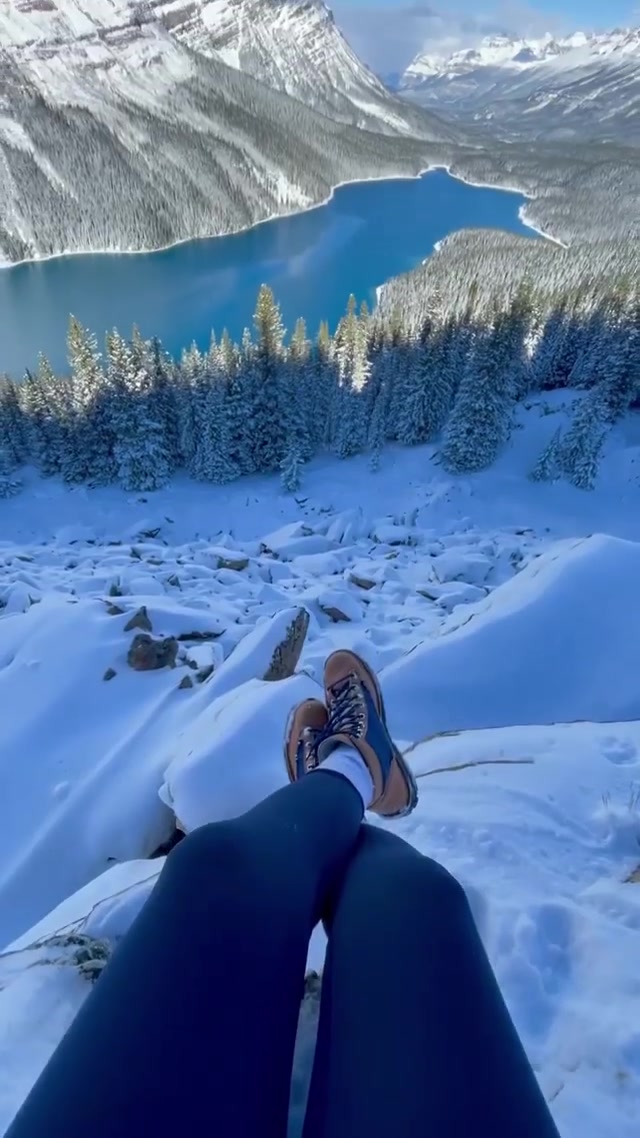
The glimmering turquoise waters of Peyto Lake contrast sharply against the thick evergreens of Banff National Park. The picturesque Canadian lake, part of the Canadian Rockies, draws thousands of visitors each year to its snowy peaks and glaciated valleys. Sweater-wearing strangers tramp into the heightened wilderness. Other adventurers pause to inhale the air, several snapping photos. But on Instagram on this day, it is @wilderness_addict's journey that captures the spirt of a winter mountain hike. The 14-second clip showcases the shoulders of the alps, a turquoise lake, and dense evergreen forests all framed by a pair of boots trundling along the snow.
What is an Alpine Lake like Peyto Lake?
Peyto Lake, is a stunning alpine lake within Banff National Park in Alberta, Canada. Created by the melting of a glacier, the lake is known for its unique turquoise waters and the surrounding rugged mountain landscapes. It is a feed of surrounding rivers and runoffs. It's unique color is due to the rayleigh scattering effect caused by its rocky substructure making the lake appear turquoise. The lake's stunning beauty is a hit amongst hikers and photographers.
A Cold-Weather Destroys — and a Call to Explore
Peyto Lake is more than just a pretty landscape to the Park. It’s part of Canada’s collective identity. Banff is an all-season destination. Each season has its own appeal. The cooler seasons are often overlooked due to the obvious risks, but a winter hike benefits those that come equipped. Many visitors arrive in summer. However, as temperatures drop, glaciers feed the lake’s waters, resulting in a deep turquoise hue that is most vibrant in the winter.
The geography of Peyto Lake.
How It’s Nestled In The Rocky Mountains
Peyto Lake sits at an elevation of approximately 6,414 feet. The Rock Mountains peak, peaks, and valleys create a theater backdrop. The lake sits in a basin in the hidden heart of the valley which is formed between the 11 peaks of the Waputik Range. It's fed by the Murray Glacier, Peyto Glacier and the Bow Glacier.
The Turquoise Waters of Peyto Lake: From Rocks to Water
Lakes are typically characterized by their colors which are determined by their depths, rocks, and sediments. However, the unusual coloring of Peyto lake is due to something called rock flour. This is a finely ground material produced by glacial erosion that suspends in the water causing the absorption of longer wavelengths of light. Giving the lake a distinctive blue-green hue. In the fall and winter months, the lake’s color is most vibrant due to the high volume of water from the melting glaciers directly above the lake.
Clothing for the Deep Glacial Backdrop
The snowy peaks and thick forest of the mountain range are a hiker’s dream. The area has multiple trails from easy to difficult that are open to the adventurous. The hikes also vary in length. @wilderness_addict hiked along the Bow Summit trail in the winter. A 6.6 mile round trip walk. This trail is notorious for its beauty and is one of the most popular trails in the Rockies.
The Climb and Glimpse to Take
The most popular hiking trail near Peyto Lake is the Peyto Lake Viewpoint trail. The trail is 1.5 km (one-way) and offers stunning views of the lake and surrounding mountains. The trail is steep in parts, but it is well-maintained and suitable for most hikers. For those looking for a longer hike, the Bow Summit trail is a 6.6 km round trip hike that offers panoramic views of the lake and surrounding mountains.
How to Appreciate the Deep Glacial Backdrop
The trail is an easy loop in winter but the best time to visit is from June to September. Lakes in this part of the Rockies are along the Icefields Parkway which is a scenic drive. Many prefer to drive to the viewpoints and snap the lake from a safe distance as the area is considered to be dangerous due to avalanches and unpredictable ice formations.
How to Explore Peyto Lake
- Get Ready: Never underestimate the environment. The temperature can fluctuate. “It's burning low” said @wilderness_addict, he was likely referring to the thinning of the air. With more than a quarter of the trail above the tree line, and open to the elements. *But it's not all bad, the weather is part of the experience. *
- Plan for the trek: Look up the map prior to your visit and decide the starting point. If you’re planning a day trip, you can drive along the Icefields Parkway. If you’re staying overnight, there are camping options nearby.
- Bring the Right Camera: The stunning beauty of Peyto Lake has made it a popular destination for photographers. Grab a DSLR or Mirrorless camera, and a wide-angle lens for capturing the lake's expansive views. If you're into drones, consider flying one that has been approved by Parks Canada.
- Food and Drinks: The journey may be adventurous, but the food on offer is the same as any other major national park in Canada, so if you expect to be disappointed with a Michelin meal and wine tastings, then you are at the wrong place.
The experience is Unmatched in Canada
The beauty of Peyto Lake, where the water is a remarkable shade of blue, is a must see. The alpine lake is a popular destination for tourists, for good reason. Few other places in Canada offer views like this. The lake’s vibrant blue color and the surrounding rugged landscapes are truly a sight to behold.
Questions readers ask
What makes Peyto Lake's water appear turquoise?
Peyto Lake's unique turquoise color is due to a phenomenon called rock flour. This fine, powdery material is produced by glacial erosion and suspends in the water, absorbing longer wavelengths of light and giving the lake its distinctive blue-green hue. The color is most vibrant in the winter months because of the increased water volume from melting glaciers.
What kind of trails are available around Peyto Lake?
There are multiple trails around Peyto Lake that cater to various skill levels. The Bow Summit trail is a popular 6.6-mile round trip hike known for its beauty, and there are other trails with varying levels of difficulty and length. The most popular trail is the Peyto Lake Viewpoint trail.
Can you hike Peyto Lake in the winter?
Yes, you can hike around Peyto Lake in the winter. In fact, the lake's vibrant turquoise color is most noticeable during the colder months due to the increased water flow from melting glaciers. However, it's important to be prepared with the right clothing and gear for the cold weather and snowy conditions.
What is the elevation of Peyto Lake?
Peyto Lake sits at an elevation of approximately 6,414 feet, nestled in a basin within the Waputik Range of the Canadian Rockies.
What is the source of Peyto Lake's water?
Peyto Lake is fed by several glaciers, including the Murray Glacier, Peyto Glacier, and the Bow Glacier. These glaciers contribute to the lake's water volume, especially during the winter months when melting glaciers cause the lake's color to be most vibrant.
Related deep dives
Similar reads based on topic and creator.



Recent articles
Fresh deep dives from the latest Reels we unpacked.

Comments
Be the first to comment.