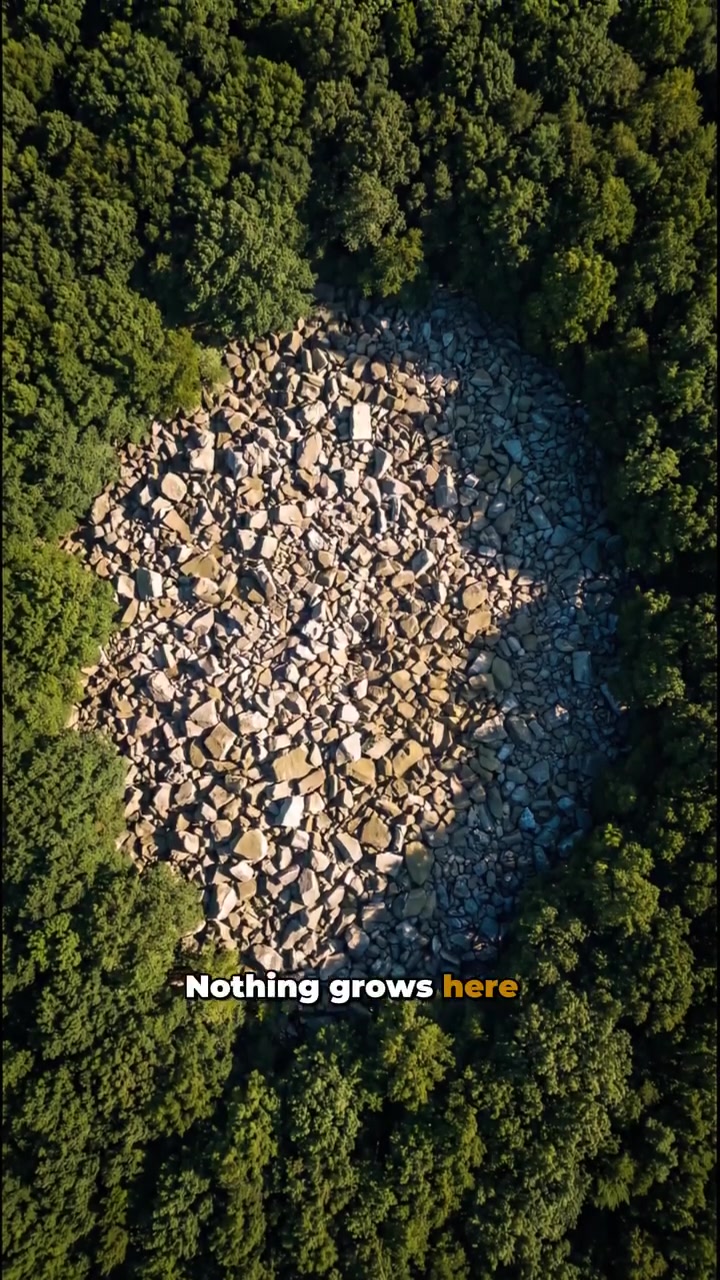
In Bucks County, Pennsylvania, a mysterious seven-acre field of bare grey boulders stands as a stark anomaly in an otherwise lush forest. Here, no trees, weeds, or grass grow, and on weekends, people gather, carrying hammers, to strike the rocks and listen for a clear, metallic ring. It's a phenomenon that has baffled experts for decades, and few options exist to explain the mysteries of the ringing rock.
The Field of Silent and Singing Stones
Buried deep in a Pennsylvanian forest, this seven-acre field is covered in bare, grey boulders. It is densely populated with these stones, with no vegetation in sight. Scientists and geologists alike have deemed this phenomenon singular, having not seen anything quite like it before. Notably, this land within a forest bears a sharp, distinct border, where the forest ends abruptly and the rocks begin. The phenomenon extends to the weekend visits. The rocks are not merely inert: around one-third of these stones produce a bell-like metallic ring when struck with a hammer. The rest produce a dull thud. The change in sound is inexplicable, as the rocks that ring and those that thud look identical from the outside and the difference is not initially perceptible. Additionally, rocks that are taken away from this field often fall silent, losing their tone when removed from the area. The metallic-like ring happens due to the rock's internal structure. Attempting to explain the phenomenon, a single, informal experiment in the 1960s posits that the thin skin of the rock swells, locking the entire boulder under stress. A stressed rock rings, a rock in the shade does not. This explanation is controversial, though, as no one has successfully replicated the experiment — leaving the phenomenon that much more of a mystery.
Exploring Earth's Mysterious Rock Tones
Rocks are hardly the type of subject to beg the question of "why" or "how." Yet the strange, bell-like sound from the rocks at this Pennsylvania site merits more than a passing fancy. The question is only more interesting when we think of how the rocks sound. Rings change based on their thickness, shape, and material. Some rocks have internal cracks that affect their acoustics, and eroded edges can also play a part. But these explanations do not apply to the field's stones, which don't have any of these characteristics. So, what makes the rocks sing, and why is it limited to this field?
The Hammer and the Ring
The rock-video creator claims only a hammer and a willing participant are needed. On weekends, visitors drive themselves to the field, leaving their cars at the edge and walking onto the rocks with hammers in hand. The rocks are singled out and struck one by one, but less than a third produce that satisfying metallic ring, and no outside factors distinguish the ringing rocks from the rest. The lull of the ring from these stones is an inexplicable mystery that no official study has attempted to solve.
The Remarkable Rocks
Questioning why some rocks ring while others do not, researchers uncovered the underlying issue: the rock's thin skin. The rocks have a unique crust on the exterior that creates tension inside. When the rock is stressed, its elastic waves travel and bounce off the interior surfaces, producing the distinctive metallic ring. The whole rock is locked in this state of stress. This crustal swelling creates an internal pressure, causing the rock to resonate like a bell. A whole rock experiencing this pressure will ring — but under the shade and without the pressure, the rock will not produce any sound. The conflicting results from rocks cut from the field and brought elsewhere only add to the mystery. Removed from the field, the rocks lose their tone — even when they initially rang in the field. Scientists wondered, what happens to them? The loss of sound is an active area of research, still. However, this variation in circumstances adds another layer to the mystery of the field.
The Internal Stress
People have to do their own study on the rocks. Something that happens in the field is internal stress, a rock under stress rings, while a rock under the shade does not. The study was conducted back in the 1960s, an informal experiment, and not replicated. The cracking of rock crystal under stress creates internal tension in the rock, which when released, produces the distinctive tone. The mystery continues, though, as the rocks outside the field remain silent. What is inside them?
Moving into The Ringing Rocks
Interested in experiencing the ringing rocks in Bucks County, Pennsylvania? If you want to check for yourself, you can visit the field on weekends. Due to the field's nature, care when approaching and staying on the field will be required. No casual or high-footwear traffic is permitted, so sensible footwear is recommended for your safety.
- Bring a hammer: This is a requirement for you to experience the metallic ring.
- Bring a jacket: Staying in the shade is essential for you to find a ringing rock.
- Stay safe: Don't wander into the woods but stay on the boulders' path and enjoy what the field offers.
- Explore: It's recommendable to explore the surroundings while searching for the rocks' ring.
- Consider the mystery: This unique field is a mystery, so understanding the rock's nature is essential for enjoying the phenomenon.
The Soundscape of the Pennsylvania Forest
The soundscape of the field around the bare grey rocks is shifting, thanks to the rock. Unlike other forests, which are known for the sounds of wind and trees, animal calls, and the rustle of the leaves, the field offers a unique sound experience. The rocks' ringing randomly happens, not just in parts of the field but in specific parts. So, the distinctive sound blends with the wind, making it a unique experience. The mystery continues to intrigue visitors and specialists alike, with the rocks falling silent when taken elsewhere, adding to the mystery.
Questions readers ask
What exactly are the Ringing Rocks and where are they located?
The Ringing Rocks are a field of grey boulders located in a Bucks County, Pennsylvania forest. This seven-acre area is unique because it's bare of any vegetation, and about one-third of the rocks produce a metallic ringing sound when struck with a hammer.
Why do some rocks ring while others don't?
The reason why some rocks ring while others don't is still largely a mystery. However, one informal experiment suggests that the rocks' thin skin swells, locking the entire boulder under stress and causing it to ring. However, this explanation remains controversial as it hasn't been successfully replicated.
Can I visit the Ringing Rocks and strike the rocks myself?
Yes, you can visit the Ringing Rocks, especially on weekends. Visitors are known to bring hammers and strike the rocks to listen for the metallic ring. However, it's important to note that only about a third of the rocks produce this sound, and the experience is subject to the rocks' natural behavior.
What happens if I take one of the ringing rocks home with me?
If you take one of the ringing rocks away from the field, it often falls silent. The rocks seem to lose their tone when removed from their specific location, adding to the mystery of why they ring in the first place.
Are there any other places in the world with similar ringing rocks?
The article does not mention any other locations with similar ringing rocks. The field in Bucks County, Pennsylvania, appears to be a unique phenomenon, at least based on the available information.
Related deep dives
Similar reads based on topic and creator.




Recent articles
Fresh deep dives from the latest Reels we unpacked.




Comments
Be the first to comment.