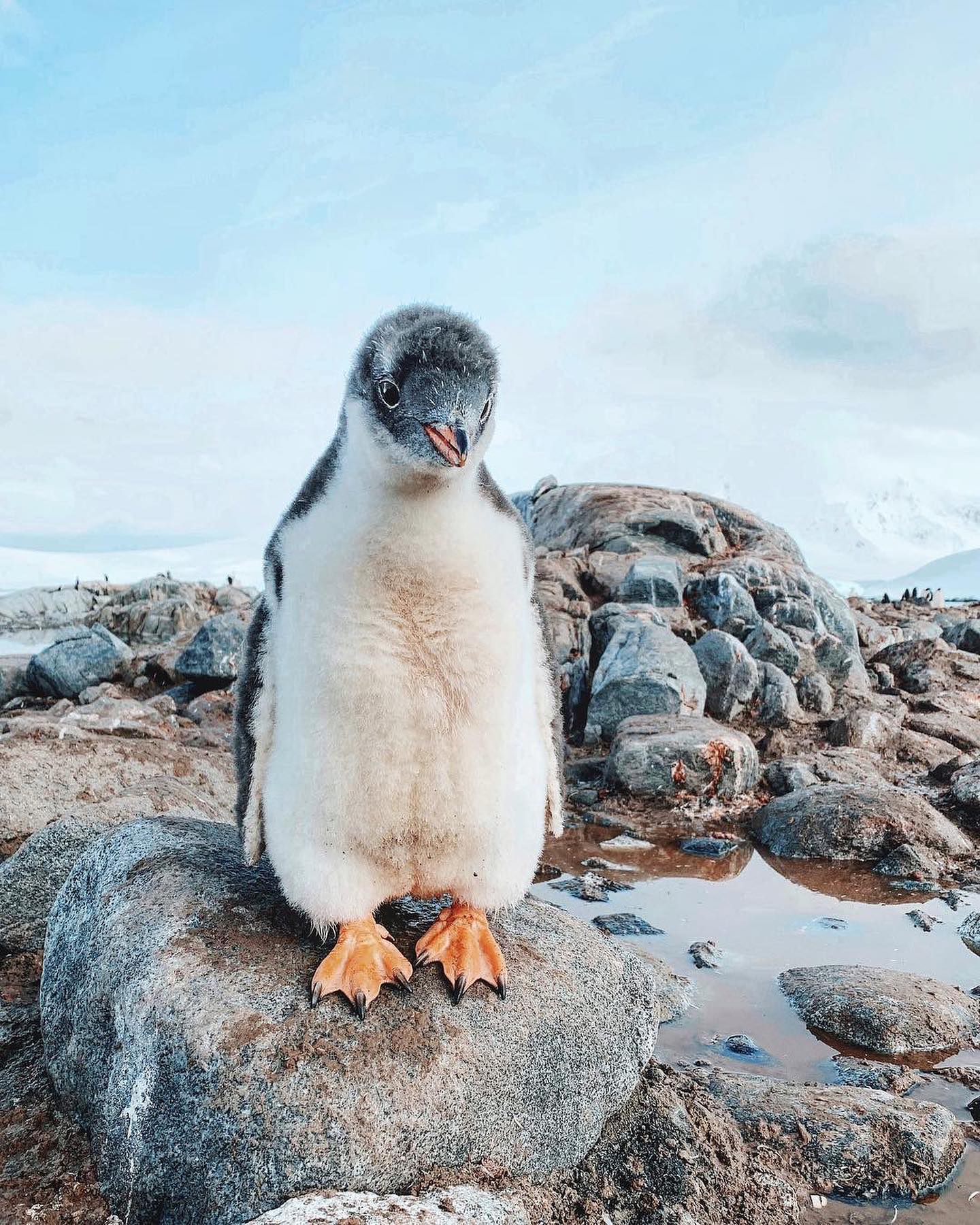
Penguins aren't just the Internet's favorite waddling birds. Here, they startle as a surprise guest in a rocky environment. A young penguin stands out as the centerpiece.
The many faces of penguin life
Penguins are aquatic, flightless birds known for their foraged diets and unique tuxedo-like plumage. In fact, there are 17 to 19 species of penguins globally, found predominantly in the Southern Hemisphere. They thrive in a variety of environments, from the rocky coasts of South America to the icy expanses of Antarctica. Penguins are a unique anomaly among birds. They are not just functionally flightless. They have evolved to survive in both water and on land. While on Earth, penguins use their wings to swim efficiently, their paddle-like flippers allow them to dive swiftly to catch fish and other marine animals — busting the stereotype of clumsy birds. Unsurprisingly, penguins have adapted to diverse habitats. Some species, like the emperor penguin, are perfectly suited to the harsh Antarctic climate. Others, like the Galapagos penguin, prefer the tropical waters off the coast of Ecuador.
An expanding appreciation for penguins
Some penguins look unmistakable. The Penguin — with sharp yellow crest feathers. Today, conservation efforts are underway to protect various penguin species. Penguin conservation aims to preserve their habitats, study the impact of climate change and human activities to ensure their survival.
Adaptation and habitat
Rocky-abiding colony life
Penguins are social animals and prefer to live in colonies. Penguins are known to exhibit communal behavior, such as huddling to keep warm during cold weather. The young stand out from the colony in the unique rocky landscapes. Groups of penguins gather together on rocky shores for breeding, sometimes numbering in the thousands. Overlapping colonies is common. The habitats will continue to be crucial to their survival.
Great swim divers
They evolved to be excellent divers, hunting underwater creatures. Penguins feed on marine animals such as fish, squid, and krill. They dive up to 180 meters underwater and stay submerged for up to 22 minutes. Penguins use their strong, flippers to swim swiftly and efficiently. Its streamlined body allows it to glide underwater with minimal resistance. Thus, penguins are well- adapted to aquatic environments.
Peculiar species appearance
Every penguin species has unique physical characteristics. The yellow crest feathers are a distinguishing feature of the penguin species. Penguins have different types of feathers. Penguins have a thick layer of fat beneath their skin to keep warm in cold climates. The physical adaptations appear across the board in the penguin species. Penguins have a variety of appearances. Various species have distinct patterns and colors of feathers. Penguins can be identified by their specific appearance. These features contribute to each penguin species' unique identity.
Appriciating penguins
Wildlife photographers and conservationists aid in enhancing penguin conservation worldwide. There are several steps you can take to support penguin conservation efforts.
- Watch videos about penguins
- Learn more about their habitats
- Contribute to penguin conservation organizations and projects
Questions readers ask
What kinds of environments do penguins live in?
Penguins are incredibly adaptable and can be found in a range of environments. They inhabit everything from the icy landscapes of Antarctica to the tropical waters around the Galapagos Islands. Some species, like the emperor penguin, are well-suited to extreme cold, while others, like the Galapagos penguin, thrive in warmer climates.
How do penguins manage to swim so efficiently?
Penguins have evolved unique physical features. They use their strong, flippers to swim swiftly and efficiently. Their streamlined bodies allow them to glide underwater with minimal resistance, making them excellent divers who can stay submerged for up to 22 minutes.
Why do some penguins have yellow crest feathers?
The yellow crest feathers are a distinctive feature of certain penguin species. These feathers serve as a visual marker, helping to identify different species and potentially aiding in communication or mate selection within their colonies.
What do penguins eat, and how do they catch their food?
Penguins have a varied diet that includes fish, squid, and krill. They are skilled hunters, diving up to 180 meters underwater to catch their prey. Their strong flippers and streamlined bodies make them agile swimmers, well-adapted to their aquatic environments.
How do penguins adapt to cold climates?
Penguins have several adaptations to survive in cold climates. They have a thick layer of fat beneath their skin to keep warm, and they huddle together in colonies to conserve body heat. Additionally, their dense plumage provides insulation against the cold.
Are there any conservation efforts to protect penguins?
Yes, there are ongoing conservation efforts aimed at protecting penguin species. These efforts include preserving their habitats, studying the impact of climate change, and mitigating human activities that threaten their survival. Organizations and wildlife photographers also play a crucial role in raising awareness and supporting these initiatives.
Can penguins be found in the Northern Hemisphere?
Penguins are predominantly found in the Southern Hemisphere, with the majority of species living in or near Antarctica and South America. While there are no penguin species native to the Northern Hemisphere, some species like the Galapagos penguin inhabit tropical waters near the equator.
Related deep dives
Similar reads based on topic and creator.




Recent articles
Fresh deep dives from the latest Reels we unpacked.




Comments
Be the first to comment.