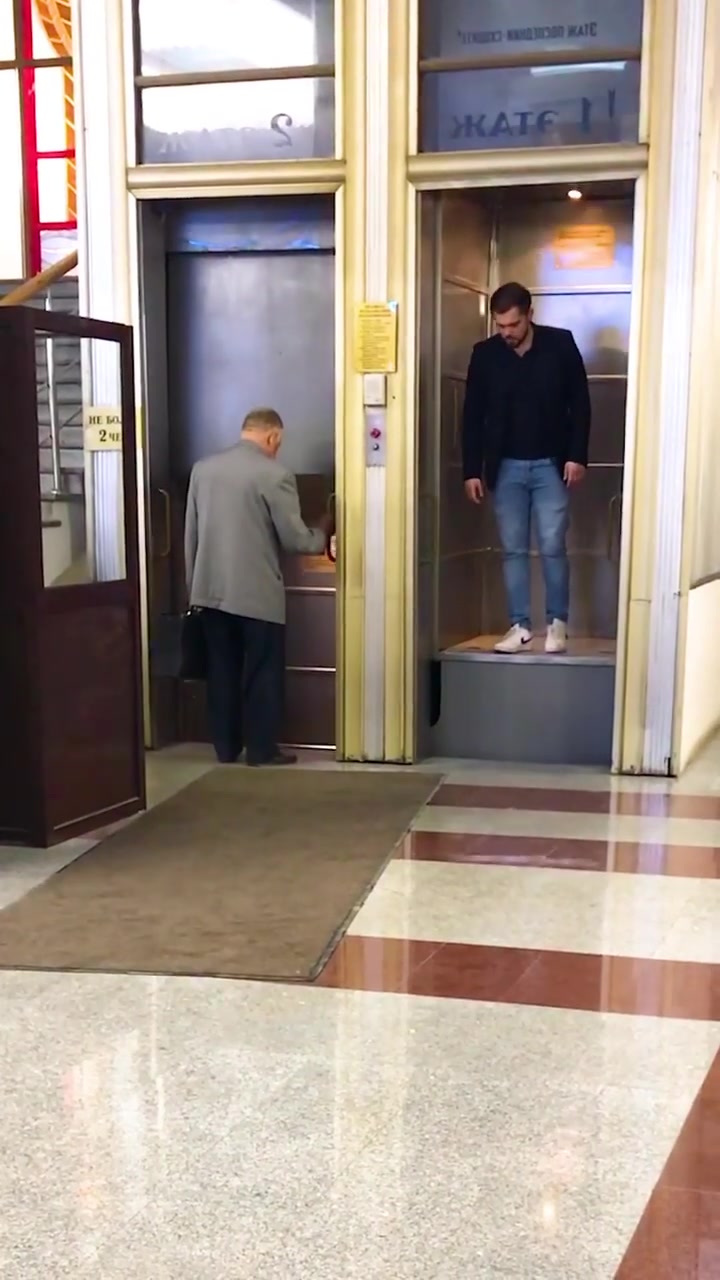
The Ministry of Agriculture of the Russian Federation in Moscow houses an unusual relic of a bygone era: a Paternoster lift. This peculiar elevator consists of a continuous loop of open compartments that glide slowly up and down, allowing passengers to step on and off at will.
The Eternal Loop of the Paternoster
A Paternoster — named so after the eternal loop, or Paternoster, from the Latin prayer for Our Father, is essentially a never-ending elevator. Comprising a series of open compartments, these lifts move slowly in a loop within a building's shaft. Each compartment is typically large enough for two people and designed to allow passengers to hop on or off at their desired floor. The lift operates without stopping, providing continuous service to all floors it traverses. This is unlike traditional elevators, which have set stops. The Paternoster’s distinctive design and continuous operation create a mesmerizing sight that unsettles those who see it in use for the first time. Paternoster lifts gain their distinctive aesthetic from their open compartments and continuous motion, which can feel like an eternal loop. The sense of continuous motion is both disarming and captivating. This design reduces wait times, as passengers can simply hop on or off on any floor, making these lifts accommodating to a higher volume of traffic. Riding a Paternoster offers an experience akin to stepping into a historical relic, which makes the lift a conversation piece in the presently modernized world. Despite these advantages, Paternoster systems are no longer built. Construction ceased in the mid-1970s due to safety concerns.
The Great Peculiarity in Public Transit
The Paternoster’s peculiarity places it in a historical context where transport technology once prioritized elegance and efficiency over widespread safety. Century-old elevators still in use have fascinated many because the design is so different from conventional lifts. The loop of the Paternoster creates a visually striking effect where motion is a constant. Seeing it in action feels like stepping back in time, when public buildings embodied a sense of historic permanence. The Paternoster is a unique time capsule. Its design implicitly suggests its arrival. It creates a constant sense of movement that goes beyond the standard experience, and the loop of the Paternoster creates a compelling sense of motion that elevates the experience beyond merely transporting. It is not surprising that these lifts remain open in Europe, though mainly as curiosities. They're a glimpse into a bygone era of transportation, where the experience itself mattered as much as the destination. Their absence in newly built structures shares how modern safety standards transformed our approach to elevators.
The Mechanics of Movement: The Paternoster in Motion
The Chain and Compartment Design
A Paternoster consists of two vertical shafts connected at the top and bottom by a continuous chain or belt. The chain or belt is equipped with compartments, typically made of stainless steel or wood, that move along the shafts in an endless loop. Each compartment functions as a small elevator car and is large enough to accommodate one or two people. The design allows passengers to step on and off effortlessly at any floor.
Safety and Security
While the Paternoster's design is distinctive, its safety concerns are valid. Continuous motion exacerbates the risks of falling or closing doors. As a result, these lifts haven't been constructed since the 1970s. However, many existing Paternoster lifts are still operational today. In Europe, safety modifications have kept these lifts open, but strict regulations mean that only a handful of these lifts remain in use.
The Experience of Riding a Paternoster
Stepping into a Paternoster lift is a unique experience. The lift's slow, continuous motion creates a sense of perpetual movement that can be both calming and disorienting. Passengers must time their entry and exit perfectly, adding an element of skill and precision to the experience. For those accustomed to traditional elevators, the first ride on a Paternoster can be an unforgettable experience.
Elegant Remnant or Historical Curiosity?
Paternoster lifts are located primarily in historic buildings, like the Ministry of Agriculture. They function to move people between floors, as well as serve as a visual and historical draw.
The Art Deco Aesthetic
Paternosters are often housed in buildings with ornate architectural details, enhancing their charm. The stainless steel or wooden compartments, combined with the tiled floors and decorative elements of the lobby, create a striking visual contrast. This juxtaposition of old and new, of functionality and elegance, makes Paternoster lifts a delight for architecture enthusiasts and casual observers alike.
The Architectural Allure
The Paternoster's unique architectural design maintains its historical allure. Today, they survive as part of the preservation movement in Europe, and their charm lies in their legible design. This aesthetic, combined with the Paternoster's functionality, makes it a curious part of public buildings and transportation history.
Stepping into the Beloved Paternoster of Moscow
To experience the Paternoster lift in Moscow, you need to visit the Ministry of Agriculture. The lift operates continuously, offering a unique ride up and down. There are no traditional stops or buttons to press. Instead, passengers must time their entry and exit carefully. The lobby's tiled floor, ornate elevator doors, and historic architecture enhance the overall experience.
- Location: Visit the Ministry of Agriculture in Moscow.
- Interaction: Approach the lift with caution. As the compartments glide up and down, look for one nearest to your destination. Step in quickly and safely.
- Safety: Stay alert and aware of other passengers. The Paternoster's compartments move continuously, so enter and exit only when safe to do so. If you are unsure, rely on the lobby staff or inquire before your ride.
- Timing: Be mindful of the time and plan your visit accordingly.
Questions readers ask
What makes the Paternoster lift in Moscow's Ministry of Agriculture unique?
The Paternoster lift is unique because it's a continuous loop of open compartments that move non-stop, allowing passengers to step on and off at any floor. This design is a relic from pre-1970s elevator technology, making it a historical curiosity in a modern building like the Ministry of Agriculture.
How does the Paternoster lift work technically?
The Paternoster lift operates using two vertical shafts connected at the top and bottom by a continuous chain or belt. Compartments attached to this chain move in an endless loop, providing continuous service to all floors. Each compartment is designed to hold a couple of passengers, and the lift moves slowly to allow for easy entry and exit.
Why was the construction of Paternoster lifts halted?
Construction of Paternoster lifts ceased in the mid-1970s primarily due to safety concerns. The design, while efficient, posed risks that modern safety standards couldn't overlook, leading to their discontinuation in new buildings.
Can I still find Paternoster lifts in operation today?
Yes, although rare, you can still find functioning Paternoster lifts in a few places in Europe. The one in Moscow's Ministry of Agriculture is a good example. These lifts are often preserved as curiosities and historical artifacts rather than practical transportation methods.
What is the experience like riding a Paternoster lift?
Riding a Paternoster lift is unlike any modern elevator experience. The continuous motion and open compartments create a mesmerizing and somewhat disarming effect. It feels like stepping into a historical relic, offering a unique and captivating journey through the building.
Why is the Paternoster lift named after the Latin prayer?
The Paternoster lift is named after the Latin phrase for 'Our Father,' referring to the eternal loop of the prayer and the lift's continuous motion. The name reflects the lift's design, which moves in an endless loop, much like the repeated phrases in the prayer.
Related deep dives
Similar reads based on topic and creator.



Recent articles
Fresh deep dives from the latest Reels we unpacked.




Comments
Be the first to comment.