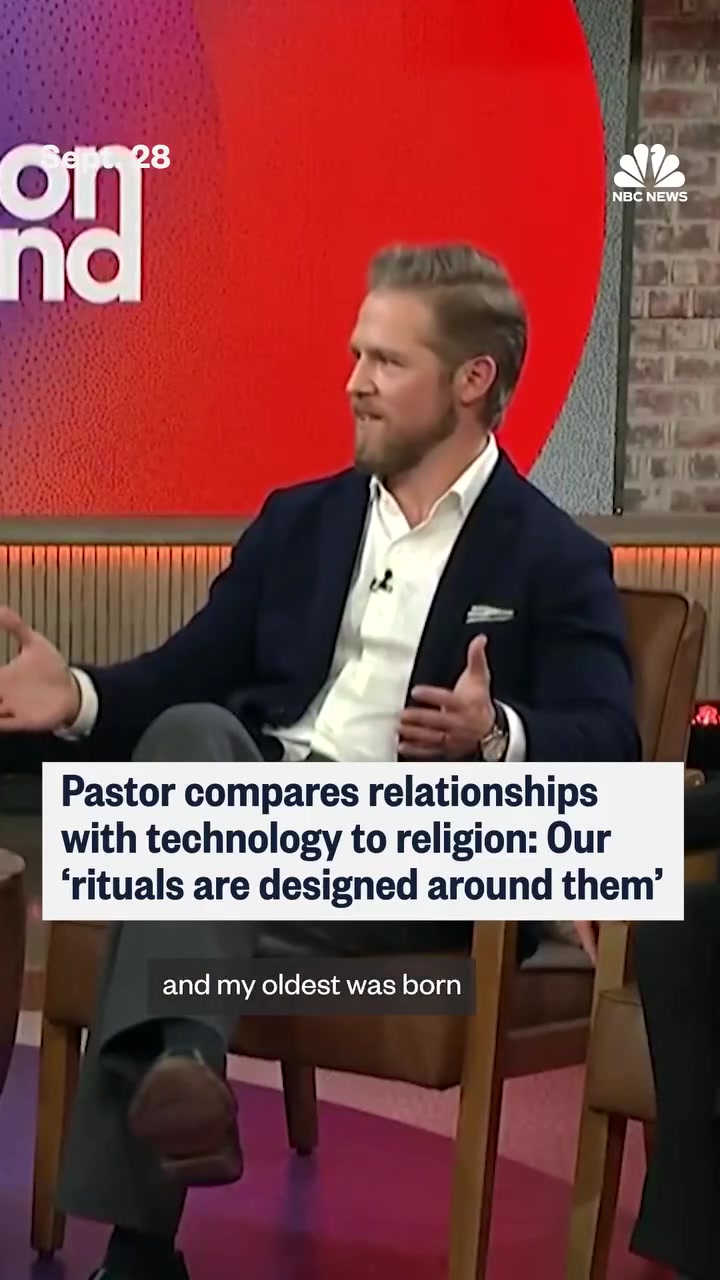
From Sermons to Smartphones
Michael Rudzena, founder and lead pastor at Good Shepherd New York, compares our relationship with phones to religious practices. It’s a perspective that is striking, particularly when the pastor observes that children raised with smartphones since birth participate in a technological ritual that shapes their worldview.
Rituals in the Palm of Our Hand
Good Shepherd New York founder Michael Rudzena contends that our relationship with technology, especially smartphones, shares similarities with religious rituals. This comparison draws parallels between the way we interact with our phones and traditional spiritual practices. When noted that “our morning and evening rituals are designed around them,” Rudzena points to the daily habits we form around our devices, arguing that this behavior mirrors the structured practices found in religious communities. Unlike some, Rudzena isn’t perturbed by the attention deficit often associated with technology. Instead, he sees smartphone use as a form of “formation”: the process of being shaped and molded by the constant engagement with digital devices. Conventional obliviously treated as sacrosanct, Rudzena’s take highlights how these digital devices are now so integral to our lives that they influence our behaviors and attitudes, molding us in ways that might not be immediately apparent but are deeply transformative.
Turning Attention into Digital Formation
Critics may misattribute smartphones’ impact to attention deficit, but Rudzena’s perspective of “formation” offers a fresh lens. He sees a paradox in our constant engagement; we are both reverent and disenchanted, caressing the devices while seeking divine connection with rituals. Rudzena’s insight into this paradox suggests that our digital habits are not only shaping how we spend our time but also how we perceive ourselves and others. They become a conduit for both fleeting moments and long-term identity formation. This internal transformation is what Rudzena terms formation: it’s the process by which we are shaped and influenced by our digital rituals.
A Disrupted Path to Loving One’s Neighbor
The deeper consequence of “formation” via technology, Rudzena argues, is that it can “undermine the whole project of loving our neighbor.” This part of the conversation focuses on the impact of digital rituals on our ability to build and maintain meaningful relationships. Rudzena suggests that when we are constantly engaged with our phones, we may be losing the capacity to engage fully with those around us. The screen becomes a barrier rather than a bridge, ultimately affecting our commitment to loving and supporting others. Rudzena’s concerns align with broader discussions about the social implications of technology, but his religious framing adds a unique dimension. He warns that the very nature of our digital interactions is eroding our ability to practice what he considers a fundamental human value: compassion and care for one another.
Technology Innovations in Spiritual Practice
Beyond shaping our personal behaviors, smartphones create a new frontier for spiritual practices. As noted, Rudzena echoes historical shifts in religious practice. When the printing press enabled mass production of Bibles, it democratized and diversified religious experiences. In a similar vein, smartphones offer new ways to engage with faith: from downloading sermons to participating in digital prayer groups. These innovations expand access and engagement, reflecting Rudzena’s belief that technology can be both a tool and a temple. Essentially, these dual uses make the smartphone both a conduit for digital formation and a means for spiritual connection.
Foster Healthy Digital and Spiritual Practices
Good Shepherd New York founder Michael Rudzena’s reflections on the intersection of technology and spirituality provide a roadmap for fostering healthy digital and spiritual practices:
- Digital Restraint: Start with simple practices, such as turning off notifications for non-essential apps. Limit smartphone use to specific times and places to maintain a sense of control.
- Intentional Engagement: Seek out digital content that enriches your spiritual life, such as devotional apps or online sermons. Use technology as a tool for connection rather than distraction.
- Avoid Parallel Demonstrations: For example, resist the urge to check your phone during meals or conversations. This helps build stronger connections with those around you.
- Establish Tech-Free Zones: Create spaces at home where technology is not allowed. This can include bedrooms, dining areas, and other places where face-to-face interactions are crucial.
- Reflect on Formation. Spend time considering how your digital habits are shaping you. Engage in self-reflection to understand the impact of technology on your spiritual and emotional well-being.
Pausing to Consider the Direction
Rudzena’s insights challenge us to consider the unintended consequences of our digital habits. By viewing our relationship with smartphones through a spiritual lens, he invites us to see the ways in which technology is shaping our lives and the broader implications for our relationships and communities. This perspective encourages a more mindful and intentional approach to technology, recognizing its power to form and transform us in ways that extend well beyond the screen.
Questions readers ask
What does pastor Michael Rudzena mean when he talks about 'formation' in the context of smartphone use?
Pastor Michael Rudzena uses the term 'formation' to describe how our constant engagement with smartphones shapes our behaviors, attitudes, and even our sense of self. He sees this process as similar to how religious practices mold individuals, but in this case, it's digital rituals that are doing the molding.
How do smartphones influence our daily rituals, according to Rudzena?
Rudzena points out that our daily routines, such as morning and evening rituals, are often centered around our smartphones. This constant interaction with our devices forms habits that can be compared to the structured practices found in religious communities, influencing our behaviors and attitudes in significant ways.
Can smartphones be considered a form of sacred text, as Rudzena suggests?
Rudzena draws a parallel between how we treat smartphones and how religious texts are treated in spiritual practices. He suggests that we hold our phones in a way that mirrors the reverence often shown to sacred texts, highlighting how integral these devices have become to our daily lives and worldviews.
How does Rudzena think technology affects our ability to love and care for others?
Rudzena argues that our constant engagement with smartphones can undermine our ability to engage fully with those around us, potentially eroding our capacity for compassion and care. He suggests that the screen can become a barrier, affecting our commitment to loving and supporting others in meaningful ways.
How does Rudzena view the impact of smartphones on attention and formation?
Unlike critics who attribute smartphones' impact to attention deficit, Rudzena sees this constant attention as a form of 'formation.' He suggests that while we may be both reverent and disenchanted with our devices, our digital habits are deeply shaping how we perceive ourselves and others, influencing our long-term identity formation.
What does Rudzena think about the social implications of smartphone use?
He aligns with broader discussions about the social implications of technology, warning that our digital interactions are eroding our ability to practice fundamental human values like compassion and care for one another. Rudzena's religious framing adds a unique dimension to these concerns, highlighting the deeper consequences of 'formation' via technology.
How do smartphones create a new frontier for spiritual practices, according to Rudzena?
Rudzena suggests that smartphones are opening up new avenues for spiritual practices, offering a different way to engage with religious rituals and communities. While he doesn't delve deeply into this in the excerpt, it hints at the evolving role of technology in shaping spiritual experiences.
Related deep dives
Similar reads based on topic and creator.




Recent articles
Fresh deep dives from the latest Reels we unpacked.




Comments
Be the first to comment.