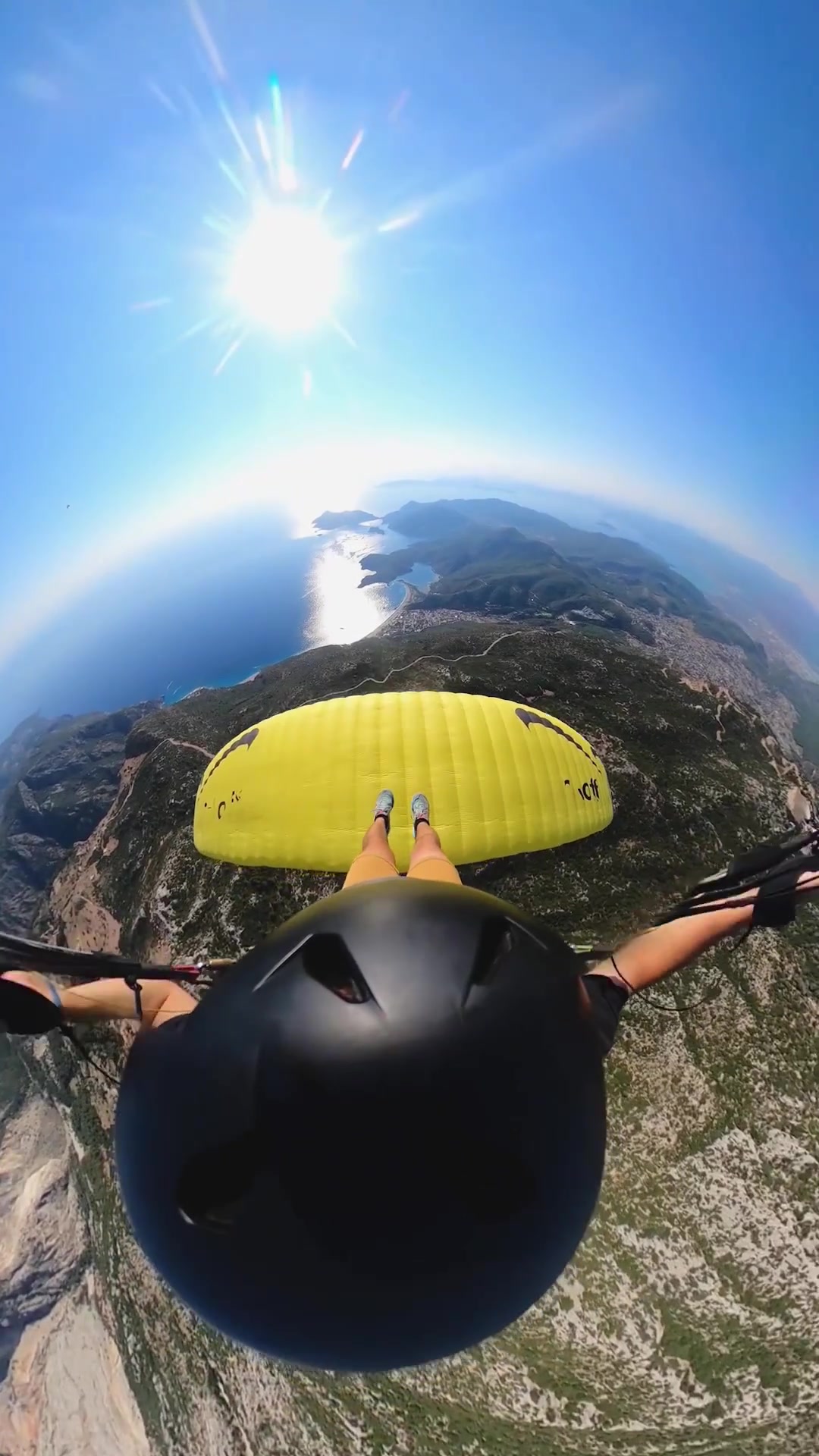
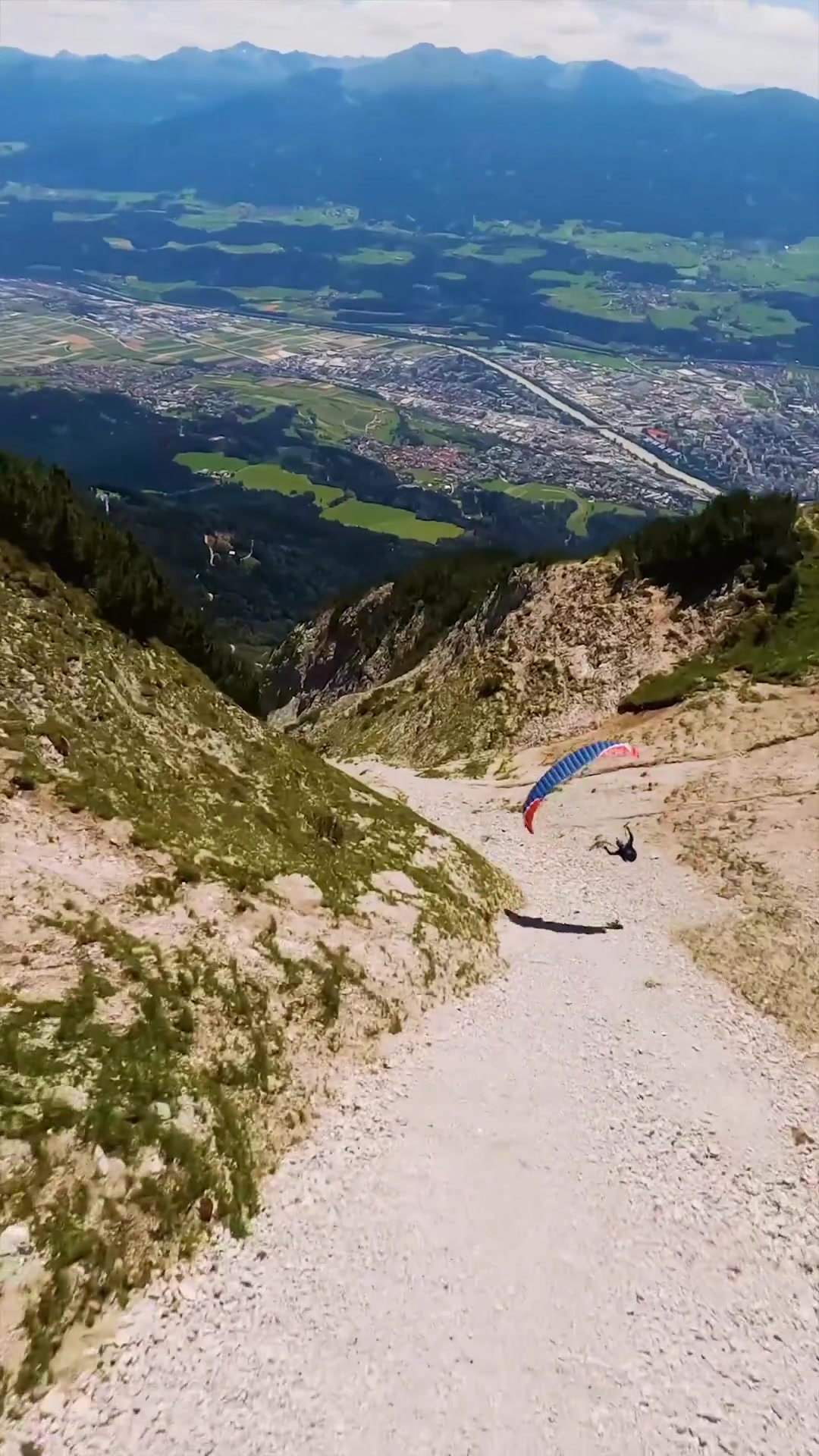
Paragliding is an adventure sport that gives first-person sensation of flying. In this case, the paraglider lifts off of a coastal bluff and glides across a bay. The pilot loops around islands. The vista unfolds: mountains, forests and deeper waters.
Paragliding: Vertical leap with wings
Paragliding is the art of free flight with a portable parachute, or "wing", that can be carried like a backpack. Pilots control their gliders using two toggle handles that manipulate the wing's airflow, allowing them to steer and direct their flight. The canopy above contains a series of cells that trap air, creating a lift that allows the pilot to fly. Unlike other aerial sports, paragliding requires no engine. Nothing but a gentle breeze is needed to take off and soar. The adrenaline rush of gliding and looping makes it an exciting sport. For many pilots, paragliding is exciting because it offers "human flight" — a sense of freedom. The experience of gliding in flight above the terrain is an amazing experience. Paragliding is accessible to those with minimal skills. As such, it doesn't demand much athletic ability. Becoming a skilled paraglider takes practice, but it's less strenuous than other aerial sports like skydiving or hang-gliding, which generally involve high speeds or acrobatics. Paraglider design represents a century of paragliding evolution. These gliders use the same principles of physics that made flight possible for birds.
Adventure for the masses
Paragliding is increasingly popular. Its cost of entry is lower than motor-powered sport aviation. Pilots need only a basic level of physical fitness and a commitment to intensive training. The beauty of the sport is that Amateur pilots can reach altitudes only professional skydivers dared approach decades ago. The sport is a bridge between the everyday world and an open sky. In tandem paragliding, new pilots fly with an experienced instructor and the instructor makes all of the pre-flight preparation decisions. Tandem flights let novices experience paragliding without committing to all the training. This is a low-stakes way to try out the thrill of flight. Portable paraglider wings fit into a backpack, ideal for adventure travel.
The Paragliding Parabola
What Makes a Flyable day
The wing's ability to catch air and remain aloft has made it safer for pilots. The canopy above traps air in its cells when inflating. The pilot pulls a couple of toggles to control the wing's speed and steering. Modern paraglider wings are designed to remain stable during flight. Favorable weather conditions are crucial for successful paragliding. These include clear skies to ensure visibility and predictability. Winds should be moderate and from a specific direction to facilitate takeoff and landing. Air temperature and humidity are other factors; warm air is less dense and can provide sufficient lift for paragliding.
Set Up, Take off, Fly
Paraglider wings are flexible and can be carried folded up in a backpack. The pilot first lays out the wing and then pulls the risers across to hold it up properly. Pilots use a harness that connects directly to the glider. Then, the pilot runs into the wind to launch. The wind catches the wing and begins to inflate. This launches the pilot into the air. The paraglider wing's wing control system allows for gentle turns. Pilots usually steer the glider with their body weight. When the pilot wants to descend, he or she can simply lower the glider’s angle of attack. Pilots can do flips and spins for fun.
The Paraglider itself
Paragliders consist of the canopy, the harness, and a pilot's helmet. These devices are essential for safety during flight. For instance, the canopy is made of lightweight polyester fabric which creates a large surface area that captures air. Once inflated, the canopy keeps its shape in flight, which provides most of the lift. The harness allows the pilot to adjust the angle of the wing and harness allows for a comfortable, supportive flight. Harnesses may come with legs, and handlebars to control it as well. Vision plays a crucial role in a pilot's ability to make informed decisions. Thus, when choosing a model, the pilot considers visibility and eye protection. The helmet is designed to protect the pilot in case of a crash. Safety features of the harness include a leg harness to keep it from flipping completely over, and padding for comfort.
How to prepare for flight
- Ground School: First, complete an introductory course lasting 3-4 days. This teaches novice pilots the basics.
- Gear: Gear includes a paraglider, helmet, harness and speed bar. Advanced pilots may also have an altimeter and radio. The harness should be a good fit for both comfort and safety.
- Get Permission: Check with local agencies to make sure the site is legal. Check if there are any height limits or other restrictions.
- Check the Wind: Use a wind meter or homebrew tool. Wait for conditions to meet paraglider standards for takeoff.
- Check Read the Weather: Avoid thunderstorms, fog or any form of precipitation.
- Find a Mentor: Flight training should ideally be supervised by a licensed instructor. Learning from an experienced pilot ensures safety.
- Uphill Run-launch: Choose a gently sloping hill for the initial flight. Make sure there are no tall objects in the immediate vicinity. Navigate the surface wind direction by positioning the wing in the right direction.
- Tandem Flight: As an alternative to buying a paraglider, a novice pilot can fly tandem. This allows the beginner to enjoy the experience of flying without having to be responsible for everything.
Full-circle Sky Pilots
For many people hooked on the idea of flying, paragliding offers a way to get high off the ground without a huge investment. If you have the desire to explore the world from a bird's-eye view, paragliding provides an amazing experience. Unlike other adventures, paragliding has an unbeatable combination of cost and adrenaline.
Questions readers ask
How do paragliders control their direction and speed during flight?
Paragliders use two toggle handles to manipulate the wing's airflow. By pulling on these toggles, pilots can steer and direct their flight, controlling both speed and direction. It's a bit like how you might control a sail on a boat, but in this case, you're using the wind to guide your flight.
What kind of physical fitness do I need to start paragliding?
Paragliding doesn't demand much athletic ability. A basic level of physical fitness is sufficient to start. The sport is less strenuous than other aerial activities like skydiving or hang-gliding, so you don't need to be an elite athlete to enjoy it.
Can I try paragliding without committing to a full training course?
Yes, tandem paragliding is a great option for beginners. You'll fly with an experienced instructor who handles all the pre-flight preparations and controls the glider. It's a low-stakes way to experience the thrill of flight before deciding if you want to pursue full training.
What kind of weather conditions are best for paragliding?
Favorable weather conditions for paragliding include clear skies for good visibility, moderate winds from a specific direction to aid takeoff and landing. Warm air is also beneficial as it's less dense and provides better lift for the glider.
How does the design of a paraglider wing work?
Paraglider wings are designed with a series of cells that trap air, creating lift. The pilot controls the wing using toggle handles, which manipulate the airflow to steer and control speed. The design has evolved over a century, using the same principles of physics that enable birds to fly.
What makes paragliding different from other aerial sports?
Paragliding stands out because it doesn't require an engine; a gentle breeze is all you need to take off and soar. It offers a unique sense of freedom and the thrill of human flight. Unlike other sports like skydiving, it's less strenuous and more accessible to those with minimal skills.
How does the cost of paragliding compare to other aerial sports?
Paragliding is relatively affordable compared to motor-powered sport aviation. The initial investment is lower, and the equipment is portable, making it ideal for adventure travel. You only need a basic level of fitness and a commitment to training to get started.
Related deep dives
Similar reads based on topic and creator.



Recent articles
Fresh deep dives from the latest Reels we unpacked.
Comments
Be the first to comment.