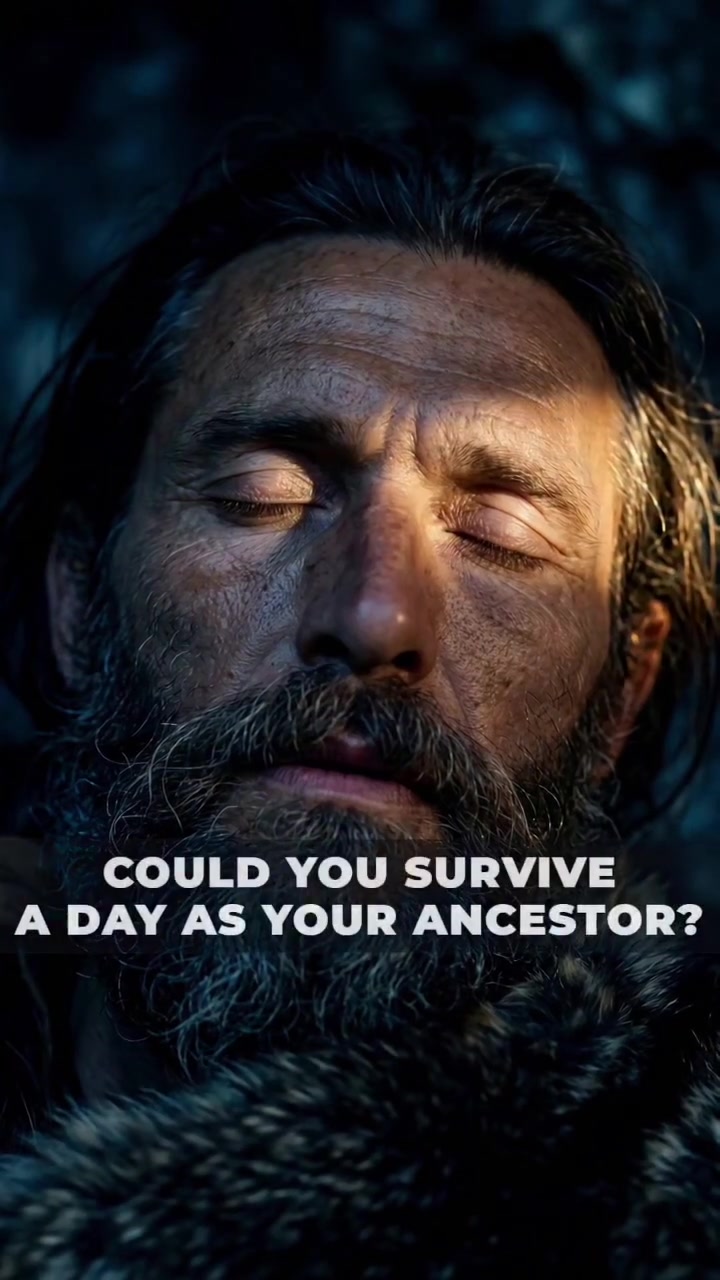
A man emulating the lifestyle of a distant ancestor awakens with the natural light of the sun. He risks not lasting long in this ordeal. His physical adaptation to the harsh lifestyle of our primal past is so different than the average person today. When humans lived this way, he argues, they achieved peak physical fitness and nutritional balance.
The Primal Prototype The lifestyle details the daily routine of a person who lives according to ancestral principals, combining physical fitness with an organism-focused diet.
Everyone from the present-day who tried the Paleo lifestyle would surely need to follow this routine.This is the life of our ancestors. What does that mean in daily terms? The creator sketches out a rough routine. Sleep regulated by the sun's light. Bare feet on the cold earth. A high step count of 16,000. Avoiding any man-made chemicals. The food consumed by the represented individual includes wild meat, bone marrow, organs, and berries. The life of this individual is incredibly taxing. The routine does not stop at basic, restful activities. This lifestyle is a constant, demanding cycle. Every meal is earned, hunted, or chased. Physical activity is a necessity: otherwise, there is no survival. Survival dominates the central place in the consciousness. The "tribal environment" — in other words, community — goes with the whole package. The person is not alone in this; the tribe moves together. The featured routine doesn't only involve walking and food — there are other elements associated with it. The ancestor sleeps deeply. No alarms disturb the night. Chemical elements like fluoride are absent from the diet. He doesn't have any tools and gadgets. Nor does he have modern clothing. The person isn't concerned about calories and macros. They never use supplements. The routine is founded on different priorities. When it comes to food, the instrument is not always a knife. Teeth are used. What is consumed is not defined by fads or easy rules. The nutrient-dense ingredients were chosen naturally by the environment and the person's physical needs. As a matter of principle, the lifestyle is free from any processed substances.
The Evolutionary Case
Our ancestors lived in a highly demanding physical environment. The Paleo diet imitates their diet and lifestyle. The lifestyle arose from a need. It is a decision to live as close to our ancestors as possible in the modern world. Ultra-processed food is avoided. Every action has a purpose. This lifestyle is far from the lifestyle of a modern person. People started the Paleo lifestyle to replicate their ancestors' diet. The core aspect of the routine is physical: a lot of walking and training. The person is never sedentary. Exercise replaces interactions with computers and other gadgets. This lifestyle isn't concerned about numbers or goals. Rather, the activities have natural meaning and purpose, hearkening back to the natural life of our past. Walking plays an essential role. The man walks 16,000 steps before noon. That's a handful of calories burned. 30 steps might have been his original target, but he can walk more. He prefers to walk barefoot. Walking barefoot converts the body into a more sensitive instrument. The individual does not avoid discomfort. Being uncomfortable is an integral part of the routine. It is a way to connect with yourself. The classical approach to body fitness is applied to the way one handles stress and tension. The body has to adapt to new challenges and demands. That's the idea behind the routine. It is about survival and resilience.
How to Eat Like your Ancestor
The food choices in the routine might seem hard to imitate. Meat is a major component; specifically, meat from wild animals. Bone marrow is a staple. Bone marrow's presence makes sense: it does provide a comprehensive, natural set of nutrients. Organ meats are another major resource. These organs are a natural multivitamin. Food is a fundamental component of the routine. The meal is chosen to mimic the diet of the ancestor. The accent is on the quality and integrity of the food. It should be a clean, unprocessed product. There are no processed foods or chemicals. The contrast between this and modern food choices is immense. The diet is simultaneously simple and complicated. It is the way of life the routine showcases. It is a radical departure from our way of life but one that could be endured. People who undertake an ancestor diet discard refined sugar, grains, and legumes. Shelves of general stores and supermarkets are practically useless. You can try a small-scale version of the diet, adopting small changes. If the diet is not being followed, never miss a meal. Skip potato chips and take wild berries instead. Small steps are a start.
The Water and Sleep Ethos
Bare feet walking on the ground every day are not the only defining traits that set this lifestyle apart. The way that food, water, and sleep is handled is different. The water and sleep regimen are used to complement the hard work and training. “The man doesn’t look for a spring,” The narrator says. “He drinks the water straight from the natural sources.” Walking the extra mile. Walking barefoot, even in chilly conditions, is part of the regimen. Water in this routine is pure. After a day of walking and working with your tribe, the body is thirsty. The water comes directly from clean rivers. The water is free from any fluoride and chemicals. There is no artificial filter. The only filter for water is nature itself. This water is better for the body than any modern water. Sleep is an integral part of the routine. It is not a time to reset. It is part of the routine and is as vigorous as the other activities. Sleep is when your body repairs itself. Sleep is deep and uninterrupted. Sleep is based on the sunlight. At dawn, the body wakes up, and it is time to start the day. At dusk, the body falls asleep. The sun is the regulator of sleep. The individual does not have to struggle with artificial light to maintain sleep. They don't need any devices. The sun and environment are a reliable source. The body never knew the diseases that fill our bodies.
The Fitness and Community Component
There are few tasks that the individual is not trusted with. Hunting and working with others are examples. The descendant reflects this routine. The individual does not train for a future event or competition. Training and fitness are a part of daily life. The man is not left to himself: he works with a group. The individual is not alone. The individual is part of a community, and this community exists in a tribal environment. The muscle that the individual abuses will be trained in the routine. There is no other way. Physical fitness is an essential part of the routine. The fitness is not about how the muscle looks. The fitness is about how the muscle works. The muscle needs to help you outrun a bear or carry a heavy burden. The entire body is put to the test. When it comes to fitness, the individual is expected to do more than usual. He walks 16,000 steps a day. Even though it may seem hard, the figure is easily reachable. Food and fitness are the basics of this routine. The individual is a part of a community. The community is filled with people who follow the same lifestyle. The tribal environment becomes a foundation for the individual's routine. No one is left on their own. There is a collective effort to achieve the goal. Being part of the community enhances the ability of individuals to reach far. The community and routine are connected. The fitness and diet are not solitary tasks. A person's survival depends on their tribe. Each member contributes by improving the routine and fitness of other members.
Reclaiming the Physical Self
To try out a Paleo's lifestyle, you'll need to first understand that it's not going to be easy. First, discard the need for equipment. Walking is an excellent start. Don't forget your environment. Your body will reward you with knowledge. Your body will remember. The benefits are physical. The person gets an amazing body immune to the modern diseases. The individual will look fat to some, but the fat is a healthy layer. Your muscle will be more toned. The first step is probably the hardest. If you want to come back to the original circuit, that is where you should start. Walk barefoot on earth. Connect your feet with the dirt. Those simple things can make a difference. The stress aspect of the routine is a surprise. You might think that the routine is hard work. It is, but the work is followed by periods of rest. Stress comes from training and hunting. The body and mind become used to the natural stress and tension. The stress seems natural. It is a part of the routine. The routine emphasizes the need for discipline. It is not easy to adapt to the routine. You must leave the comfort zone. The routine is not a linear journey with a clear start and endpoint. The end is knowing. The ritual is where one learns about the self and the world.
Questions readers ask
What exactly does the Paleo lifestyle entail besides diet and exercise?
The Paleo lifestyle is a comprehensive approach that mimics the daily routine of our ancestors. It includes waking up with natural light, walking barefoot, engaging in high levels of physical activity, and consuming a diet free from processed foods and chemicals. The lifestyle also emphasizes community and tribal living, with a focus on survival and natural rhythms.
How many steps does the Paleo lifestyle recommend daily, and why?
The Paleo lifestyle advocates for walking around 16,000 steps a day, predominantly before noon. This high step count is modeled after the active lifestyle of our ancestors, who had to walk extensively to hunt, gather, and survive. Walking barefoot is also encouraged to reconnect with the earth and enhance physical fitness.
What kind of food does the Paleo lifestyle promote, and why?
The Paleo diet focuses on nutrient-dense, whole foods that our ancestors would have consumed, such as wild meat, bone marrow, organs, and berries. It avoids processed foods, chemicals, and modern conveniences like tools and gadgets. This diet is chosen naturally by the environment and the person's physical needs, prioritizing nutrients over calories and macros.
How does the Paleo lifestyle approach sleep and community?
The Paleo lifestyle emphasizes deep, natural sleep regulated by sunlight, free from alarms or disturbances. It also encourages a strong sense of community, or 'tribal environment,' where individuals move and live together, supporting each other in their daily routines and survival efforts. This aspect of the lifestyle is crucial for both physical and mental well-being.
What are the main differences between the Paleo lifestyle and a modern lifestyle?
The Paleo lifestyle is vastly different from a modern lifestyle, which is often sedentary and filled with processed foods and technological distractions. The Paleo lifestyle prioritizes constant physical activity, natural rhythms, and a deep connection to the environment and community. It also avoids modern conveniences and focuses on survival and natural living.
Can someone living the Paleo lifestyle use modern tools and gadgets?
The Paleo lifestyle discourages the use of modern tools and gadgets, as it aims to replicate the lifestyle of our ancestors as closely as possible. This means relying on natural methods for survival, such as using teeth to consume food and walking barefoot to enhance physical fitness. It also avoids modern conveniences and focuses on natural living.
What are some practical challenges of adopting the Paleo lifestyle?
Adopting the Paleo lifestyle can be challenging due to its demanding nature. It requires a significant amount of physical activity, a strict diet, and a deep commitment to natural living. Additionally, it may be difficult to find wild, nutrient-dense foods and to avoid modern conveniences and processed foods. However, the lifestyle offers a unique opportunity to reconnect with nature and achieve peak physical fitness and nutritional balance.
Related deep dives
Similar reads based on topic and creator.

Recent articles
Fresh deep dives from the latest Reels we unpacked.



Comments
Be the first to comment.