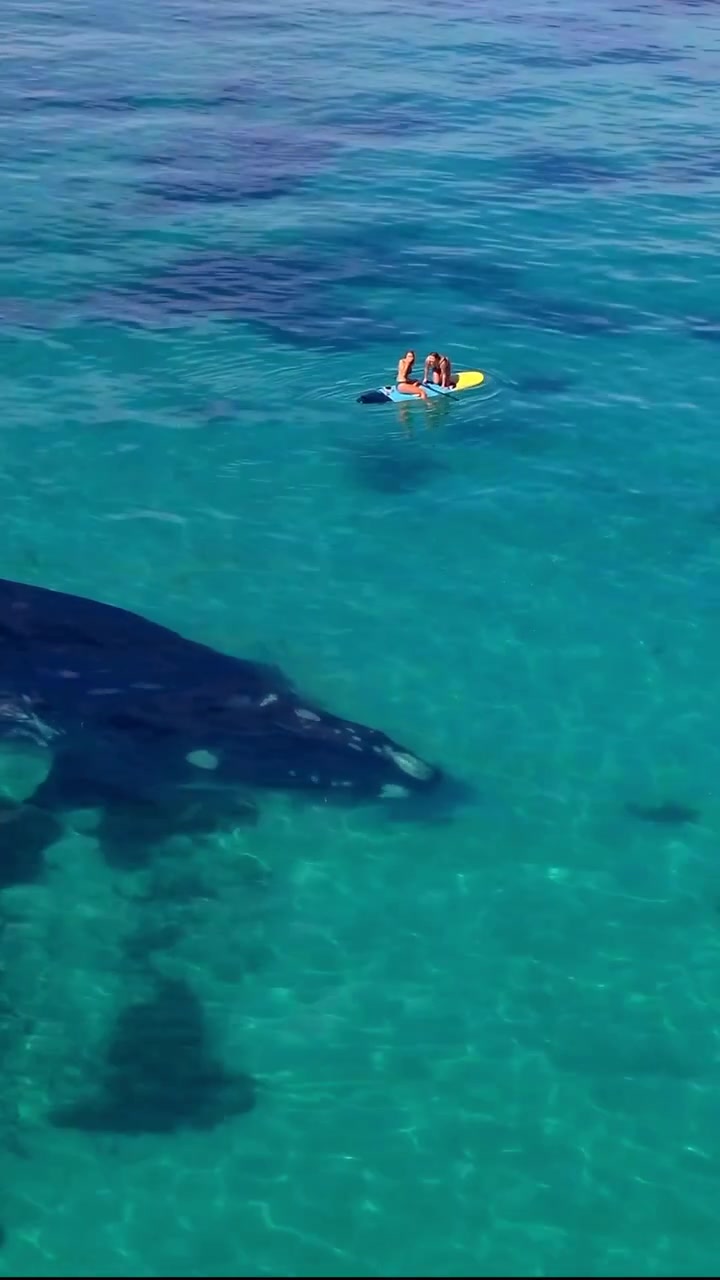
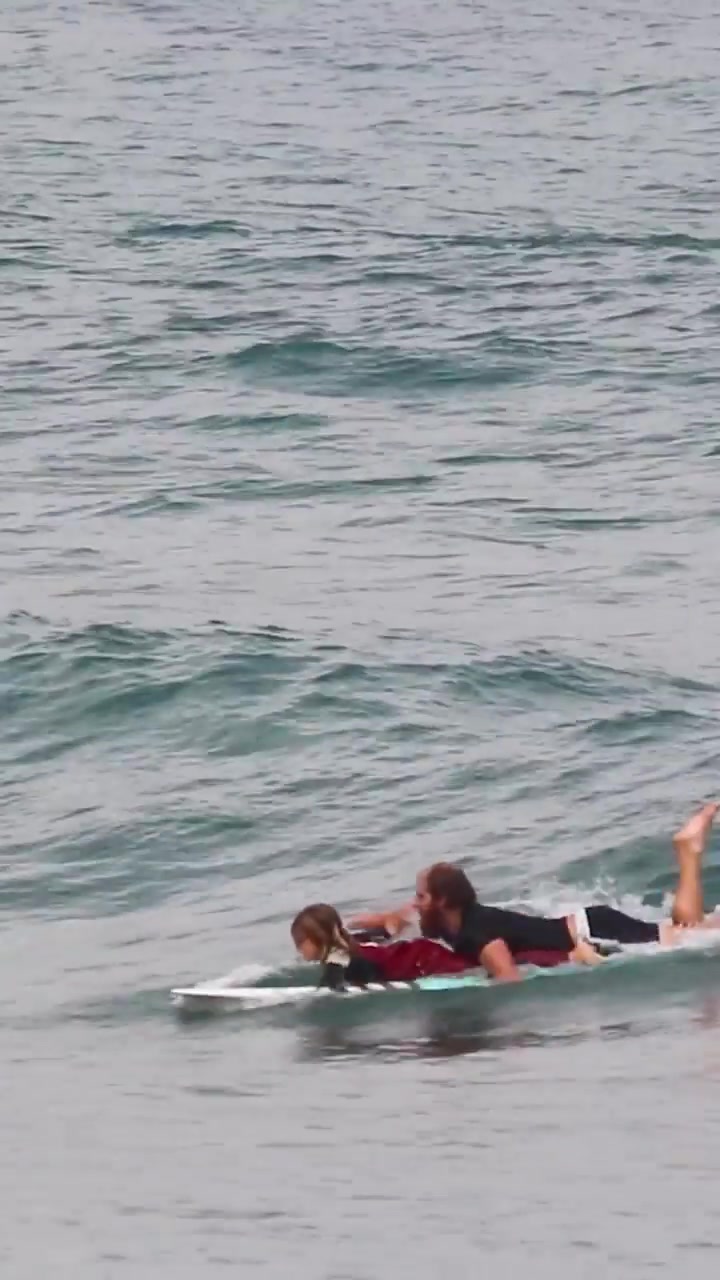
The video captures two people paddleboarding in crystal-clear turquoise waters, with the unexpected sight of a whale swimming gracefully beneath them. The encounter highlights the thrill of marine life sightings during a popular water sport. This encounter should remind everyone how close large marine life can come to humans in the water, and how beautiful it is.
Experience on the brink of paradise
What is paddleboarding? Paddleboarding is an outdoor water sport that involves standing on a large, flat board and propelling yourself through the water with a long paddle. This stand-up water sport is commonly done in calm, shallow waters; it is more stable and easier than surfing. The paddleboard itself is designed for stability, balance, and efficient movement. Though paddleboarding focuses on calm waters, the contrast of the unknown is shown dramatically, with a hippopotamus-like whale swimming beneath the paddle boarder. Paddleboarders can enjoy the water quietly. Every paddle stroke or gentle shift of weight then becomes a point of connection with the aquatic world — and it might not just be fish.
Preserving nature as tourism
A whale sighting during a paddleboarding adventure is a testament to the beauty of marine life. But how do people interact with marine animals? When marine animals and humans meet face-to-face, humans need to maintain enough distance to ensure the safety of both parties. In order to conserve marine wildlife, people must adhere to strict guidelines and rules. Generally, keeping a distance of at least 50 meters from marine life is recommended. Yet, paddleboarders are likely closer than that — with just a few feet separating them from the whale. Though the whale crosses too close to the paddle boarders, with a little over 20 feet between the animal and the board, there's no mention of disruption or harm. It's important to note that whales can be especially dangerous — they are large and strong, like a boat or small plane. A good comparison might be a hippo attack in Africa. Whales are unpredictable, and large whales can weigh anywhere from 2-3 tons, so they can cause serious injury or even death to human beings. Researchers have been injured by whales, knocked unconscious, or killed in on water interactions. The whale sighting in the video shows that, despite being close, humans can coexist with marine wildlife. However, everyone should be aware of whale safety guidelines, including keeping a safe distance and understanding the risks to recreate this event safely. The whale sighting captured in the video could be a potential marketing tool. With the help of tourism, marine conservation efforts could be advanced. These sightings would increase tourism, and subsequently, more money could be directed towards conservation efforts. For example, if there are more economic gains of whale sightings, it could help keep marine life healthy and well-protected. People would also pay to visit the location of the sighting, and the ability to enjoy it with respect to the animals may have visitors protecting the wildlife themselves.
The drama of marine life sightings
The beauty of the experience
Visitors can capture the joy and thrill of paddleboarding. Transferring the beauty of marine life sightings accurately to social media captures a lot of attention, if done respectfully. In the case of the social media post, viewers — paddleboarders and landlubbers alike — are awestruck by the unexpected sighting. The paddleboarders’ reaction to the sighting is simply experiencing the outing, not changing behavior based on the presence of the whale. The whale, visibly visible under the paddle boarders, has no interest in the humans above and remains unaffected. People appreciate and enjoy the beauty of the ocean more once faced with a large, majestic animal living in it. The whale's presence adds drama and grandeur to the videos and images people take of the experience.
Enjoying the thrill
Paddleboarding can also be an excellent form of exercise and a way to enjoy a relaxing adventure. Individuals can take in the natural scenery and often idle through wildlife. The whale sighting makes an everyday paddleboard trip into an adventure. The whale appears directly under and close to the paddleboarders. They do not change the behavior of their paddleboarding, but they have the experience of being near such a majestic creature — which makes the whole experience of paddleboarding feel like a safari. The paddleboarders likely even more affected by the sighting, and may eventually become responsible for the safety of the animals as well.
Concerns about the whale's safety
The larger the animal, the more likely humans are to be cautious about it. The video shows two paddle boarders, and whale. The closeness of the whale is unexpected, and the sighting is unexpected as well. However, the whale encounters no apparent danger from the predators. Just 10 feet away from the whale is a paddleboarder, who is quietly standing still. Human beings will have to take this situation as an exception. Though the encounter feels close, the whale can only see the paddle boarder — and the paddleboarder is barely in the water, so neither the paddleboarder nor the whale is in any danger. To maintain this -- to protect marine animals while also allowing humans to enjoy their beauty -- people should adhere to strict guidelines and rules for marine life. Generally, keeping a distance of at least 50 meters from marine life is recommended. No law enforcement is in place to protect the animal or the people, so safety falls on the individuals themselves. What happens if the whale becomes disruptive? It is important for the paddleboarder and the whale to maintain safety while they are in the water, which will involve understanding the laws and regulations of their specific area.
Making your own adventure
Marveling at the experience of these two paddleboarders as they encounter a whale. Grab a paddleboard, and try these tips to get in the water responsibly.
- Safety first: Wear a personal flotation device. Make sure you learn how to swim, to minimize risk to both yourself and whatever marine life may be out there. This isn't a video game or an AV experience.
- Follow the rules of the water: Each area will have certain rules that paddleboarders should follow. This might involve anything from remaining at a certain depth to wearing certain safety equipment. Make sure you understand what they are and follow them.
- Stay aware of the surroundings. Keep an eye on your surroundings. Swimming near a beach, or deep in a wake, might have unseen dangers. The larger the animal, the more dangerous it can be. If you're lucky enough to come across a whale, take a moment to appreciate the beauty of the experience and the grandeur of the animal. Then, carefully back away. When no one is harmed by the interaction — whether human or animal, the interaction is beneficial to everyone. It's when everyone around the sighting realizes they can't always control the environment. When no one is harmed by the interaction, they can appreciate the beauty of the ocean and all the creatures living in it.
Questions readers ask
What kind of paddleboard would be best for seeing marine life?
For seeing marine life, a stable and wide paddleboard is ideal. The video shows paddleboarders using a large, flat board designed for stability and balance, which is perfect for calm waters and spotting wildlife. These boards allow for a smooth and quiet ride, minimizing disturbance to marine animals.
What should I do if I encounter a whale while paddleboarding?
If you encounter a whale while paddleboarding, it's crucial to keep a safe distance. The video highlights the importance of this, even though the whale came close. Researchers recommend staying at least 50 meters away, and avoiding any actions that could disrupt or harm the animal. Remember, whales are large and unpredictable, so safety should always be your top priority.
How can paddleboarding contribute to marine conservation?
Paddleboarding can contribute to marine conservation by increasing awareness and tourism. If more people visit areas where marine life is abundant, it can generate funds for conservation efforts. The video shows that these encounters can inspire people to protect marine wildlife, making them more likely to support conservation initiatives.
Why is it important to keep a distance from whales?
Keeping a distance from whales is important for both your safety and the whale's well-being. Whales are large and strong, and can be unpredictable, potentially causing serious injury or even death to humans. Additionally, maintaining a safe distance helps to minimize stress and disturbance to the animal, ensuring that it can continue its natural behaviors undisturbed.
What does the video show about the risks of encountering a whale?
The video demonstrates the potential risks of encountering a whale while paddleboarding. While the whale in the video came close to the paddleboarders, it's important to note that whales can be dangerous and unpredictable. The video serves as a reminder to always prioritize safety and follow guidelines for interacting with marine life.
Can I expect to see a whale while paddleboarding?
While it's possible to see a whale while paddleboarding, it's not guaranteed. The video shows a rare and unexpected encounter. The best way to increase your chances of seeing marine life, including whales, is to paddleboard in areas known for their marine wildlife and to follow best practices for wildlife viewing.
What should I do if a whale approaches me while paddleboarding?
If a whale approaches you while paddleboarding, stay calm and avoid making sudden movements. The video shows the importance of remaining still and quiet. If possible, slowly move away from the whale while keeping a safe distance, and avoid any actions that could disrupt or harm the animal. Always prioritize your safety and the well-being of the whale.
Related deep dives
Similar reads based on topic and creator.


Recent articles
Fresh deep dives from the latest Reels we unpacked.


Comments
Be the first to comment.