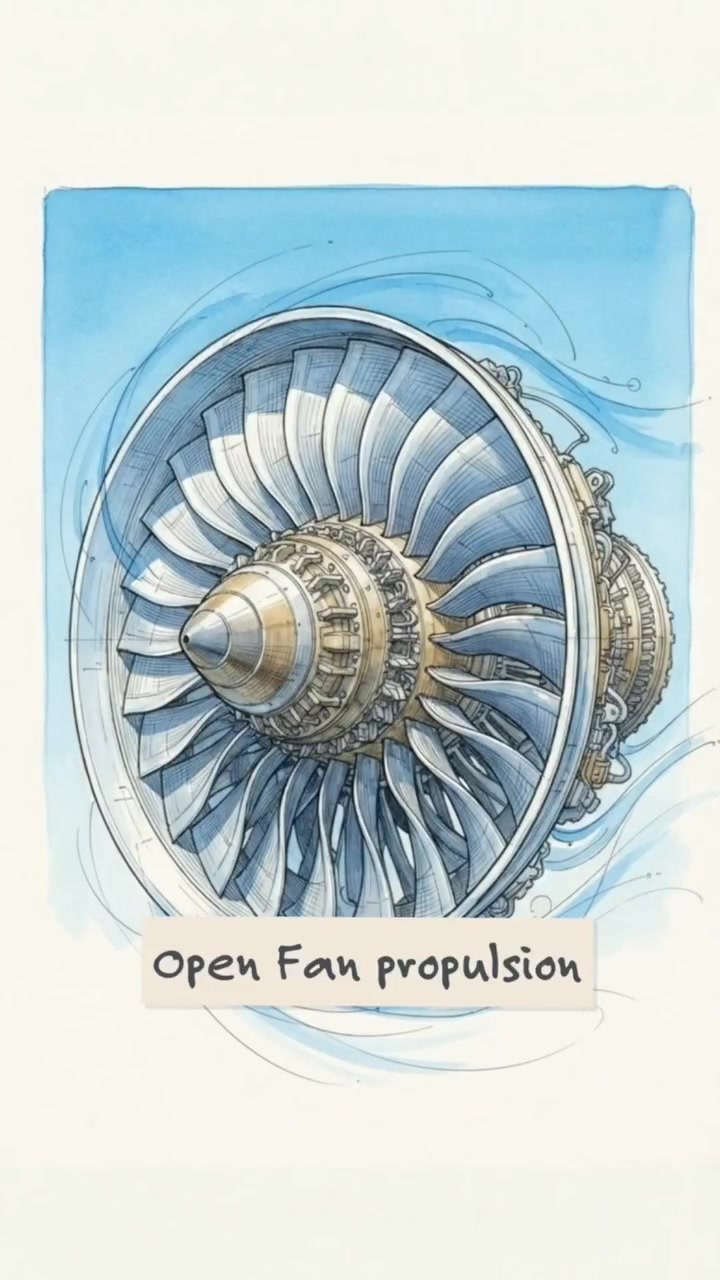
Aviation has been grappling with efficiency for decades, but a new approach is taking off. The open fan engine technology is about to change everything under the wings by doing away with the heavy casing that has long held back fuel efficiency.
Exposing Turbofans to the Wind
Ever wondered why jet engines still rely on heavy outer shells to propel airplanes? Traditional turbofans push air through a central core, with the bulk of the thrust generated by air flowing around this core, not through it. This makes a wider front fan key to better fuel efficiency, but wider fans need larger casings. That heavy outer shell, called a nacelle, adds weight and drag, ultimately canceling out any fuel savings. But the future appears to be here. The open fan propulsion system invented by GE Aerospace's Bangalore Research Hub simply eliminates the nacelle altogether. That means fan blades can expand to a massive diameter, and generate the thrust to cut fuel consumption by twenty percent.
The airway to a lighter airship.
Open fan propulsion taps into a critical moment for aviation, where both the public and industry have to adapt to carbon standards. The push for fuel efficiency and sustainability highlights the need for more economical aircraft. Beyond the environmental impact, advances in engine technology like open fan designs will significantly reduce operational costs and help lower ticket prices. The next generation of commercial airliners won't drag under the weight of giant metal tubes. Instead, they will fly on massive, completely exposed blades under the engineering direction of GE Aerospace's Bangalore Research Hub.
The physics at the heart of open fan propulsion.
Weightless wings.
Sweeping away the heavy nacelle in favor of wide-open blades transforms the physics of jet propulsion. The fans can reach a larger diameter thanks to the removed structural penalties. The larger blades sweep a greater volume of air, generating the thrust needed while cutting fuel consumption. Even though more air moves around the engine core, this system keeps the engine relatively straightforward. It maintains a simpler, more efficient design without the heavy casing, which ensures less drag and less fuel burned.
Blades gleam.
Where the open fan system really shines is in its power efficiency. That huge airflow around the exposed blades provides the thrust needed for efficient flight. The wider blades allow for higher airflow, which means better efficiency. This allows the engine to generate the required thrust output with a minimal engine size and reducing the overall footprint of the engine itself. Without the nacelle, this design allows the blades to glide freely in the wind with minimal drag.
The engine turns green.
In this era of green technologies, the open fan propulsion technology is exactly what the world of aviation needs. A GE Aerospace research hub team proposes a most significant test case for aviation efficiency, with dramatic reductions in greenhouse gas emissions and engine weight. Engine innovations like the open fan architecture are critical components in reducing the environmental impact of the aircraft – and show that fuel savings and sustainability can go hand in hand.
Take your flight stance.
When the next generation of airliners take to the skies, they'll be propelled by engines that look and work dramatically differently. If you're curious about how the open fan propulsion technology can propel you into the future, you might expect to see the new generation of airliners from GE Aerospace. Commercial airlines will be more efficient and carbon footprint, powered by the open fan technology.
Fly into the Future
The open fan engine technology is one of the boldest innovations in aviation. As technology evolves and the industry becomes more sustainable, the open fan engine technology will face a lot of scrutiny, but it is definitely a step in the right direction. The fan blades sweep through the air more freely, the engine design is more straightforward, and the environmental benefits are more profound. As a result, the skies will become greener, and the future of aviation looks more efficient.
Questions readers ask
How exactly does the open fan propulsion system work?
The open fan propulsion system works by removing the heavy outer casing, or nacelle, from the jet engine. This allows the fan blades to expand and sweep a larger volume of air, generating more thrust with less fuel consumption. The exposed blades also reduce drag, contributing to overall fuel efficiency.
What are the main benefits of using an open fan propulsion system compared to traditional turbofans?
The primary benefits are increased fuel efficiency, reduced weight, and lower operational costs. By eliminating the nacelle, the open fan system can achieve a 20% reduction in fuel consumption, making it a more economical and environmentally friendly option. This also helps lower ticket prices for passengers.
How does the open fan propulsion system contribute to sustainability in aviation?
The open fan propulsion system significantly reduces greenhouse gas emissions by cutting fuel consumption. This makes it a critical component in the aviation industry's push for more sustainable and eco-friendly aircraft. The reduced weight and drag also contribute to lower operational costs, aligning with the industry's goals for carbon standards.
Can open fan propulsion systems be retrofitted to existing aircraft, or are they only for new designs?
The article does not specify whether open fan propulsion systems can be retrofitted to existing aircraft. Given the fundamental changes in engine design, it's likely that these systems are more suited for new aircraft designs rather than retrofitting existing ones. However, more information from GE Aerospace would be needed to confirm this.
What role does GE Aerospace's Bangalore Research Hub play in the development of open fan propulsion technology?
GE Aerospace's Bangalore Research Hub is instrumental in the development of open fan propulsion technology. The hub has invented the open fan propulsion system, which eliminates the heavy nacelle and allows for wider, more efficient fan blades. The hub's engineering direction is crucial in advancing this technology for the next generation of commercial airliners.
How does the open fan propulsion system maintain efficiency while moving more air around the engine core?
The open fan propulsion system maintains efficiency by allowing the fan blades to reach a larger diameter, which sweeps a greater volume of air. This increased airflow generates the necessary thrust without requiring a larger engine core. The design keeps the engine relatively straightforward, ensuring less drag and less fuel burned.
Are there any potential downsides or challenges to implementing open fan propulsion technology?
The article does not explicitly mention any downsides or challenges. However, potential concerns could include the structural integrity of exposed blades, maintenance requirements, and the impact of debris or weather on the engine. More information from GE Aerospace would be needed to address these potential issues.
Related deep dives
Similar reads based on topic and creator.




Recent articles
Fresh deep dives from the latest Reels we unpacked.




Comments
Be the first to comment.