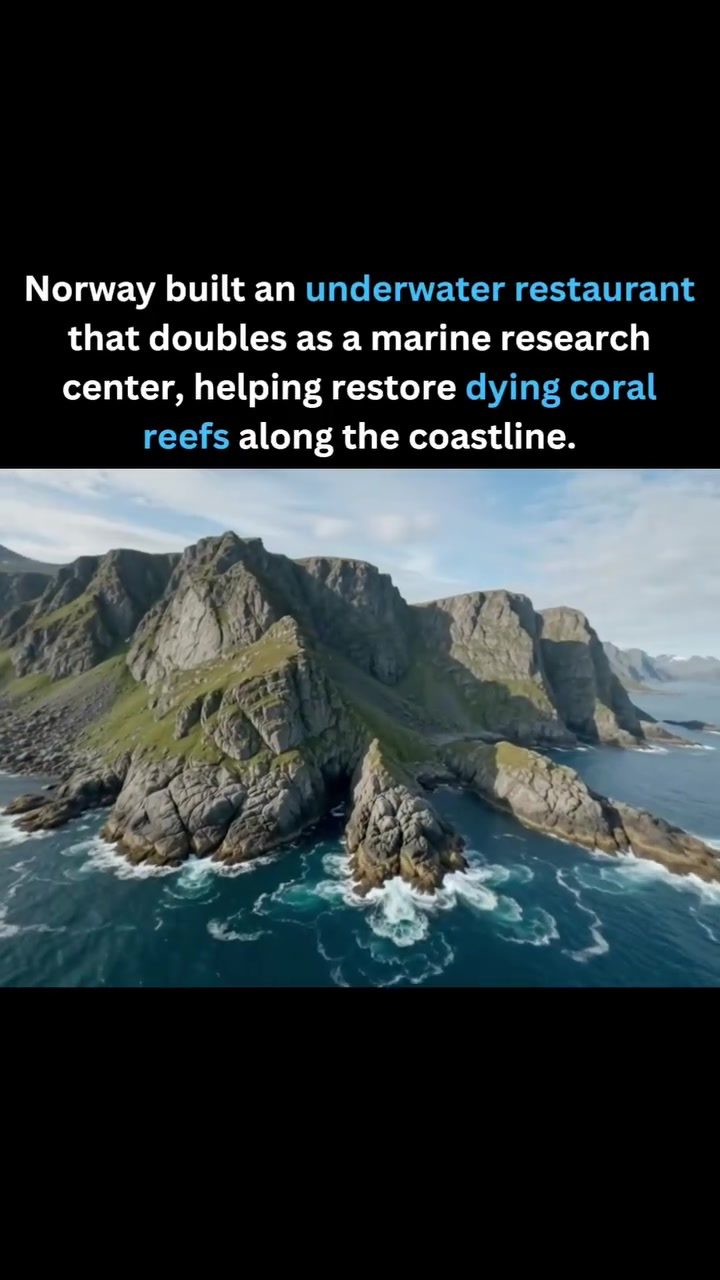
Underwater Dining and Marine Restoration
Norway has pioneered an innovative concept: an underwater restaurant that serves a dual purpose. It offers a unique dining experience while also functioning as a marine research center. This remarkable facility is making significant contributions to the restoration of dying coral reefs along the Norwegian coastline.
Why This Matters
The world's coral reefs are under threat due to various factors, including climate change, pollution, and destructive fishing practices. Coral reefs are crucial ecosystems that support marine biodiversity and protect coastlines from erosion. The restoration of these vital habitats is essential for maintaining healthy oceans and the communities that depend on them.
Exploring the Underwater Restaurant and Marine Research Center
The Concept
The idea of combining a restaurant with a marine research center is groundbreaking. This unique concept allows diners to enjoy a meal while contributing to a critical environmental cause. The restaurant's design includes large windows that provide stunning views of the marine life outside, creating an immersive dining experience.
The Facilities
The restaurant is equipped with state-of-the-art coral and fish tanks, which house various marine species. These tanks serve as living laboratories where researchers can study and monitor the health of coral reefs and the marine life that depends on them. The facility is also designed to be sustainable, using eco-friendly materials and energy-efficient systems to minimize its environmental impact.
Marine Research and Restoration
The restaurant's researchers are focused on developing effective strategies for coral restoration. They are particularly interested in understanding how certain marine species can help regenerate dying coral reefs. By observing and documenting the interactions between different species in the tanks, researchers hope to uncover new methods for restoring damaged reefs in natural environments.
Practical Tips for Supporting Coral Restoration
While not everyone can dine at an underwater restaurant, there are several ways to support coral restoration efforts:
Reduce Carbon Footprint
One of the most significant threats to coral reefs is climate change. By reducing your carbon footprint, you can help mitigate the effects of climate change on marine ecosystems. This can be achieved through simple actions like using public transportation, reducing energy consumption at home, and supporting renewable energy initiatives.
Support Sustainable Fishing Practices
Overfishing and destructive fishing practices can severely damage coral reefs. By supporting sustainable fishing practices, you can help protect these vital ecosystems. Choose seafood that is certified by sustainable fishing organizations and avoid products that contribute to overfishing.
Participate in Coastal Cleanups
Coastal cleanups are an excellent way to help keep marine environments healthy. By participating in local cleanups, you can help reduce the amount of plastic and other debris that end up in the ocean, which can harm coral reefs and marine life.
Fund Marine Conservation Projects
Donating to organizations that focus on marine conservation can support research and restoration efforts for coral reefs. These organizations often rely on public donations to fund their work, making your contribution essential to their success.
Important Takeaways
The underwater restaurant in Norway is a shining example of how innovation and environmental stewardship can coexist. By combining a unique dining experience with critical marine research, this facility is playing a crucial role in restoring dying coral reefs.
Conclusion
Underwater restaurants like the one in Norway are pioneering a new approach to environmental conservation by integrating dining experiences with marine research. This model not only provides a unique culinary adventure but also contributes significantly to the restoration of coral reefs and the preservation of marine biodiversity. By supporting sustainable practices, reducing our carbon footprint, and participating in conservation efforts, each of us can contribute to the health of our oceans and the planet as a whole.
Questions readers ask
How does the underwater restaurant in Norway support coral reef restoration?
The restaurant is integrated into a marine research center, allowing scientists to study and implement restoration techniques for dying coral reefs. A portion of the profits from dining services goes toward funding these conservation efforts, making every meal a contribution to marine preservation.
What can diners expect from the underwater dining experience in Norway?
Diners can enjoy a unique and scenic experience, with panoramic views of Norway's marine life. The menu features locally sourced, sustainable seafood, enhancing the connection to the coastal ecosystem while enjoying fine dining.
Why is coral reef restoration important for Norway's coastal ecosystems?
Coral reefs play a vital role in protecting coastlines from erosion and supporting marine biodiversity. Restoring these habitats helps maintain healthy oceans, which are essential for Norway's fishing industry and marine life.
How does the underwater restaurant contribute to marine research?
The restaurant serves as a base for marine researchers, providing a unique vantage point for studying marine life and testing coral restoration methods. This integration of dining and research supports the ongoing efforts to preserve Norway's marine environments.
What measures are taken to ensure sustainable dining at the underwater restaurant?
The restaurant focuses on sustainable seafood options, sourced responsibly from local fisheries. By prioritizing sustainability, the restaurant reduces its environmental impact and supports the long-term health of Norway's coastal ecosystems.
Can guests learn about marine conservation efforts while dining?
Yes, the restaurant offers insights into the ongoing marine conservation efforts through informative materials and interactions with researchers. This allows guests to deepen their understanding of the importance of coral reef preservation while enjoying their meal.
How does the restaurant address the challenges of climate change affecting coral reefs?
By serving as a hub for marine research, the restaurant supports studies that develop methods to mitigate the impacts of climate change on coral reefs. These efforts include monitoring the effects of rising sea temperatures and implementing innovative restoration techniques.
Related deep dives
Similar reads based on topic and creator.

Recent articles
Fresh deep dives from the latest Reels we unpacked.
Comments
Be the first to comment.