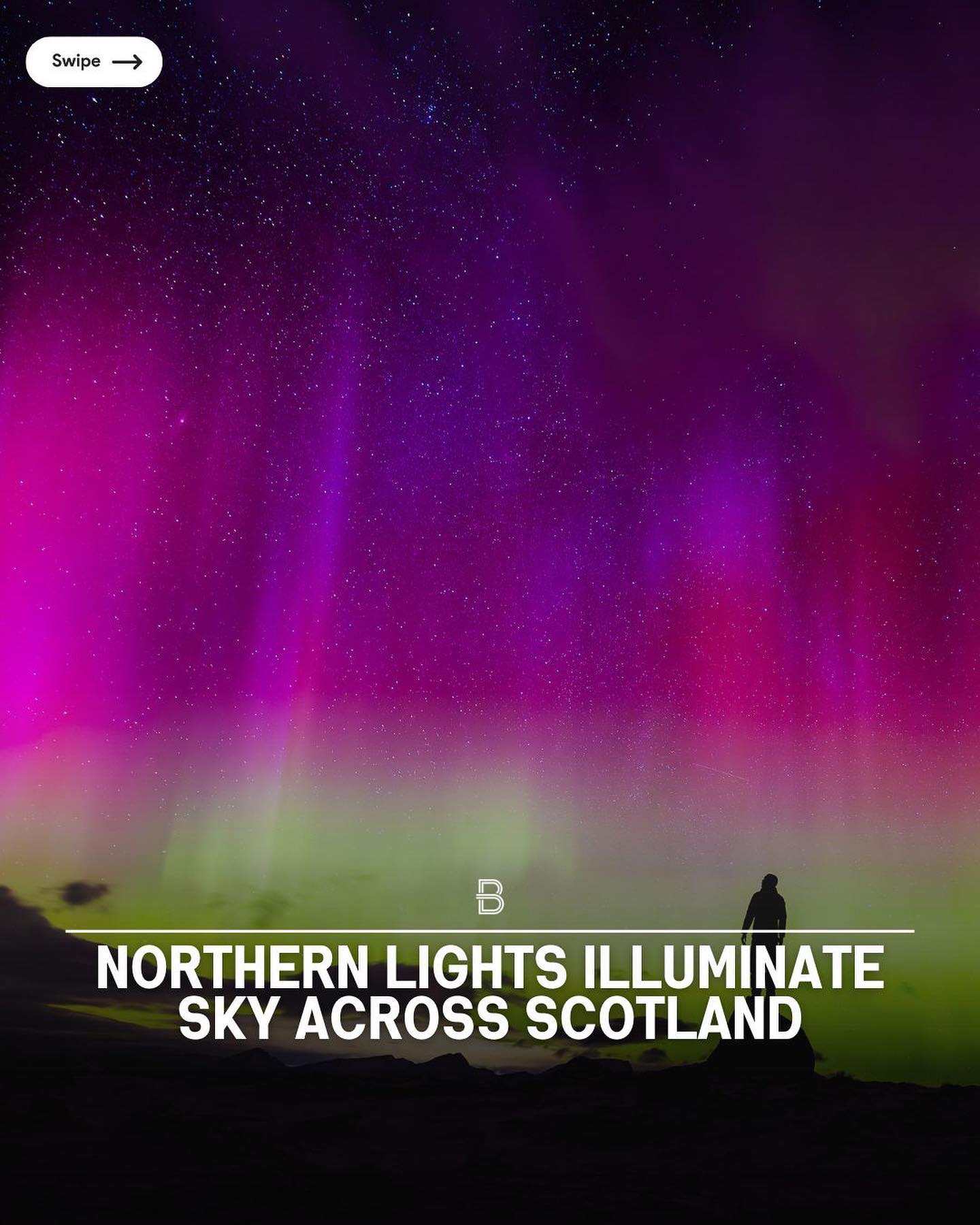
The Northern Lights, a natural phenomenon also known as the Aurora Borealis, paint the Scottish sky with vivid hues of green, pink, and purple. These lights are a sublimely beautiful phenomenon that draws travelers to Scotland. They've left observers captivated by the mysterious depth and movement of the lights. That the natural display is visible from a rocky landscape, under the open sky and next to a camping tent, reminds the viewer of the unique mix of access, simplicity, and grandeur that makes up Scotland's aurora experience. It is one of the UK's most striking natural phenomena.
Living Canvas of the Sky
The Northern Lights over Scotland is a naturally occurring spectacle in the night sky. It is caused by the interaction of charged particles from the sun with Earth's magnetic field and atmosphere. The result is a display of vibrant, moving lights that vary in color and intensity. The lights most commonly appear as a green glow, but pink and purple hues also make frequent appearances, depending largely on the gas molecules involved. The distinctive aurora bands are the product of chemical reactions high in the Earth’s atmosphere. When energized particles from solar winds collide with molecules of oxygen and nitrogen, they create photons of light, which are the stunning lights we see. In Scotland, the most vibrant displays usually appear in the far north, under very dark and clear skies. Set against Scotland’s rugged landscapes, the Northern Lights create a breathtaking contrast between the natural wilderness and the ethereal glow of the aurora. Auroras are visible in the Northern Hemisphere from 8 to 19 times a year. The sky always looks different. Some nights the sky is a gentle glow, while on others dancing curtains emerge and stretch across the sky. During intense activity, the vibrant lights can pulsate and twist, forming intricate patterns against the vast expanse of the night sky.
Scottish Lights, Global Appeal
The Northern Lights are a magnet for visitors. They draw tourists from across the world to Scotland. These auroras reflect a wider cultural interest in astronomy and the night sky. The appeal of the phenomenon is timeless, but social media has amplified the allure of such magical experiences. The allure of the lights is that they capitalize on the intangible desire that is a mix of awe, excitement, and discovery. They represent a momentary escape from artificial light. We can see the northern lights anywhere in Scotland. It's worth seeing the lights, camping under the auroral display.
Sky and Scottish Weather
Conceptually, and technically, the Northern Lights are a clear subject but understanding when and where to see them depends on several factors. The northern lights are best viewed on a clear, dark night in northern Scotland, especially in locations such as the Shetland Islands, Orkney, or Caithness. The weather greatly impacts visibility, making the unpredictable Scottish climate both a blessing and a challenge for aurora hunters. The auroras are best viewed when the sky is clear and dark. Make sure to check the forecast ahead of your trip. While Scotland's weather may be unpredictable, clear skies offer the best conditions for spotting the lights. Find a spot away from light pollution, such as a remote hilltop or a secluded beach.
Preparing for the Display
Set up a comfortable camping spot and settle in to wait for the show to begin. A sturdy tent and warm camping gear, including blankets, warm clothing, and possibly a camping stove or heater, are crucial. During long periods of waiting, having snacks and warm drinks available can make the experience more enjoyable. Most importantly, keep checking the sky and don't miss the show!
Relaxing in the Natural Wonders
The Northern Lights provide a unique setting for a camping trip under the stars. The vivid colors and mystical patterns create a magical atmosphere. The experience is truly transformative, offering a connection to nature and creating lifelong memories. It’s a night away from electronics and the urban environment, allowing you to fully immerse yourself in the wonders of the universe.
Capturing the Magic
The aurora borealis provides an immense amount of beauty, but capturing the moment on camera is difficult due to the low light and movement of the lights. The best way to photograph the Northern Lights is to use a tripod and a camera with manual settings. Adjust the ISO to 1600 or higher. Start with a wide-angle lens and experiment with different shutter speeds to capture the movement of the lights. Once the exposure is set, focus on a distant object or turn off autofocus. Use a slower shutter speed, such as 10-30 seconds, to capture the flowing movement of the lights. After several attempts, you'll see your first closeups of the aurora's glow.
The Lights Will Guide You
In a world where nights are often filled with artificial light, the Northern Lights over Scotland offer a rare and profound connection to nature. The experience is not just about witnessing a natural phenomenon but also about immersing oneself in the vast, untamed beauty of the landscape. With the right gear, weather, preparation, and a bit of patience, you can see the lights and appreciate the beauty. Whatever the outcome, you will have a sense of a once-in-a-lifetime experience that you can enjoy for years to come.
Questions readers ask
What exactly causes the Northern Lights to appear in the sky over Scotland?
The Northern Lights, or Aurora Borealis, over Scotland are caused by the interaction of charged particles from the sun with Earth's magnetic field and atmosphere. When these particles collide with oxygen and nitrogen molecules in the atmosphere, they create a stunning display of vibrant, moving lights. The colors—green, pink, and purple—vary based on the types of gas molecules involved in the reaction.
How often can you see the Northern Lights in Scotland?
The Northern Lights are visible in the Northern Hemisphere, including Scotland, from 8 to 19 times a year. The frequency and intensity of the lights can vary greatly, with some nights showing a gentle glow and others featuring dynamic, pulsating patterns. The best displays usually occur in the far north under very dark and clear skies.
Are there specific places in Scotland that are better for viewing the Northern Lights?
Yes, the far northern regions of Scotland, such as the Shetland Islands, Orkney, and Caithness, offer the best views of the Northern Lights. These areas provide clear, dark skies that enhance the visibility of the aurora. The rugged landscapes of these regions also add to the overall experience, creating a stunning contrast between the natural wilderness and the ethereal glow of the lights.
What kind of weather conditions are best for viewing the Northern Lights in Scotland?
The Northern Lights are best viewed on clear, dark nights. For the best viewing experience, make sure to check the weather forecast ahead of your trip. Scotland's unpredictable climate can be both a blessing and a challenge for aurora hunters, so it's essential to plan accordingly. Clear skies offer the best conditions for seeing the vibrant lights.
Can I camp under the Northern Lights in Scotland, and is it a common activity?
Yes, camping under the Northern Lights is a popular activity in Scotland. Many visitors from around the world flock to the nation's northern regions to experience this natural display. Camping under the aurora offers a unique mix of access, simplicity, and grandeur, allowing you to immerse yourself in the beauty of the lights while enjoying the rugged landscapes of Scotland.
What makes the Northern Lights in Scotland so appealing to tourists?
The Northern Lights in Scotland appeal to tourists due to their awe-inspiring beauty and the unique experience of seeing them in person. The lights represent a momentary escape from artificial light and offer a blend of awe, excitement, and discovery. Social media has also amplified the allure of these magical experiences, drawing visitors from across the world to witness the phenomenon firsthand.
Are the Northern Lights visible anywhere in Scotland, or are there specific spots that offer the best views?
While the Northern Lights can be seen from anywhere in Scotland, the best views are typically found in the far northern regions. Places like the Shetland Islands, Orkney, and Caithness offer clear, dark skies that make the aurora more visible. It's worth planning a trip to these areas for the optimal viewing experience, especially if you're interested in camping under the lights.
Related deep dives
Similar reads based on topic and creator.
Recent articles
Fresh deep dives from the latest Reels we unpacked.

Comments
Be the first to comment.