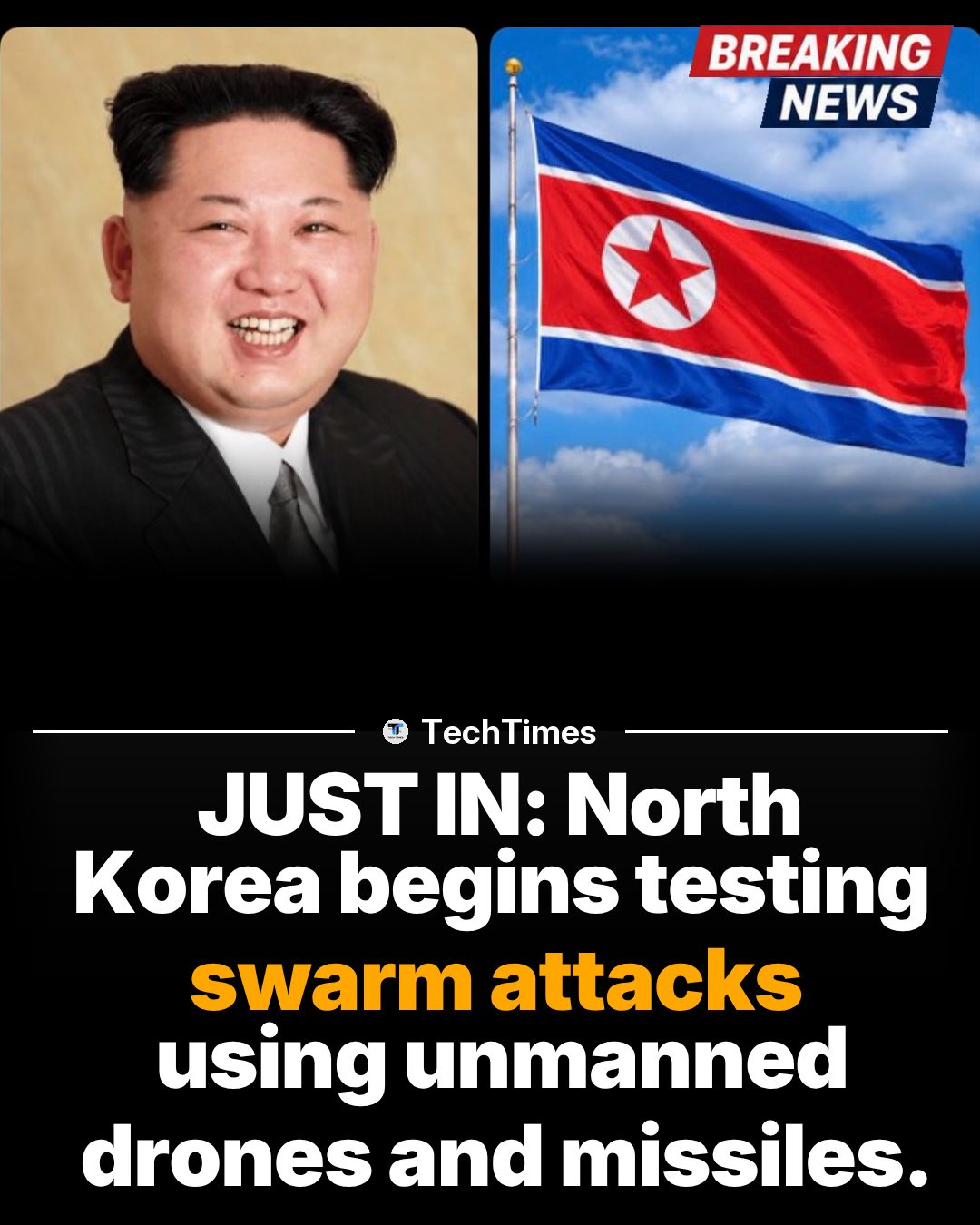
North Korea's latest military developments have brought the world's attention to a new tactic being tested. Pyongyang is reportedly putting unmanned drones and missiles to the test. The extreme nature of the attacks raises urgent questions about geopolitical tensions and the evolution of digital warfare. How it works, and its implications.
**Stealthy Weaponry:
What Unmanned Drone and Missile Swarm Attacks Are** Operating through swarm tactics, unmanned drones and missiles work by overwhelming enemy systems. The array of coordinated drones and missiles work in tandem to penetrate defenses; overpowering with their sheer volume and unpredictability. This tactic poses a significant challenge for conventional defense systems. They are designed to handle a limited number of threats and would be overwhelmed by the sheer volume and unpredictability of a swarm attack. The use of unmanned drones in swarm attacks is particularly alarming. These drones can be remotely controlled or programmed to fly in swarms, making it difficult for defenders to track and intercept them. Their stealth nature implies that modern radar and surveillance systems, which rely on detecting the larger signatures of traditional aircraft, may struggle to detect these smaller, faster-moving targets. The missiles complement the drones, providing a destructive payload that can cause significant damage. The combination of drones and missiles in a swarm attack creates a layered threat. The drones can act as decoys, confusing defense systems and drawing fire away from the missiles, which can then strike their targets with greater accuracy. The distinctive nature of swarm attacks lies in their ability to saturate and overwhelm conventional defenses. This makes them particularly dangerous, as they can penetrate even the most robust defense systems. This testing raises concerns about how Korea's development of these techniques could impact global security.
**The Testing Explained:
What It Means for Geopolitics** The swarm attacks being tested by North Korea highlight a growing trend in military technology. Nations are increasingly turning to unconventional tactics to gain an edge in warfare. The development and testing of swarm attacks using unmanned drones and missiles by North Korea is a clear indication of this shift. These tactics represent a significant escalation in military capabilities, as they allow for more flexible and unpredictable attacks. The geopolitical implications of these developments are profound. North Korea's testing of swarm attacks could potentially alter the balance of power in the region. Neighboring countries, such as South Korea and Japan, may need to reassess their defense strategies to counter this new threat. The testing also raises concerns about arms proliferation. If North Korea succeeds in developing and deploying swarm attacks, other nations may seek to acquire similar capabilities. The latest tests emphasize the shifting nature of warfare In the realm of modern warfare, the distinction between traditional and non-traditional threats is becoming increasingly blurred. North Korea's testing of swarm attacks highlights a new phase in military strategy. This move is not just about North Korea's military capabilities, but about the broader implications of such advanced weaponry on global security.
What is Driving the Changes in Korean Military Capabilities ?
Drone Swarms: The Silent Enablers The drones' small size and stealthy nature make them difficult to detect and intercept. They can fly in tight formations, making it challenging for defense systems to distinguish between individual drones and the collective swarm. Unlike larger aircraft, drones can operate in low-altitude environments, evading radar detection and making them harder to intercept.
Drones are particularly useful in swarm attacks as they can be deployed in large numbers, overwhelming defense systems. Their ability to fly in tightly coordinated patterns allows them to create a distraction, drawing attention and fire away from the missiles. This makes the missiles harder to intercept and increases their chances of reaching their targets. Additionally drones offer a low-cost, high-impact option for North Korea. The drones can act as decoys or even suicide drones, taking out a swath of military or civilian targets. The cost of producing and deploying drones is significantly lower than that of traditional aircraft, making them an attractive option for nations with limited resources.
The Role of Missiles in Swarm Attacks In a swarm attack, missiles are the actual delivery mechanism for destructive payloads. As these operate in tandem, they work through a targeted way: the drones create a distraction, while the missiles strike the intended targets. The missiles provide the lethal force, while the drones create the chaos and confusion. This combination makes swarm attacks a formidable weapon.
North Korea’s latest development are a clear signal of this shift. These missiles can be programmed to fly in synchronized patterns, making them difficult to track and intercept. Their precision and destructive payload make them a significant threat, especially when deployed in swarms. The disjointed nature of these drones and missiles means they can be deployed from multiple locations. Unlike traditional missiles, which require large, fixed launch sites, this system can be launched from mobile platforms. This also increases the logistics of the actual testing, as these platforms can be deployed from anywhere.
The Role of Cyber Warfare Appears Vague But Promising
North Korea reportedly isn’t just interested in military swarm testing but also digital swarm warfare. This evolves around coordinating drones and missiles through a digital network, making them more autonomous and harder to defend against. The integration of drone and missile technology with cyber warfare capabilities may be a significant reason for testing swarm attacks. This added layer of complexity makes the swarm attacks more robust and versatile. The ability to coordinate the swarm through a digital network means that they can be controlled remotely, making it difficult for defenders to locate and neutralize the source of the attack. The exact details of this development are still unclear. It is unclear how far they’ve come in testing these systems. The lack of clarity only serves to underscore the potential threat of such technology. This is especially true, as the systems would be more autonomous and adaptable.
No Room for Error
Swarm attacks that use drones and missiles present a significant threat, both to military and civilian targets — but what makes them particularly dangerous is that they could overwhelm even the most advanced defense systems. The sheer volume of drones and missiles in a swarm attack creates a layered threat, making it difficult for defense systems to prioritize and intercept all targets. This dilutes the defenses, creating openings for the payloads to strike. These attacks are also unpredictable. The drones and missiles can change their flight paths, creating a dynamic and moving threat that is difficult to defend against. They can fly in tight formations, making it challenging for defense systems to distinguish between individual drones and missiles and the collective swarm. The unmanned nature of the drones and missiles also make them more expendable. There is no risk of human loss on the attacking side. This makes them a more attractive option for nations like North Korea, who may be less concerned about the loss of military personnel.
Mitigating the Threat of Swarm Attacks However, these weapons are not without their limitations. One of the biggest challenges in swarm attacks is the coordination and communication between the drones and missiles. As they are unmanned, they rely on remote communication to coordinate their movements. This creates a vulnerability that could be exploited.
There are countermeasures to mitigate the threat of swarm attacks. One option is to develop defense systems that can detect and intercept multiple threats simultaneously. This would require a significant investment in technology and infrastructure, but it could provide a more effective defense against swarm attacks. Another option is to develop jamming and spoofing technologies that can disrupt the communication and coordination between the drones and missiles. This would make it more difficult for the swarm to operate effectively, reducing the threat they pose.
The Very Real Implications of Wide-Spread Testing
The development and testing of swarm attacks by North Korea could have significant implications for regional and global security. The technology could potentially be used in future conflicts, increasing the risk of casualties and damage. The threat posed by these weapons is evident in how nations are responding. Neighboring countries and international powers are already reassessing their defense strategies in light of this new threat. It could also lead to an arms race, with other nations seeking to develop similar capabilities. This could result in a proliferation of swarm attack technology, making it more accessible and increasing the risk of conflict. The development and testing of swarm attacks by North Korea is a clear indication of the future of warfare. It represents a significant escalation in military capabilities, one that could alter the balance of power in the region and potentially lead to an arms race. North Korea's recent developments serve as a reminder that the threat of warfare is evolving. Swarm attacks using drones and missiles pose a significant risk to global security. As nations continue to develop and test new weapons and technologies, it will be crucial for the international community to stay vigilant and proactive in countering these new threats.
Questions readers ask
What exactly is a swarm attack using unmanned drones and missiles?
A swarm attack involves deploying a large number of unmanned drones and missiles in a coordinated manner to overwhelm enemy defenses. These drones and missiles work together, with the drones potentially acting as decoys to distract defenses while the missiles strike their targets. The key is the sheer volume and unpredictability of the attack, which can saturate and confuse conventional defense systems.
How do unmanned drones contribute to a swarm attack?
Unmanned drones in a swarm attack can be remotely controlled or pre-programmed to fly in coordinated patterns, making them hard to track and intercept. Their small size and fast movement can also make them difficult for traditional radar and surveillance systems to detect, allowing them to penetrate defenses more easily.
Why are swarm attacks considered a significant threat?
Swarm attacks pose a significant threat because they can overwhelm even robust defense systems with their sheer volume and unpredictability. They can penetrate defenses that are designed to handle a limited number of threats, and the use of drones as decoys can confuse and distract defenses, allowing missiles to strike their targets more accurately.
What are the geopolitical implications of North Korea's swarm attack tests?
North Korea's testing of swarm attacks raises concerns about the shifting balance of power in the region. Neighboring countries like South Korea and Japan may need to reassess their defense strategies to counter this new threat. Additionally, the testing could potentially lead to an arms race, with other nations seeking to acquire similar capabilities.
How do swarm attacks challenge conventional defense systems?
Conventional defense systems are typically designed to handle a limited number of threats at a time. Swarm attacks, with their high volume and unpredictable movements, can overwhelm these systems. Modern radar and surveillance systems, which rely on detecting larger signatures, may struggle to detect the smaller, faster-moving targets in a swarm attack.
Can current defense technologies effectively counter swarm attacks?
Current defense technologies may struggle to effectively counter swarm attacks due to the sheer volume and unpredictability of the threats. Traditional radar and surveillance systems might not be able to detect and track all the targets in a swarm, and the use of drones as decoys can further confuse and overwhelm defenses. New strategies and technologies may be needed to counter this evolving threat.
What makes the combination of drones and missiles in a swarm attack particularly dangerous?
The combination of drones and missiles in a swarm attack is particularly dangerous because the drones can act as decoys, drawing fire away from the missiles. This allows the missiles to strike their targets with greater accuracy and effectiveness. The layered threat created by this combination can saturate and overwhelm even the most robust defense systems.
Related deep dives
Similar reads based on topic and creator.
Recent articles
Fresh deep dives from the latest Reels we unpacked.




Comments
Be the first to comment.