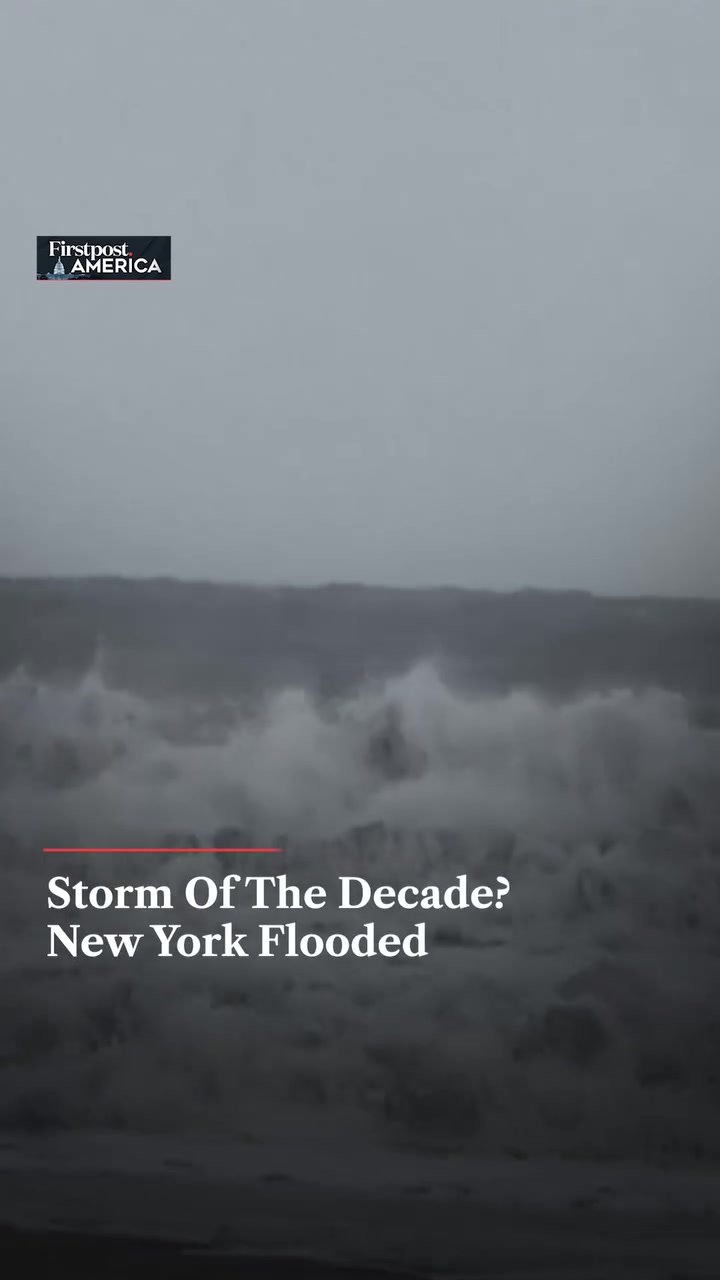
A Weekend of Deluge: How a Nor'easter Swamped the East Coast
[Firstpost described a powerful nor'easter battering the East Coast from New York to Boston. During the storm surge, waters inundated streets, flooded parts of New York City — leading residents to use kayaks to navigate. New York and New Jersey also faced submerged cars, downed trees and power outages. At least one person died in the storm. Travel was disrupted across the region, with thousands of flights cancelled or delayed. Even as the storm system moved inland, the threat of flooding remained.
The Unseen Crest: How Storm Surges Form and Strike
Storm surges occur when a storm’s winds and low pressure drive water inland over a coastal area. Unlike the gradual rise in sea level associated with normal tides, storm surges drive water onto land in a sudden, powerful rush. What makes storm surges particularly dangerous is their ability to reach far inland, often bringing with them deadly debris and contaminants, These surges are often amplified by high tides, which can add several extra feet of water on top. Storm surges do not need to arrive on a day with exceptionally high tides to cause damage, but higher-than-usual tides increase overall risk. Coastal flooding can also occur due to heavy rainfall, but storm surges are particularly destructive because of the depth of the water and the speed at which it arrives.
The Nor'easter's Unrelenting Assault
Weather-forecasting and geographical maps of the affected areas show that storm surges can travel inland for miles, depending on the local terrain and the intensity of the storm. In the case of the nor'easter, most of the damage was seen in urban and suburban areas. **Those who live by waterways were particularly affected. Consider Queens: the kayaks provide a literal image of neighborhoods transformed into canals, rendering streets impassable. Yet, storm surges can strike anywhere along the coast, from densely populated cities to sparsely populated coastal homes, making preparedness a constant requirement. **
Freight and Ferries: The Unexpected Transition to Maritime Travel
Even residents who didn’t get swept into floodwaters in Queens faced travel headaches. Nearby North Shore reported submerged cars, including a BMW, which officials warned against driving through. For those who did not make it out of harms’ way in time, floodwaters make road travel nearly impossible.****
Flooding and Power Cutoffs: Storm and Aftermath
In addition to the storm surge, the weather-related cancellations of flights throughout US airports led to a loss of many passenger miles. In North Carolina, highway 12 was hit by large waves that washed out part of the roadway. Cape Hatteras communities, which rely on roadways for access, were left vulnerable with emergency ferry routes as their only means to safely access the mainland.****
The Power of Nature Versus Infrastructure
North Shore residents also had to deal with the downed trees and power outages that commoned the storm. And though the storm surge may have eased, the effects were still felt throughout the day with heavy rain and thunderstorms. High tides continued to threaten floodplains, delaying the cleanup and recovery process.
The Fleeting Respite: The Urgent Need for Climate Adaptation
While the East Coast was battered by the ferocious nor'easter, disaster cleanup may prove more of a challenge, with more heavy rain and thunderstorms forecast to batter the region once again. The people impacted by coastal flooding had to navigate the storm surge, temporarily transforming their world into a watery labyrinth. New York and New Jersey bore the brunt of the storm’s fury, with residents in Queens using kayaks to navigate rising floodwaters. Farther south, large waves led to a partial evacuation of North Carolina’s Cape Hatteras. Heavy rainfall transformed streets into rivers, vehicles became hazards as they floated out of control. The storm had damaged homes and caused widespread power outages. As the storm system weakened, communities were left to clean up the storm’s aftermath. With another round of heavy rain and thunderstorms expected, however, the threat of flooding remains.
Aftermath: Navigating the Nor'easter's Aftermath
- Heed Local Authorities: Keep alert to advisories from local authorities concerning flooded roads and other hazardous areas. Forecasters have warned about the potential for additional flooding, so stay tuned to updates from emergency services.
- Assess Roads and Infrastructure: **Do not attempt to drive through flooded areas and assess your route before setting out. Use alternative routes when possible to avoid damage to your vehicle and yourself. **
- Prevent Additional Hazards: Make sure any trees or debris that were uprooted by the storm are secured to avoid further damage as the storm passes. Do not attempt to remove debris alone if it is heavy and difficult to move.
- Stay Informed: The nor'easter is still evolving, with forecasters predicting changes in wind speeds, heavy rain, and thunderstorms. Keep up with the latest weather information from reliable sources. You can get regular updates by following weather-related social media accounts or signing up for weather alerts from your local news stations. The storm has likely damaged power lines and wires, which could leave behind a hazardous situation. Do not attempt to move or repair damaged utility lines, especially with wet feet. Electricity and gas are especially hazardous in flooded areas, so leave such problems to the professionals.
- Rely on Community Resources: The U.S. Northeast will need time to clean up and rebuild. Reach out to community resources to address your needs, as well as to help your neighbors and community recover. The storm is moving, and those in its path are advised to take caution and stay current with the most recent information.
In the Aftermath: Resilience in Storm-Wracked Communities
In the face of this nor’easter’s ferocity, communities from New York to North Carolina have shown resilience and determination. As the East Coast cleans up and rebuilds, these communities will once again prove their mettle, adapting to the challenges that come with living in a region prone to severe weather. Many homeowners have turned to new technologies such as smart home weather sensors to help them remain vigilant in the wake of flooding. However, in times of crisis, local governments may enact ordinances to ease the burden. For example, some regions may offer temporary suspensions of residential permit fees or building requirements to expedite repairs.
Questions readers ask
What exactly is a nor'easter and how does it cause such severe flooding?
A nor'easter is a type of storm that typically forms along the East Coast of the United States and Canada, bringing strong winds and heavy rainfall. In this case, the nor'easter caused severe flooding by driving water inland through storm surges, which are sudden, powerful rushes of water that can travel far inland, inundating streets and submerging cars. These surges are often amplified by high tides, making the flooding even more destructive.
How did New Yorkers end up kayaking in the streets during the nor'easter?
During the nor'easter, the storm surge caused significant flooding in parts of New York City, particularly in neighborhoods near waterways like Queens. The flooding was so severe that some streets were transformed into canals, making them impassable by car. This led residents to use kayaks as a means of navigation to get around the flooded areas.
Why are storm surges so dangerous compared to regular coastal flooding?
Storm surges are particularly dangerous because they bring a sudden, powerful rush of water inland, often carrying deadly debris and contaminants with them. Unlike regular coastal flooding, which can be gradual, storm surges can quickly inundate areas far from the coast, making them extremely destructive. The depth and speed of the water make storm surges especially perilous, even without exceptionally high tides.
What kind of damage did the nor'easter cause beyond flooding?
Beyond the flooding, the nor'easter caused significant damage, including downed trees and power outages. The storm also disrupted travel across the region, with thousands of flights cancelled or delayed. In some areas, highways were washed out, and communities were left vulnerable, relying on emergency ferry routes for access to the mainland. The effects of the storm persisted even after the storm surge eased, with heavy rain and thunderstorms continuing to impact the region.
How does the geography of an area affect the impact of a storm surge?
The local terrain plays a significant role in how far inland a storm surge can travel. In urban and suburban areas, the damage is often more visible and widespread due to the concentration of infrastructure and population. Areas near waterways, like Queens in New York City, are particularly vulnerable. The intensity of the storm also influences how far the surge can reach, making preparedness crucial for coastal communities, whether densely populated or sparsely populated.
Related deep dives
Similar reads based on topic and creator.




Recent articles
Fresh deep dives from the latest Reels we unpacked.




Comments
Be the first to comment.