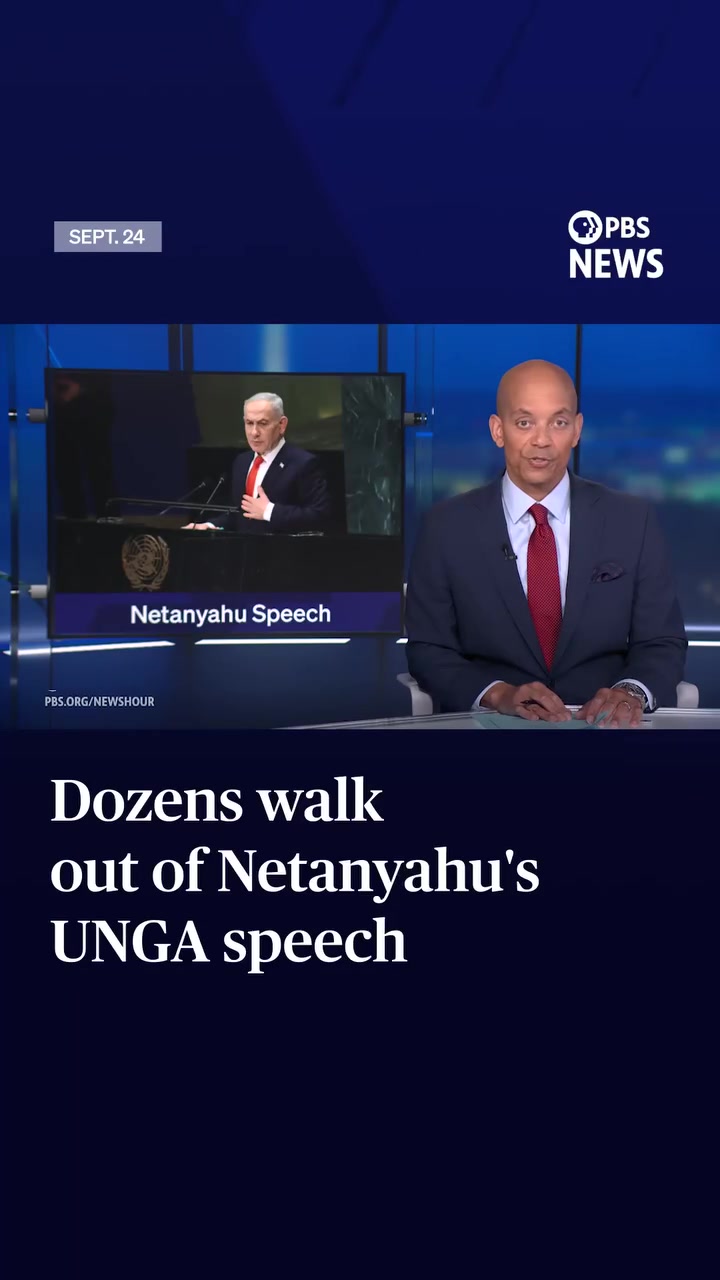
Netanyahu at the United Nations: A Divisive Speech
The UN General Assembly (UNGA) is meant to be a platform for global dialogue, but Israel's Prime Minister Benjamin Netanyahu's recent speech cut through that with a confident assertion that shocked and offended many members of the international community. His comments that allegations of genocide in Gaza were "the biggest lie of the century" and his assertions that attacking Iran was "one of the easiest decisions he's ever had to make" reverberated through the assembly hall.
Benjamin Netanyahu's Dominating Speech
Netanyahu is a former Israeli military officer, former journalist, and Prime Minister, with his latest UNESCO meeting speech targeting accusations of genocide in Gaza. This speech, delivered at the UNGA, was an aggressive push-back against allegations of genocide in Gaza. While Netanyahu acknowledged that the truth may be difficult for many delegates to hear, he insisted that Israel's military actions, which he claimed are focused on fighting terrorism, do not constitute genocide. Netanyahu contended that the significance of the speech was clear: Israel’s military actions are protecting those who do not align with terrorism. Netanyahu's harsh response to the allegations and his reframing of Israel’s actions as anti-terrorist efforts marked the speech. He described this callout to those who claimed Israel was committing genocide as "the biggest lie of the century." This was aimed directly at the 1948 United Nations conventions on genocide, which prohibit acts committed with intent to destroy, in whole or in part, a national, ethnical, racial or religious group. His claim that Israel’s actions defend many countries whose delegates walked out of the hall was met with derision. Delegates from many countries in the Middle East, Africa, and Latin America left in protest. Netanyahu’s remarks agitated many countries in the assembly. Hamas, the Palestinian militant group, is treated critically by Israel. These remarks from Netanyahu, as well as his claims that his actions were to stamp out any terrorism, was central to his speech. His assertion that alliance against Iran is essential was particularly divisive because he described this as one of the easiest decisions. However, it's clear from the reaction that this claim has significant tensions.
Clashing Narratives at the United Nations
The UNGA is a stage for powerful narratives and counter-narratives to collide, and Netanyahu’s speech and the delegates' reactions are an example of this. Netanyahu's speech was notable both for what he said, and for the audience's reaction. Netanyahu's speech came amidst a wider discussion about the Israel-Palestinian conflict where Palestinian leader Mahmoud Abbas had renewed his call for a two-state solution earlier that day, indirectly contrasting Netanyahu's speech. The international perspective on the conflict is nuanced, but the stark contrast in the delivery and reception of Abbas and Netanyahu’s speeches underscores this dichotomy. The walkout during Netanyahu’s speech reflects the deep divisions in understanding the Israel-Palestinian conflict. Israel has a historical allegation that it is being unfairly demonized and isolated internationally, and Netanyahu's speech played into that narrative. However, his assertions that Israel’s actions are morally justified and that Israel has kept many countries from danger also imply that he views the opposition and critics as misinformed, weak, or morally bankrupt — or "moral cowards."
Multiple Perspectives, One Stage
The Palestinian Counterpoint
Netanyahu’s speech was not the only one. Palestinian leader Mahmoud Abbas delivered a pre-recorded speech as well. Abbas could not attend the session due to the Trump administration's denial of a US visa. Abbas accused Israel of carrying out "a genocidal war against the Palestinians." Abbas’ speech underscored the two conflicting narratives and grievances at the heart of the conflict. Abbas stressed the idea of mutual coexistence as the Palestinian narrative. Abbas's speech, delivered amid the controversy over Netanyahu's comments, highlighted the contrasting narratives about Israel's actions. Abbas noted the Palestinian people are victims of genocidal actions and that Israeli violence must be remedied by recognition of a two-state solution. However, Abbas’s reassertion of the two-state solution didn’t address the conflict's nuances between the two perspectives.
Uncensored Words and Audience Sifting
The audience reaction to Netanyahu's speech was significant. Members of the Arab League, several European countries, and many African countries left the hall — typifying the global divide in views on the Netanyahu speech. Netanyahu’s assertion that he was defending these countries from the scourge of terrorism with his actions did not resonate, with delegates from many countries openly fraternizing Hamas.
Biased Accusations
Netanyahu’s claim that allegations of genocide in Gaza constitute "the biggest lie of the century" was a bold affirmation of an Israeli narrative. The description of the allegations is a bold restatement of Israel’s stance on genocide charges. Netanyahu’'s restatement might foreshadow an escalation in the conflict. The UN has long viewed the Israeli-Palestinian conflict as both a moral and political problem. While Israel's critics fear long-term consequences, Netanyahu claims that his actions are not only morally sound but fundamentally easy.
Responding to World Events
International Solidarity or Rejection
Netanyahu’s confrontation did not go unnoticed or unpunished. The international walkout was a clear indication of the diplomatic repercussions. The number of delegates who walked out underscored the international community's dissatisfaction with Israel’s actions. It's a clear indication that Netanyahu’s speech will shape the broader geopolitical worldview, and that his perspective will be seen as a divisive factor.
Challenging the Status Quo
Netanyahu's speech also challenged a broader status quo within the international community. Netanyahu’s speech was a rebuke to the multilateral approach that typifies international relations and the United Nations. Netanyahu’s framing of Israel’s actions as defensive and morally necessary is a stark contrast to the UN's narrative and that of the Palestinians.
Navigating Controversial Speeches
“How are the Israelis, and those states that have ties to the Israelis supposed to respond?” Netanyahu's speech can be an opportunity to better understand how both parties are responding to their own grievances. It will be essential to understand the facts and actions which Netanyahu believes are justified. The media and the international community should push Israel and other parties to consider the broader implications of the actions and their standing within the international community.
- Research the speech: Read the transcript and understand the Israeli perspective.
- Analyze the opposing view: Research Palestinian and International viewpoints and understand their perspective. Practical advice is more than the words from Netanyahu. It also includes understanding the Israeli perspective and the actions of the Palestinians. To understand the complexity of the conflict, it is important to consider the implications of Netanyahu’s speech and actions by multiple parties. Netanyahu's speech should not be seen in isolation but within the broader context.
The Echoes of Controversy
Netanyahu’s speech continues to reverberate in international relations. His comments, even if they stand in contrast to the views of his critics, illustrate the complexity of Israel-Palestinian relations. This complexity is only continuing to manifest
Questions readers ask
What exactly did Netanyahu say that caused so many delegates to walk out?
Netanyahu's assertion that the allegations of genocide in Gaza were 'the biggest lie of the century' and his suggestion that attacking Iran was 'one of the easiest decisions' he's ever had to make were particularly contentious. Many delegates, especially from countries in the Middle East, Africa, and Latin America, found these statements offensive and walked out in protest.
How did Netanyahu defend Israel's actions in Gaza?
Netanyahu defended Israel's actions in Gaza by framing them as anti-terrorism efforts, rather than acts of genocide. He argued that Israel's military actions are focused on protecting those who do not align with terrorism, and that the allegations of genocide are false.
Why did the reactions to Netanyahu's speech differ so much between different countries?
The reactions to Netanyahu's speech varied greatly due to the differing perspectives on the Israel-Palestinian conflict and the broader geopolitical dynamics. Many countries in the Middle East, Africa, and Latin America have strong sympathies for the Palestinian cause, which led to the walkouts in protest.
What was the significance of the walkouts during Netanyahu's speech?
The walkouts during Netanyahu's speech were significant because they highlighted the deep divisions and tensions within the international community regarding the Israel-Palestinian conflict. They underscored the stark contrast in how different countries view Israel's actions and the broader geopolitical issues at play.
How did Netanyahu's speech compare to Mahmoud Abbas' speech on the same day?
Netanyahu's speech was notable for its aggressive defense of Israel's actions and its contentious claims, while Abbas' speech renewed the call for a two-state solution, offering a contrasting narrative. The reactions to their speeches underscored the deep divisions and differing perspectives on the Israel-Palestinian conflict.
What was the reaction to Netanyahu's comments about Iran?
Netanyahu's comments about Iran, where he described attacking Iran as 'one of the easiest decisions' he's ever had to make, were met with significant tension and criticism. This assertion highlighted the complex and contentious nature of Israel's stance on Iran and its broader geopolitical implications.
Recent articles
Fresh deep dives from the latest Reels we unpacked.




Comments
Be the first to comment.