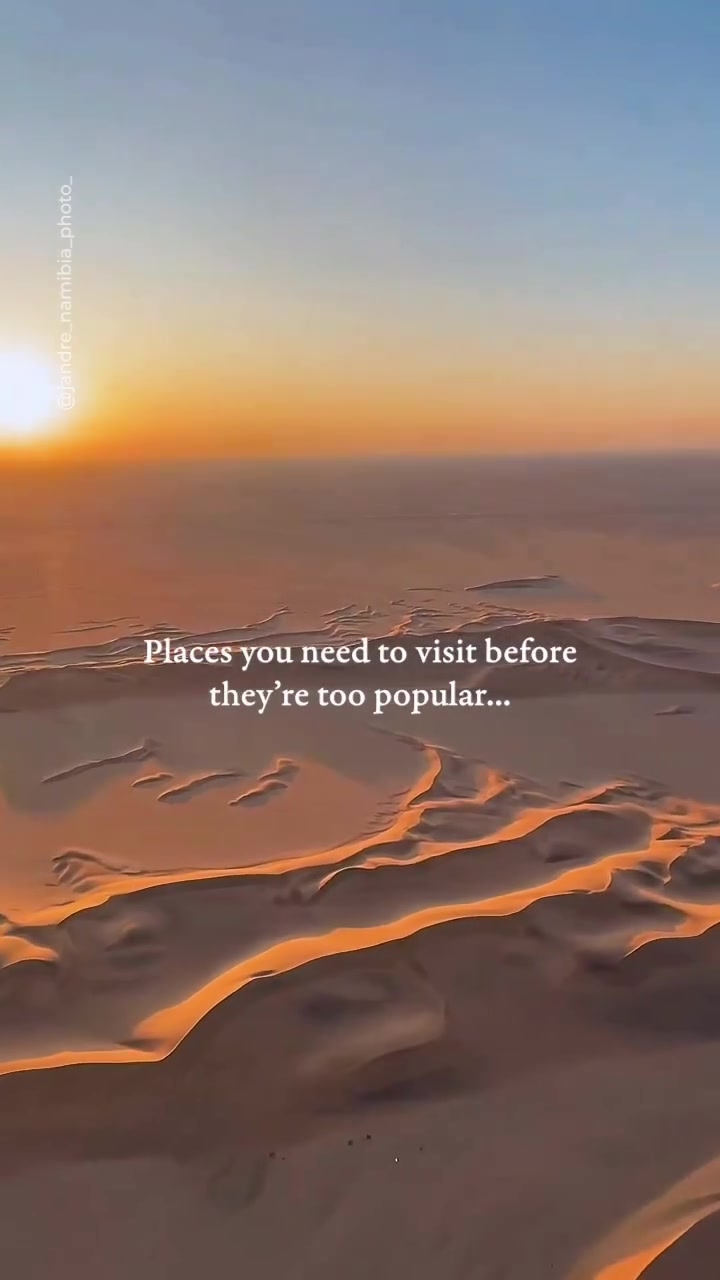
Travel enthusiasts, imagine this: the sun dips low in the sky, casting an orange glow across the undulating red dunes of the Namib Desert. This isn't just a scene from a Hollywood epic; it's a real-life vista in Namibia, a country that might be Africa's best-kept travel secret. The Namib Desert, standing as the world's oldest desert, and the uniquely dramatic landscapes of Sandwich Harbour, Sossusvlei, and Deadvlei draw adventurers to Namibia. Yet the desert's popularity is poised to grow, which is why these destinations may soon lose their exclusivity.
Namibia's Wild Frontiers
Nestled in southwestern Africa, Namibia is a land of extremes—from the arid Namib Desert to the lush Caprivi Strip. But the Namib Desert takes center stage. Running along 1,200 miles of the Atlantic coast, it offers a raw, pristine beauty that distinguishes it from other deserts. Namibia is one of the driest places on Earth. The country is a haven for adventurous travelers. The Namib Desert commands the spotlight. Its 1,200 miles of Atlantic coastline and seasonally damp sites, such as the Kuiseb River, offer dramatic views and tough survival conditions. It draws visitors who are seeking to escape the struggles of everyday life while also observing the otherworldly landscape. Wildlife thrives in Namibia’s diverse ecosystems. The Deadvlei, filled with skeletal trees and surrounded by mountainous sand, is a highlight. In contrast, the Sossusvlei, where water from the Tsauchab River bursts during the rainy season into the Namib Desert. The resulting panoramic views of large desert lakes and flat areas set against the backdrop of towering dunes are quite unexpected.
Namibia's emerging tourism
Despite its growing popularity, Namibia's tourism infrastructure is still in its infancy. This state of affairs is simultaneously an asset and a risk. In some parts of the country, up to 30% of the population is impoverished. This exclusion may be the reason why there are fewer than 350 hotels available across Namibia. Yet Namibia’s growing tourism industry has the potential to bring in new opportunities, build local economies, and exacerbate environmental degradation.
Navigating Namibia’s Wild Landscapes ### The Namib Desert
The Namib Desert is the core of Namibia's identity. Due to its age and the mild climate, it hosts the world's tallest dunes and its driest spot. The wind often sculpts dunes into odd shapes, most frequently long, smooth waves. Arriving at a vista full of these sand dunes may feel like losing all connection to the present. Namibia's landscape is punctuated by salt pans and impressive rock formations. The dunes create an intriguing interplay of light and shadow, giving visitors a sense of depth and movement. The salt pans provide a sharp contrast to the surrounding desert with their flat, white surfaces, while the rock formations add a sense of permanence and stability. Below the surface, wildlife thrives. It may be challenging to navigate the desert’s steep dunes and racing rivers. Namibia's Namib-Naukluft National Park has a series of seasonal rivers. These rivers typically have dry riverbeds, offering a hotter, sun-baked landscape during the dry season. Yet during the rainy season, the result is often a pancreatic waterfall oasis, a surreal landscape of marshes, sand rivers, and desert-adapted trees.
### Deadvlei: An Alternative View of the Namib Desert.
Deadvlei presents a stark contrast to the dynamic surroundings. Its dead trees, petrified remains of acacia trees, lie in eerie contrast to the shapeshifting sand dunes. These trees, estimated to be over 900 years old, offer a sense of continuity and longevity in an ever-changing landscape. Its surreal appearance has made it a popular backdrop for filmmakers, photographers, and social media influencers. The silence and stillness of Deadvlei are particularly striking in a setting dominated by movement. The sand dunes, constantly moving, offer a stark contrast to the stillness of the dead trees. In Deadvlei, visitors can explore a fascinating and otherworldly glacial landscape without the expense of leaving the country.
### Sossusvlei
Standing adjacent to Deadvlei, Sossusvlei offers a dashboard of views. At the dry end of the Tsauchab River lies the Sossusvlei pan. The Sossusvlei pan offers a variety of landscapes and panoramic desert views. During the wet season, the pan fills with water, attracting wildlife. Birds, such as flamingos and pelicans, flock to the area to feed and breed. However, the pan can be hazardous to human life. It can become a be-trapped in the bubbling mud of a quicksand trap. Sossusvlei offers visitors a unique opportunity to explore the Namib Desert's varied landscapes and a glimpse into its fragile ecosystem.
Visiting Namibian Landscape
To immerse yourself in Namibia’s unique landscapes, start planning your trip as soon as possible.
- Be ready for the elements. Pack plenty of water, sunscreen, and a hat that covers your neck. Temperatures can soar, and it's easy to become dehydrated in the desert.
- Plan your itinerary with the seasons in mind. The best time to visit depends on what you want to see.
- Plan your route. You can take a guided tour, hire a safari vehicle, or travel solo. If you're short on time or traveling alone, a guided tour is your best bet. Communities are either providing services to their fellow travelers or communities are banding together to support each other and advertising it as a community tour. Visitors will see the Namib Desert differently, based on the extent of their commitment to the community. Visiting Namibia invites travelers to reflect on what it takes to experience something new and beautiful.
### Experiencing Namibia
Striking landscapes and surreal experiences await travelers to Namibia. Visitors can explore the world's oldest desert, see petrified trees, and swim in the pan. Landrover tours are arranged by a number of communities and tour operators. The viability of these tour services will depend on the viability of the communities. Spending money in Namibia bolsters the local economy. Namibia is a place where travelers can have a once-in-lifetime experience while preserving the environment and empowering local communities.
Questions readers ask
What are some of the unique features of the Namib Desert that make it stand out from other deserts?
The Namib Desert is the world's oldest desert, featuring the tallest sand dunes on the planet. Its mild climate and unique landscape, including salt pans and rock formations, create a striking interplay of light and shadow. The desert's age and the wind's sculpting effects make it a truly otherworldly experience.
How does Namibia’s tourism industry balance its growth with environmental preservation?
Namibia's tourism industry is still developing, which presents both opportunities and challenges. While it can bring economic benefits to local communities, there's also a risk of environmental degradation. The country's low number of hotels, less than 350, reflects its limited infrastructure, which could be both a constraint and a potential advantage in preserving its natural landscapes.
What are the best times to visit the Namib Desert to experience its unique landscapes and wildlife?
The best time to visit the Namib Desert is during the rainy season when the Tsauchab River flows into the desert, creating panoramic views of large desert lakes. This period offers a unique contrast of water and sand. However, the desert's dramatic landscapes and wildlife can be enjoyed year-round, with each season offering a different perspective.
Can I navigate the Namib Desert on my own, or do I need a guide?
Navigating the Namib Desert on your own can be challenging due to its steep dunes and seasonal rivers. It's advisable to have a guide, especially if you're unfamiliar with the terrain. The Namib-Naukluft National Park has a series of seasonal rivers that can be tricky to navigate, and a guide can enhance your safety and overall experience.
What are some of the standout destinations within the Namib Desert besides the Deadvlei?
The Namib Desert offers several standout destinations. The Sossusvlei, with its towering dunes and dramatic views, is a must-visit. Sandwich Harbour, known for its unique and dramatic landscapes, and the Kuiseb River, which offers a stark contrast of arid desert and seasonal water, are also highlights. Each of these locations provides a unique perspective on the desert's beauty.
How does the Namib Desert support wildlife despite its harsh conditions?
The Namib Desert's diverse ecosystems support a surprising amount of wildlife. The dunes and salt pans may seem barren, but below the surface, there's a thriving ecosystem. Seasonal rivers and the mild climate contribute to the desert's biodiversity, making it a haven for adventurers seeking to observe unique wildlife in an otherworldly landscape.
Related deep dives
Similar reads based on topic and creator.



Recent articles
Fresh deep dives from the latest Reels we unpacked.
Comments
Be the first to comment.