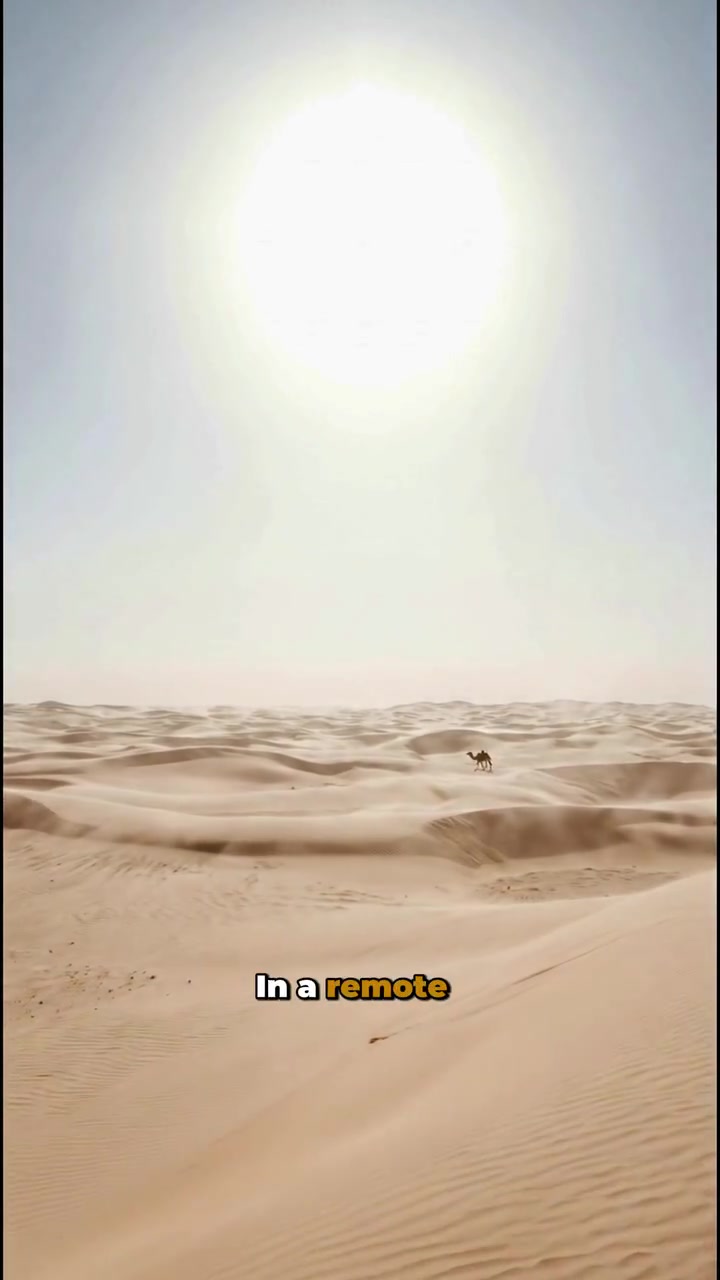
The border between Egypt and Libya holds a peculiar secret: scattered across the desert lie chunks of pure yellow glass, almost pure silica, and around 29 million years old. These are no ordinary glass fragments; they are natural, formed by a force so intense and mysterious that it has left scientists baffled for decades. For some context, the glass is so valuable that a scarab carved from this material sits at the center of one of Tutankhamun's pectorals. The ancient Egyptians, known for their reverence of rare materials, never understood the true origin of this glass.
The Mysterious Libyan Desert Glass
The glass, known as Libyan Desert Glass, is distributed over a vast area — no one knows exactly what created it. Mechanism similar to how volcanic lava turns sand into glass, requires heat exceeding 1,600°C. This explains why scientists still puzzle over its origins: the desert shows no clear signs of a volcanic eruption that could have produced such extreme temperatures.
A Blast from Millions of Years Ago
The Libyan Desert Glass was created by an event so monumental that it left behind no trace. Although the glass is scattered over a wide area, no corresponding crater has been found. This has led scientists to propose several theories. Some suggest that a meteorite might have exploded in the air above the desert, while others believe it could have slammed into the ground, causing a massive blast.
The Widely-Proposed Meteorite Theory
The most widely accepted explanation involves a meteorite. The theory proposes that a large meteorite entered Earth's atmosphere and exploded in the air, producing the intense heat needed to turn sand into glass. According to this theory, the resulting explosion would have dispersed the glass over a wide area, leaving no single crater behind. However, the lack of a confirmed impact site means this theory remains unconfirmed.
The Theory of Air Explosion
Those who believe in the airburst explosion theory argue that the impact of a meteorite would have created a clear crater. By contrast, an explosion in the air would have scattered the glass more widely, consistent with what we see today. However, the absence of debris from the exploding meteorite or a confirming impact crater makes this theory difficult to prove. A closely related theory proposes that the meteorite, perhaps composed of silica-rich materials, disintegrated in the Earth's atmosphere. This would have released enough heat to vitrify the sand but left no significant remnants.
An Escape from Valhalla
The absence of a confirmed crater has led to an intriguing proposition: perhaps the source of the glass was extraterrestrial and unique in Earth's history. This theory suggests an object entering the atmosphere, causing an intense airburst but disintegrating completely in the process. No fragments of the meteorite have ever been found, making it a highly speculative idea. Adding to the curious mystery of the glass, the ancient Egyptians made the most of the mysterious material without understanding its origins.
Enter Tutankhamun’s Scarab
The glass, so valued by the Egyptians, has a fascinating history as well. A scarab made of this glass was found in the tomb of Tutankhamun. This artifact, with its intricate designs and craftsmanship, showcases the high regard the Egyptians had for this enigmatic material. Yet, despite their admiration and use of it, the true origin of the glass remained a mystery to them, as it does to modern scientists.
The Goodie Box
A fortune in natural glass remains untouched by the sands of time, waiting to be appreciated, and studied. The glass, formed from an event that permeated the secret of its occurrence long ago, still holds value. This is what makes Libyan Desert Glass an enduring mystery in the annals of geology and archaeology. The surviving glass pieces are, indeed, remnants of an unparalleled natural phenomenon.
The connection to Kabira Crater of Libya
Researchers have suspected the Kabira Crater in Libya might be the source of the glass for a long time. Kabira Crater, resulting from an impact 29 million years ago, was initially thought to be the potential source of the Libyan Desert Glass. However, geological studies revealed inconsistencies. The glass spread over a broader area than what can be explained by the crater. Missing evidence like meteorite fragments and shocked quartz further complicates the case. Kabira Crater, though closely related to the events that produced the glass, is likely not the sole or primary source.
Discovering the Libyan Desert Glass
Travelling to the area where the glass is found is no simple task. The Libyan Desert Glass stretches over a remote and inhospitable region, making it challenging to access. However, for those keen on either a real-life adventure or a virtual journey, there are ways to explore the Libyan Desert Glass.
- Libya Permit: Ensure you have the necessary permits and permissions from the Libyan authorities. Traveling to this area requires official approval, and it’s essential to follow all guidelines and regulations.
- Guided Tours: Join a guided tour with experienced expedition leaders who know the terrain and can provide valuable insights into the region’s history and geology.
- Scientific Research: Consider participating in or contributing to scientific research projects focusing on the Libyan Desert Glass. Engaging with researchers can provide a deeper understanding of the glass and its origins.
- Virtual Tours: Virtual tours and online resources offer an alternative way to explore the Libyan Desert Glass. These platforms provide detailed information, high-resolution images, and sometimes even interactive maps, allowing you to discover the glass from the comfort of your home.
The Glass Desert Lies
The Libyan Desert Glass remains a testament to an event of monumental proportions that has left behind no definitive clues. It serves as a reminder of the mysteries that still lie hidden within the Earth, waiting to be uncovered. The desert itself, with its vast, unyielding expanse, adds to the allure and intrigue of the glass. The vast, open landscape, dotted with scattered glass fragments, invites both wonder and curiosity. The glass, formed from an event that permeated the secret of its occurrence long ago, still holds value. This is what makes Libyan Desert Glass an enduring mystery in the annals of geology and archaeology.
Questions readers ask
What exactly is Libyan Desert Glass and where can it be found?
Libyan Desert Glass is a type of natural glass found in the Sahara Desert, near the border between Egypt and Libya. It's made almost entirely of silica and is estimated to be around 29 million years old. The glass is scattered across a large area, with no clear source of its creation.
How was Libyan Desert Glass formed?
The exact formation process of Libyan Desert Glass is still a mystery, but the most widely accepted theory involves a meteorite exploding in the air above the desert. This airburst would have generated enough heat to melt the sand and create the glass, but not enough to leave a crater or debris.
Why is it so unusual for scientists to find no crater or debris?
The absence of a crater or debris is unusual because most meteorite impacts leave behind clear signs of their presence. The lack of these signs in the case of Libyan Desert Glass suggests that the event that created it was unique and unlike any other known impact event. This could be due to the meteorite disintegrating completely in the atmosphere or an airburst explosion.
What makes the Libyan Desert Glass so valuable?
Libyan Desert Glass is valued for its rarity and unique properties. It's made of almost pure silica and has a striking yellow color. Additionally, it has a long history of being used by ancient civilizations, such as the Egyptians, who crafted beautiful artifacts from it without understanding its true origin.
Is there any evidence supporting the meteorite theory?
The meteorite theory is the most widely accepted explanation for the formation of Libyan Desert Glass. The theory suggests that a large meteorite entered Earth's atmosphere and exploded in the air, producing the intense heat needed to turn sand into glass. However, the lack of a confirmed impact site or debris makes this theory difficult to prove.
Are there any other theories about how the glass was formed?
Yes, there are several theories about how the glass was formed. Some suggest that a meteorite might have exploded in the air above the desert, while others believe it could have slammed into the ground, causing a massive blast. Another theory proposes that the meteorite, perhaps composed of silica-rich materials, disintegrated in the Earth's atmosphere, releasing enough heat to vitrify the sand but leaving no significant remnants.
Related deep dives
Similar reads based on topic and creator.



Recent articles
Fresh deep dives from the latest Reels we unpacked.




Comments
Be the first to comment.