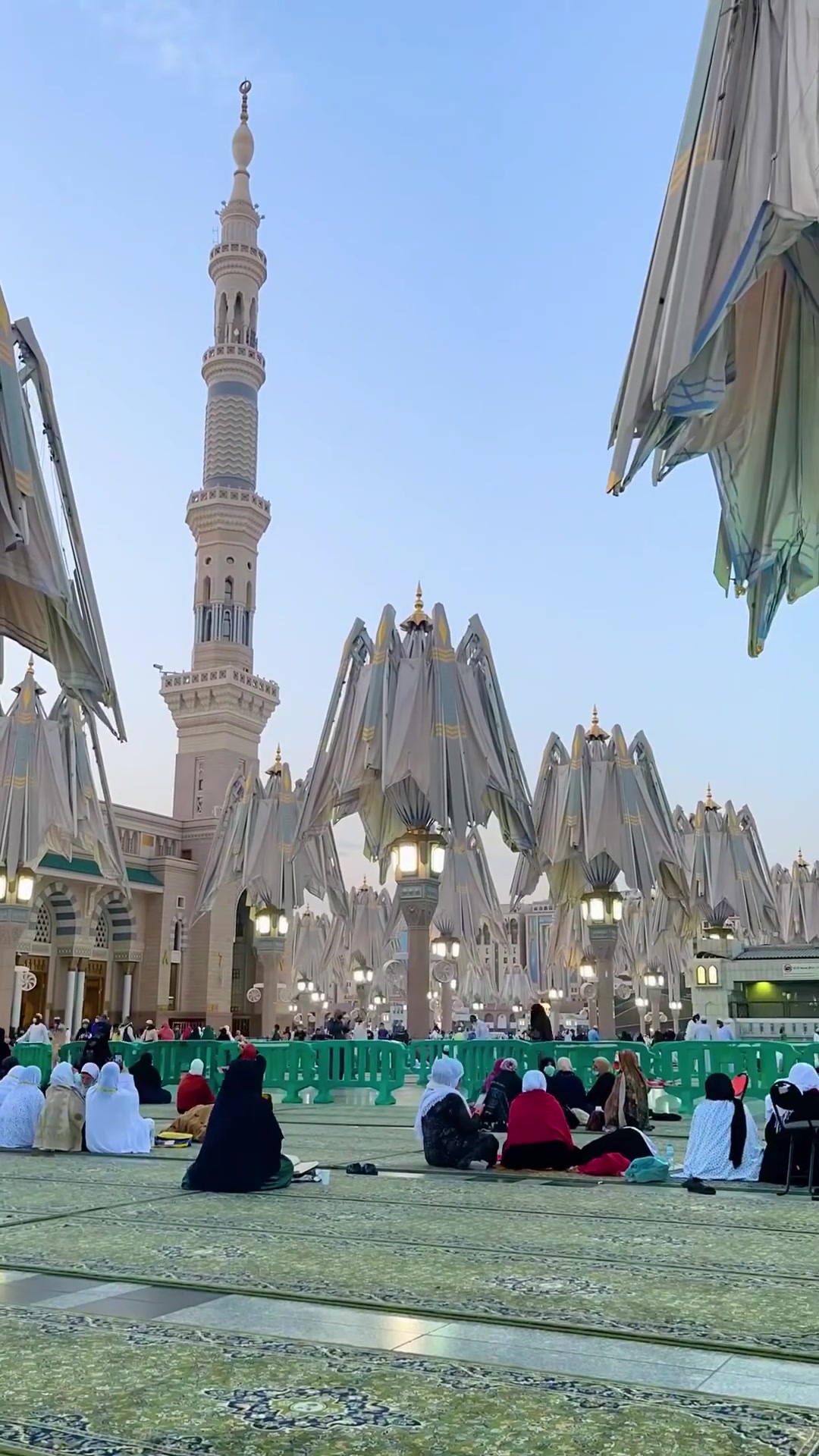
Few things anchor a community quite like a religious gathering, especially on a kind of scale displayed in this video. A sea of people are seated on a sprawling green carpet, a vibrant contrast against the beige landscape. A prominent minaret looms over a canopy structure providing shade for the peaceful assembly, and the audience is clad in traditional attire. These kinds of gatherings harness the power of collective worship, underpinned by centuries of tradition; yet, they have an adaptability that sustains them.
A Greeting of Faith and Unity
Religious gatherings are collective acts of devotion, where individuals of a community gather to worship in a shared ritual. The distinctive feature of these gatherings is their emphasis on communal worship, where individuals come together in a public space to engage in spiritual exercises and feel a sense of togetherness within their community. These gatherings are often marked by specific rituals and traditions that foster a sense of unity and belonging. The designations of these events range from congregational prayer sessions to larger communal festivals. They typically follow a structured format, beginning with a congregational prayer or statement of faith, followed by recitations from sacred texts and concluding with a communal prayer. Religious gatherings are usually held in designated places of worship or public spaces, both indoors and outdoors. A key element of the experience is praying together on a green carpet, while a minaret, a common architectural feature in many mosques, serves as a focal point and acts as a call to prayer. Overhead, a canopy structure provides shade, which is a practical necessity in warmer regions as it allows lengthy prayer sessions to continue comfortably. Traditional clothing worn by attendees often plays a significant role in maintaining the sanctity of the gathering. It facilitates the recognition of the spirituality of every individual who participates.. In some communities, adhering to modesty and distinctiveness in dress signifies a shift to a deeply personal time of prayer, reflecting one’s devotion and respect for the gathering.
The Emotional Bedrock of Communities
If you attend a religious gathering in the modern world, you can observe a trend of rising digital engagement. The proliferation of live streams and online prayer sessions has expanded the reach of these gatherings, making them accessible to individuals who may not be physically present. It allows them to take part in the service virtually from across the globe. Yet, there is something concrete, something human about experiencing the shared spiritual energy produced by a crowd in person. Watching this video, the immediate impression is the simplicity of the scene despite the grand scale — a green carpet, a minaret, a canopy, and a sea of people. It represents an instantly recognizable social glue that can offer sanctuary, advice and a cohesive platform. From giving guidance to new converts to comforting the grieving, the power of these gatherings to shape people’s experience of life deepens with every assembly.
The Aspect of a Minaret
The image of a minaret signifies more than just a physical landmark; it’s symbolic of religious identity. The minarets of the past had served as a beacon for mosques, guiding people to the place of worship, while serving as a call to prayer. Similarly, the building of a minaret has significant cultural and religious significance. Minarets are often constructed to balance with a mosque, which is a house of worship. These 100+ foot tall structures stand in the courtyard of a mosque, raising the architectural features to a skyward height. The minaret’s design has changed over time, with early examples dating to the 7th century, featuring spiral staircases, and more recent styles incorporating modern materials, such as concrete and glass. These structures serve as a prominent feature of the local skyline and are usually the most visible part of the mosque. In modern times, the use of minarets has been adapted to new technologies that broadcast the call across a larger area.
A Greeting of Faith
Mosques where the vast majority of worshippers are men are still more prominent in Muslim communities. In many cases, women are encouraged to worship at home or in separate sections, and this is particularly true for Friday congregational prayers. But religious gatherings are also seen as a place of social interaction and community building, so there is a growing number of mosques that are welcoming women as active participants in religious activities. The tradition of women participating in mosques has been evolving. In the past, mosque spaces were typically segregated, but there has emerged a fresh demand for more inclusive prayer spaces where women and men participate together. In recent decades, women have been taking an active leadership role in religious gatherings, leading prayers, and giving sermons. To accommodate women’s participation, there are instances where the mosque itself was expanded or prayer spaces were repurposed for mixed worship.
Inclusive Dress Codes
Dress codes formulate a significant portion of customs in these gatherings. The dress codes differ depending on the region and religious denomination, but, generally, they emphasize modesty and uniformity. These codes are a reflection of religious teachings and, in some cases, cultural traditions, which promote humility and equality. Dress codes often require men to wear loose-fitting clothing, while women are required to cover their heads, wear long sleeves and modest skirts and dresses. However, there is a debate around what constitutes modest clothes; some believe that the focus should be on the intention behind the clothing rather than the appearance. In response, many women have adapted traditional clothing to modern tastes across the world and are using their clothing choices as a form of self-expression.
The Expression of Faith
The call to prayer in Islam is a significant element of the gathering, and it is designed to remind believers of the importance of prayer and worship. The phrase "Allahu Akbar," which means "God is Great," is repeated several times during the call to prayer. This phrase is a reminder of the greatness and majesty of God. It is a powerful expression of faith and often provides a sense of solace and hope. The call to prayer is also a reminder of the brotherhood and sisterhood of Muslims, who are encouraged to worship together and support each other. It is a means to unify the community, as all Muslims are called to pray at the same time, regardless of their location or personal circumstances.
Should You Attend?
If you are interested in experiencing a religious gathering, there are a few things to keep in mind. Clothing: Dress modestly and respectfully. This can involve wearing long sleeves, covering your head, etc. Shoes: Personal hygiene is prioritized, and prayer attendees might feel comfortable removing their shoes Etiquette: Be respectful of the traditions and practices, which may include standing or sitting in a certain way. Avoid touching or kissing the Holy Quran or making gestures that may be considered offensive. You will appreciate the fellowship and customs better when you are aware of the perceptions and expectations ahead.
- Contact a local mosque or religious leader: If you are unfamiliar with the gathering, consider reaching out to a local mosque or religious leader or a knowledgeable Muslim, who can provide guidance.
- Observe and take part in the traditions: Participating in the rituals and traditions of the gathering will allow you to become an integral part of the community.
- Discover what you can: You can also attend a beginner prayer session. The aim of these sessions is to teach attendees what they need to know before they participate in the main worship.
The Common Bond
The visual is striking: a minaret, a canopy, traditional attire and the salat, but the core element is the people seated on a green carpet. That assembly can be the glue that binds the fabric of a community, without the need for grand gestures. It’s the shared experience that drives the sense of kinship and belonging. Within these gatherings, people find a sense of community, a chance to connect with their faith and engage in a collective experience. The green carpet, the minaret, and the canopy act as more than just props; they are symbols of the shared belief.
Questions readers ask
What is the significance of the minaret in a Muslim gathering?
The minaret is a towering architectural feature often found in mosques, it serves as a focal point during gatherings and acts as a call to prayer, guiding worshippers and symbolizing the spiritual center of the community.
How do these gatherings foster a sense of unity and belonging?
These gatherings emphasize communal worship, with specific rituals and traditions that bring people together. The shared experience, often marked by congregational prayers and recitations from sacred texts, creates a profound sense of togetherness and unity among participants.
Can these gatherings be held in places other than mosques?
Yes, while mosques are the traditional settings, these gatherings can also take place in other designated places of worship or even public spaces, both indoors and outdoors. The key is having a space where a green carpet is laid and a canopy provides shade.
What role does traditional attire play in these gatherings?
Traditional clothing worn by attendees often signifies the sanctity of the gathering and reflects the devotion and respect of the participants. It also helps in recognizing the spiritual nature of the event and the individuals who are part of it.
How have digital platforms impacted these religious gatherings?
Digital platforms have expanded the reach of these gatherings, allowing individuals to participate virtually through live streams and online prayer sessions. However, the in-person experience remains valuable for the tangible sense of shared spiritual energy.
What practical considerations are there for holding these gatherings outdoors?
Outdoor gatherings often require a canopy structure for shade, especially in warmer regions, to ensure comfort during lengthy prayer sessions. Additionally, the green carpet serves as a communal prayer space, and a minaret may be present to call worshippers to prayer and serve as a focal point.
Are there any differences in the structure of these gatherings based on the type of event?
Yes, these gatherings can range from smaller congregational prayer sessions to larger communal festivals. The structure typically includes a congregational prayer or statement of faith, recitations from sacred texts, and a concluding communal prayer, but the specific rituals and traditions can vary based on the type of event.
Related deep dives
Similar reads based on topic and creator.




Recent articles
Fresh deep dives from the latest Reels we unpacked.




Comments
Be the first to comment.