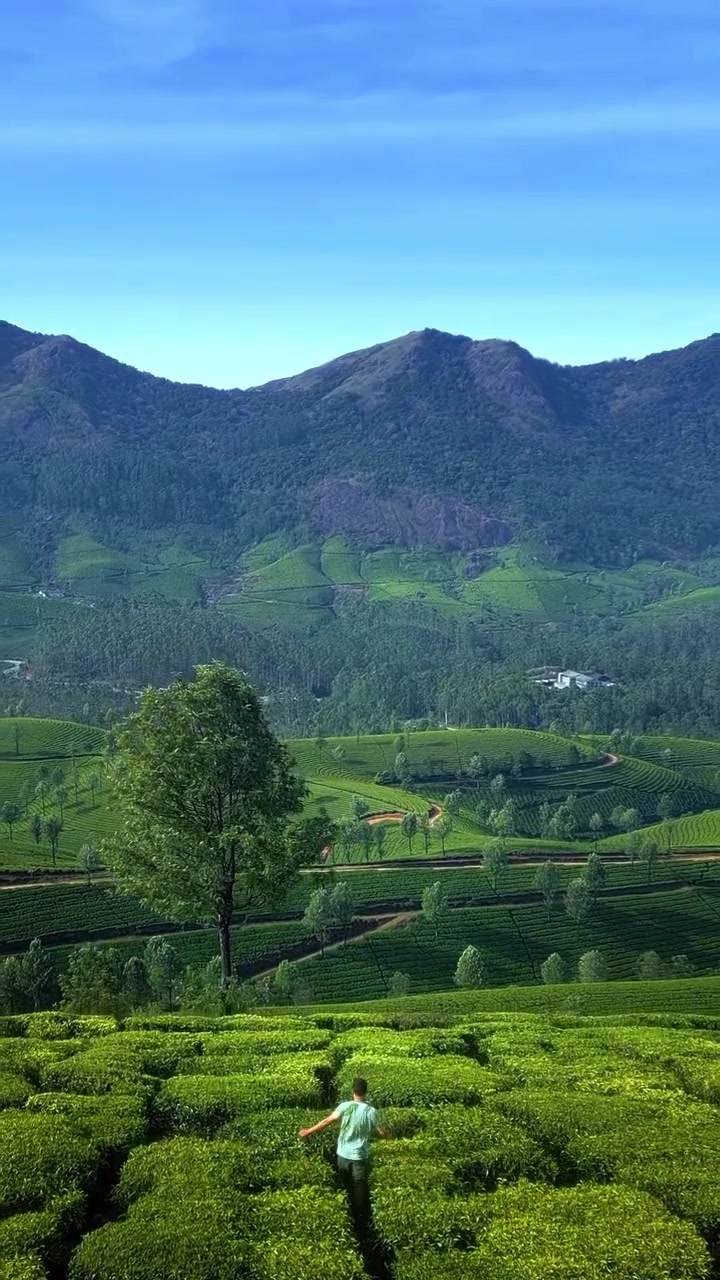
A walker cranes his head in a gentle breeze, a panoramic view of green hills and towering mountains spreads behind him. He is traversing India’s famed tea plantations, an experience that has made this destination a must visit for travel and tea enthusiasts alike.
The Tea Plantations Of Munnar
India’s tea plantations are not just agricultural landscapes — they are sweeps of bright green with crisp mountain air, a living tapestry of nature and labor. Tea plants or Camellia sinensis dominate the expanse visible from the walker. It was the British who had first planted them, creating a unique architecture of terraces and hedgerows. The region is one of the world’s largest tea producers. It is most recognisable in the Munnar hills of Kerala, which are themselves a result of the eruption of a long-dormant volcano. Experts recognise this environment as offering the perfect conditions for producing high-quality tea due to the combination of slopes, climate, and soil. Native Camellia sinensis plants grow best on high altitudes, sometimes reaching 2600 meters (8,500 feet). The most common tea variety grown in the area is the CTC (Crush, Tear, Curl) – a black tea variety. Plants may be pruned to waist height to facilitate ease of plucking. Soils are well-drained, and the inclines allow each plant to receive the right balance of sun and water.
India’s Distinctive Tea Culture
Kerala’s tea plantations are the result of colonial entrepreneurism and the region’s unique natural beauty. The place is not just about a harvest. Torqueing the entire scene into a sensory experience is the culture of Kerala, the sensuous tea estates and bungalows to stay, the brewed fresh cup. This attraction is a draw for tourists beyond India’s borders. The walker features in a POV video tour in a style that has caught on in how social media users enjoy visual storytelling. Among the world’s premier destinations, Munnar owing to it’s colonial influence and influence of its climate and tea, the tour is a worthy addition. It generally opens from October through February, when the skies are clear, and the harvest season begins. The region is an experience to savor.
A Walk Among The Tea Plants
Watch the rolling hills once and you’d wish to book a visit. The industrial human labor is a rhythm to the landscape. A walker traverses between vivid green hills, with a cloudy sky and expansive mountains, revealing the breadth of the plantation. The video’s music and ambient sound elevate the sensory experience. The walker cuts through a tea plantation, with each tea plant, raised at a level that is easier for plucking. The crop cycle in Munnar is short, with two harvests per month. The tea farms grow not just the tea plants, but also the farms process the tea.
The Plucking Process
The plants go through plucking, withering, rolling, and drying, which creates a different flavor for the tea. The plucking is done manually. The withering phase involves drying the leaves and removing the bitter flavor. In the rolling stage, the leaves are heated and stripped of the juices and air. And then the final step, the leaves are dried and sorted based on the appearance and size, sifted through north wind-swept leaves. The last step is to cut the leaves and sort them for packaging.
A Fresh Cup Of Tea
Sunset and sunrise are always the best moments to watch the tea plantations of the hills. The crispness in the air with the laid-back flow at its peak, with the freshly brewed cup of tea in hand. The plantation’s tea varieties allow for different levels of taste and caffeine, and thus, different uses throughout the day. Having fresh tea in hand at sunrise evokes the feeling of being alone in nature with a cup of the world’s finest tea. A walk-through with the view of tea plants, high mountains, and a beautiful sunset or sunrise are a rare and peaceful natural experience.
What To Pack
If you plan a visit to the tea plantations in Munnar:
- Footwear: Comfortable walking shoes, since there will be a lot of walking
- Clothing: Layers, as it can get chilly in the hills
- Sun Protection: Sunscreen and wide-brimmed hats to protect from the strong direct sunlight
- Camera: To capture the stunning landscapes
- Breathable Fabric: Sports jersey or yoga pants to be comfortable during outdoor activities
- Scarf or S/Wrap: A lightweight scarf or wraparound to pull over your shoulders on chilly mornings or evenings, or during a sudden shower
- Avoid wearing flashy clothes and bright colors, to blend in with the natural environment The best moments in Munnar are the walks themselves, alongside guided tours that give a fuller sense of the industry and its history.
Questions readers ask
What makes the tea plantations in Munnar so unique compared to other tea-growing regions?
Munnar's tea plantations are unique due to their high altitude, well-drained soils, and the specific climate conditions that are perfect for growing high-quality tea. The terrain, a result of a dormant volcano, offers the right balance of sun and water for the plants. Additionally, the tea culture and colonial influences in the region add to its distinctiveness.
How does the tea plucking process work in Munnar, and why is it done manually?
The tea plucking process in Munnar involves several steps: plucking, withering, rolling, and drying. The plucking is done manually to ensure the best quality. The withering process removes bitterness, while rolling and drying develop the tea's flavor and texture. Manual plucking is preferred because it allows for more precise and careful handling of the tea leaves, which can enhance the final product's quality.
Are the Munnar tea plantations open to visitors year-round, or is there a specific time to visit?
The Munnar tea plantations are generally open to visitors from October through February. This period is ideal because the skies are clear, and it coincides with the harvest season, offering visitors a chance to experience the tea-plucking process and the beautiful landscapes in their full glory.
What kind of tea is primarily grown in the Munnar plantations, and why is it significant?
The most common tea variety grown in the Munnar plantations is the CTC (Crush, Tear, Curl) black tea. This variety is significant because it is widely recognized and appreciated for its robust flavor. The unique climate and soil conditions in Munnar contribute to the high quality of this tea, making it a sought-after product in the global market.
What can visitors expect to experience during a walk through the tea plantations in Munnar?
Visitors can expect a sensory experience with panoramic views of green hills and towering mountains. The walk offers a chance to see the tea plants up close, understand the tea-plucking process, and appreciate the rhythmic labor of the workers. The ambient sounds and the overall beauty of the landscape enhance the experience, making it a memorable one.
How does the colonial influence shape the tea culture in Munnar?
The colonial influence in Munnar is evident in the architecture of the tea estates and bungalows, as well as the overall tea culture. The British were the first to plant tea in the region, creating a unique landscape of terraces and hedgerows. This colonial heritage, combined with the region's natural beauty, has shaped the distinctive tea culture that attracts tourists from around the world.
Why are the tea plants in Munnar pruned to waist height?
The tea plants in Munnar are pruned to waist height to facilitate ease of plucking. This practice makes it more convenient for workers to harvest the tea leaves, ensuring that the process is efficient and that the leaves are handled with care, which is crucial for maintaining the quality of the tea.
Related deep dives
Similar reads based on topic and creator.



Recent articles
Fresh deep dives from the latest Reels we unpacked.



Comments
Be the first to comment.