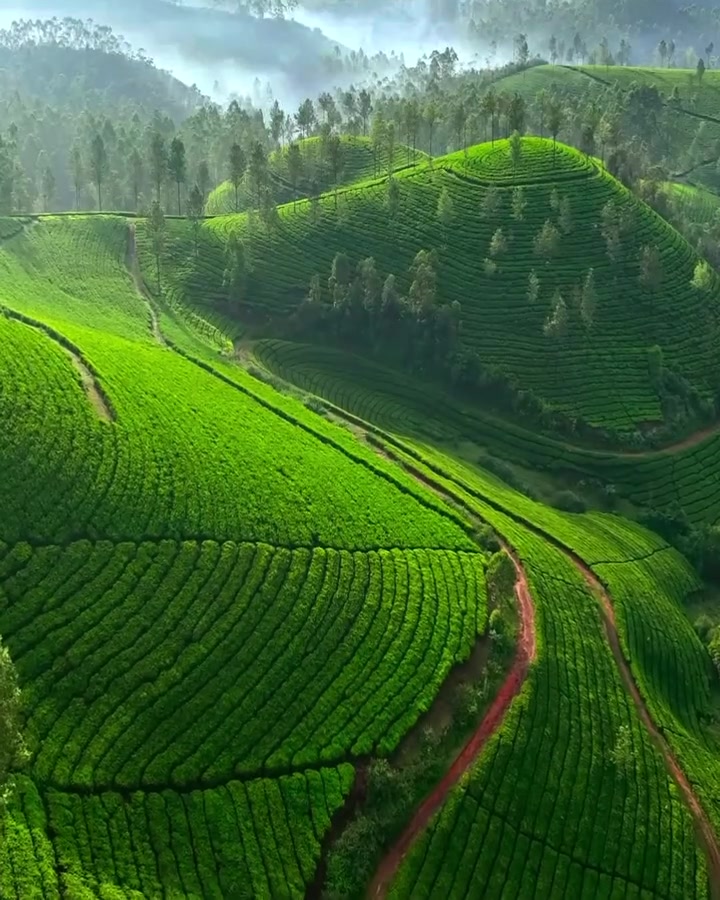
There is a place nestled in the Western Ghats, India. Spectacular, mirror-like tea plantations, rolling hills, peaceful valleys, and bracing calm. The air hangs thick with the humidity associated with lush green forests, moss, and dense foliage. They cover a large area of the landscape in a serene and picturesque place in the Kerala state, India.
Munnar's Terraced Tea Plantations
Munnar is situated in the Western Ghats mountain range in the state of Kerala, India. The city is famous for its sprawling tea plantations, stunning natural scenery, and the mist-covered environment. Some of the more notable flora include tea, cardamom, and coffee. Munnar's terrain is perfect for cultivating tea. The climate is cool and moist, with temperatures that can drop to near freezing and annual rainfall levels that can reach up to 3000mm. The plantations are designed in a manner that takes advantage of the terrain, with rows of trees laid out in a north-south direction, to maximise sunlight and minimise erosion. The terraces vary in elevation and are supported by low retaining walls lined with grass. This gives the plantations a layered, green look, almost as if stacked. There are a number of tea plantations in the area with a long history going back to 1895. Tea plantations contribute significantly to the regional economy, directly employing thousands of people.
Munnar and the art of terracing
In its quest to be among the world's largest tea producers, India does not resort to brutal deforestation for cultivation, like Brazil. Instead, it uses the art of terracing. Terraces allow farmers to grow crops on steep slopes, prevent erosion, and conserve water. Terraces are built by cutting into the slope and building up the vertical structure of the slope. Creating and maintaining a terrace plantation is a huge and ongoing effort since it involves modifying the slope, creating a level surface for planting, regularly clearing rain water, and fixing walls. Tea farmers invest in terracing because the benefits are worth the work. Terrace structure increases the arable land area, provides a way to retain moisture on plants, and increases the productivity in the short term. It also reduces erosion in the long term. The art of terracing has been mastered by generations of tea farmers in Munnar. It's an approach they have adopted for several reasons. Terraces allow them to cultivate crops on slopes thus maximising the land available for cultivating crops. It also reduces the rate at which soil erosion occurs. This is a huge advantage in the heavy rains of the region. Terraces also ensure that rainwater does not drain out but is held by the terracing banks. This prevents water scarcity, which in turn keeps the tea plant from drying out. In contrast to other methods of farming, terracing is a sustainable practice. Terraces allow farmers to keep soil intact, make water available and utilise land that would otherwise be unsuitable for farming.
Green Plantations in a Green Land
The striking visual pattern of vibrant green tea bushes in Munnar cannot be overstated. Eco-tourism businesses catering to the niche market thrive on this. These large scale plantations present a unique aesthetic appeal, making it a paradise for visitors who love nature. The scene in the video, with terraced tea plantations, surrounded by lush green forests and mist-covered valleys, presents a vision of tranquility and natural beauty. It's not just the plantations that give Munnar a unique landscape. Dense forests and mist-covered valleys have a picturesque beauty all their own.
Structure of the Plantations
The tea farms in Munnar are known as “terrace gardens” because the tea bushes are planted in neat, even rows on the slopes of hills. This makes it an attractive tourist destination. Plantation workers' huts are often nestled among the terraces, making for great photo opportunities. Because of the stunning scenery, visitors flock to the land. They marvel at the natural beauty of the environment and the picturesque view which includes tea fields, dense forests, rolling hills, and scenic valleys. The green tea bushes vividly contrast with the teal blue sky.
The Homelands of Tea
A walk in Munnar's plantations will make you wonder about tea-plantation life. There is a peculiar charm in living among the tea plants, sheltered by the mist and the hills. The tough tea plants with their tiny leaves, and the smell of the forest. Even the clouds seem to feel the enchantment, lingering longer than other places. The tea plantations in Munnar have been growing tea for over 100 years. The area became a hot spot for tea farming for a number of reasons. The drop in temperature and annual monsoon rains, combined with soil rich in humus, made it an ideal spot for tea cultivation. Which brings us to:
A Different View of Tea
Tea's popularity in India can be attributed to its myriad health benefits. It contains more polyphenols than other foods. These substances help to prevent cell damage. While tea consumption is growing in India, it remains a steeping ground for culture as well as cuisine. The production of tea occupies a distinct place in the Indian economy. Most of the country's tea is grown on plantations in the northeastern states of Assam and West Bengal.
How to Plan Your Trip to Munnar
A trip to India's second most famous tea growing region will prove well worth your time. The best time to have a visit is between January and August, with April being the most beautiful and tranquil month. The area makes for a perfect escape from the hustle and bustle of daily life.
- Viewing the tea plantations: There are several tea museums in Munnar, one of the most impressive being the TaMunnar Tea Museum. Here you stand a chance to learn about the history, machinery and growth of the tea industry. The museum is open every day except Mondays.
- Bucket List Experiences: A visit to the tea museum, watching the sunrise or sunset, and resting at the hotel are a few of the experiences you can have while you visit the tea plantations.
- Where to stay: There are many resorts available if you plan to stay overnight, with the most notable ones being the Hotel Windsor Tea retreat and the Grand Hyatt Kannur. These places of luxury are known for their grandeur and beautiful surroundings.
Beyond the Green Hills
Munnar is more than just tea and hills. It is also known for its biodiversity. The Western Ghats mountain range is home to many endangered species. Mt. Eravikulam National Park is a well-known sanctuary. The wildlife as well as the flora in Mt. Eravikulam National Park, like the Nilgiri tahr, are protected. The national park is known for its many species of rare plants and animals.
Questions readers ask
What makes the tea plantations of Munnar so visually distinctive?
The tea plantations in Munnar are visually distinctive due to their terraced design, which creates a layered, green landscape that rolls across the hills. This design is not only aesthetically pleasing but also functional, helping to maximize sunlight, prevent erosion, and conserve water. From above, these terraced fields resemble a vast, green wave.
How does the climate in Munnar support tea cultivation?
Munnar's climate is ideal for tea cultivation because it is cool and moist, with temperatures that can drop to near freezing and high annual rainfall levels. These conditions are perfect for growing tea, which thrives in environments with consistent moisture and cooler temperatures.
What role do terraces play in Munnar's tea plantations?
Terraces are crucial in Munnar's tea plantations as they help to maximize the use of steep slopes, prevent soil erosion, and conserve water. By creating level surfaces for planting and using retaining walls, terracing allows farmers to grow tea on slopes that would otherwise be unsuitable for cultivation. It also ensures that rainwater is retained, keeping the plants hydrated and reducing water scarcity.
Can visitors explore the tea plantations in Munnar?
While the article doesn't specify the availability of tours, it's common for popular tourist destinations like Munnar to offer guided tours of the tea plantations. Visitors can often explore the plantations, learn about the cultivation process, and even sample some of the locally produced tea. It's worth checking with local tour operators or the plantations themselves to see what options are available.
Related deep dives
Similar reads based on topic and creator.


Recent articles
Fresh deep dives from the latest Reels we unpacked.




Comments
Be the first to comment.