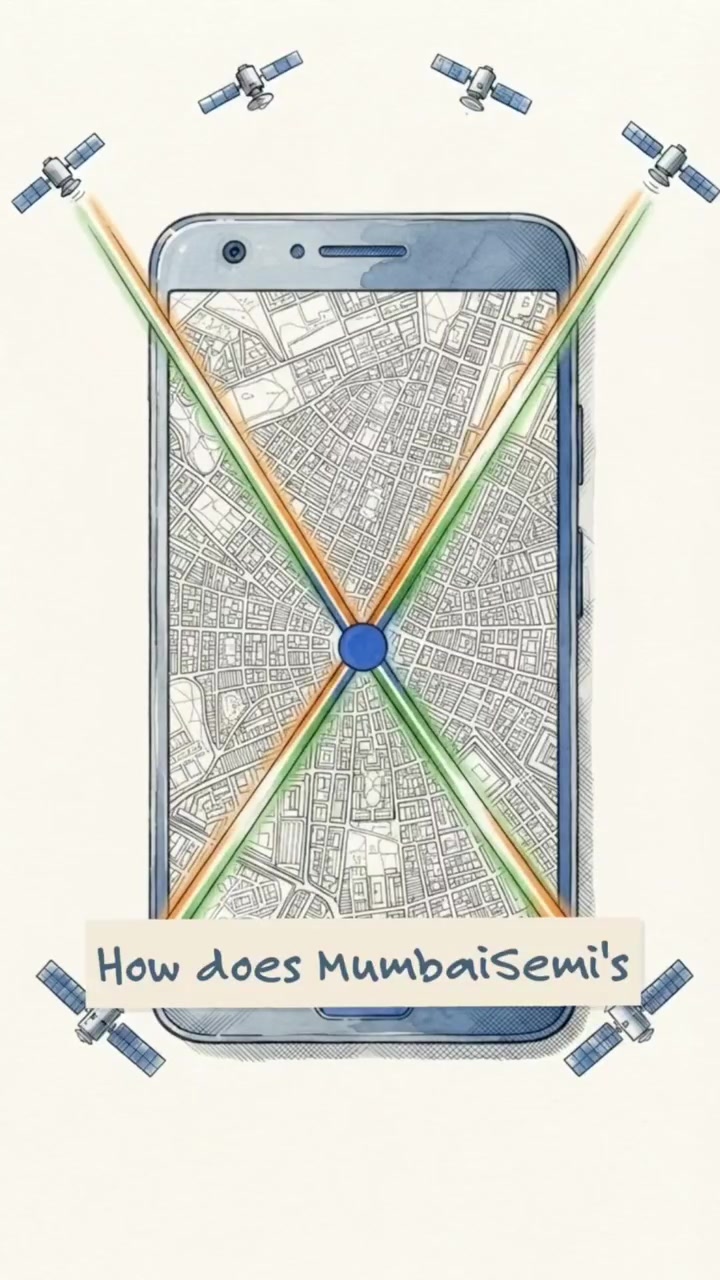
Navigating the world seamlessly is something many people take for granted, especially with the help of GPS technology. When a smartphone or car instantly pinpoints a location, few stop to consider the technology that makes it happen. At the heart of this convenience lies a new piece of technology: the MumbaiSemi DhruvaPro chip, a reconfigurable Radio Frequency Integrated Circuit (RFIC) designed to revolutionize how devices track their location.
The Choreography of GPS and Reconfigurable Silicon
How does this chip work, and what makes it distinctive? The MumbaiSemi DhruvaPro chip is designed to connect to every global satellite system, including American GPS, European Galileo, and India's NavIC, all at once. This is a significant leap from the traditional method, which requires cramming separate, bulky receivers onto one circuit board. The chip's distinctive feature is its ability to alter its own internal programmable bandwidth, dynamically shifting between 2 and 24 MHz to match the exact frequency of the incoming satellite. Normally, capturing signals from different satellite networks requires multiple reception layers, which drains battery life, consumes physical space, and increases costs. The DhruvaPro chip consolidates this into a single piece of silicon, drastically reducing power consumption and hardware complexity.
From Urban Streets to Autonomous Vehicles
The advent of the MumbaiSemi DhruvaPro chip comes at a time when reliable navigation is more critical than ever. Autonomous vehicles, for instance, require precise and instantaneous location tracking to operate safely. This chip could be a game-changer for the burgeoning autonomous car industry, as it reduces the need for bulky and expensive hardware. Additionally, the chip's ability to process signals from multiple constellations means that it could offer more reliable navigation in areas where one satellite system might be weak or unavailable. The chip's capabilities also extend to consumer electronics. Smartphones, smartwatches, and other wearable devices could benefit from more accurate and energy-efficient location tracking. This could lead to better fitness tracking, more reliable navigation, and improved emergency location services. Additionally, the chip's reduced power consumption could extend the battery life of these devices.
The Dual Frequency Bandwidth Magic
A fundamental challenge in satellite navigation is the variety and delicacy of the signals that satellites transmit. Each system broadcasts weak signals on different frequencies, ranging from L1 to S-bands. Capturing these signals usually requires devices to stack multiple reception layers, which is both cumbersome and impractical. The MumbaiSemi DhruvaPro chip addresses this by physically altering its own programmable bandwidth to tune into incoming signals more efficiently. This adaptive capability sets it apart from traditional RFICs, which are typically fixed in their frequency range.
Engineering Real-World Solutions from Academic Research
The journey from academic research to a market-ready product is a challenging one, especially in the semiconductor industry. However, this technology has successfully undergone actual silicon fabrication and testing. The chip was developed by two founders of IIT Bombay, who spun years of research into a startup that engineers this proprietary chip architecture. This technology isn't just about sophisticated engineering; it also represents a shift in India's approach to technology. India isn't just building software anymore; it's trying to build the silicon underneath it. The Dhruva Pro chip is a testament to this ambition, offering a locally designed solution to critical navigation and location technology.
Reconfigurable Silicon in the Mass Market
The real question, however, is whether MumbaiSemi can turn this impressive semiconductor technology into a mass-market product. The startup faces significant challenges, including production costs, supply chain management, and competition from established semiconductor giants. However, the potential for this technology is enormous. The ability to offer a cost-effective, low-power, and multi-constellation receiver chip could be a significant advantage for product manufacturers, and the Indian IP grants the startup a significant edge. Besides, India's growing semiconductor sector provides a supportive ecosystem for such deep-tech startups. The future of location technology might just be shaped by the innovative minds at MumbaiSemi.
Navigate Better with MumbaiSemi
When considering using or investing in the MumbaiSemi DhruvaPro chip, it’s important to recognize its advantages and the context of its development. Take care of the following:
- Consult with Device Manufacturers: If you’re a device manufacturer, consulting with MumbaiSemi could offer innovative solutions for integrating reliable and efficient navigation technology into your products.
- Consider the Ecosystem: Understand the support and infrastructure provided by India’s growing semiconductor sector, which can be a significant factor in the success of locally designed chips.
- Evaluate the Technology: The chip’s ability to process signals from multiple constellations on a single piece of silicon is a technological leap. Evaluate how this can benefit your particular application, whether it’s in autonomous vehicles, consumer electronics, or another field. Ultimately, MumbaiSemi’s journey from research to a market-ready product is a testament to India’s ambition in the semiconductor industry. Their innovative approach to satellite navigation technology has the potential to reshape the way we think about location tracking and pave the way for more reliable and efficient navigation solutions.
Questions readers ask
What exactly is the MumbaiSemi DhruvaPro chip and how does it improve GPS tracking?
The MumbaiSemi DhruvaPro chip is a reconfigurable Radio Frequency Integrated Circuit (RFIC) designed to enhance GPS tracking. It improves accuracy and efficiency by connecting to multiple global satellite systems simultaneously, such as GPS, Galileo, and NavIC. This eliminates the need for separate receivers, reducing power consumption and hardware complexity.
How does the DhruvaPro chip manage to connect to different satellite networks at once?
The chip dynamically alters its internal programmable bandwidth, shifting between 2 and 24 MHz to match the exact frequency of the incoming satellite signals. This adaptability allows it to capture signals from various satellite networks without requiring multiple reception layers, which simplifies the hardware and saves energy.
Can the DhruvaPro chip be used in autonomous vehicles, and if so, how does it benefit them?
Yes, the DhruvaPro chip is particularly beneficial for autonomous vehicles. It provides precise and instantaneous location tracking, which is crucial for safe operation. By reducing the need for bulky and expensive hardware, it makes autonomous vehicles more efficient and cost-effective. Additionally, its ability to process signals from multiple constellations ensures reliable navigation even in areas with weak satellite coverage.
What advantages does the DhruvaPro chip offer for consumer electronics like smartphones and smartwatches?
For consumer electronics, the DhruvaPro chip offers more accurate and energy-efficient location tracking. This can lead to better fitness tracking, more reliable navigation, and improved emergency location services. Its reduced power consumption also extends the battery life of these devices, making them more convenient for users.
How does the DhruvaPro chip handle the different frequencies used by various satellite systems?
The DhruvaPro chip handles different frequencies by physically altering its own programmable bandwidth. This adaptability allows it to tune into incoming signals more efficiently, capturing weak signals from different frequency bands without the need for multiple reception layers. This sets it apart from traditional RFICs, which are typically fixed in their frequency range.
Is the MumbaiSemi DhruvaPro chip already available for use in devices, or is it still in development?
The article mentions that the technology has successfully transitioned from academic research to a market-ready product, but it does not specify the current availability. For the most accurate information, it would be best to check MumbaiSemi's latest updates or contact them directly.
Related deep dives
Similar reads based on topic and creator.




Recent articles
Fresh deep dives from the latest Reels we unpacked.




Comments
Be the first to comment.