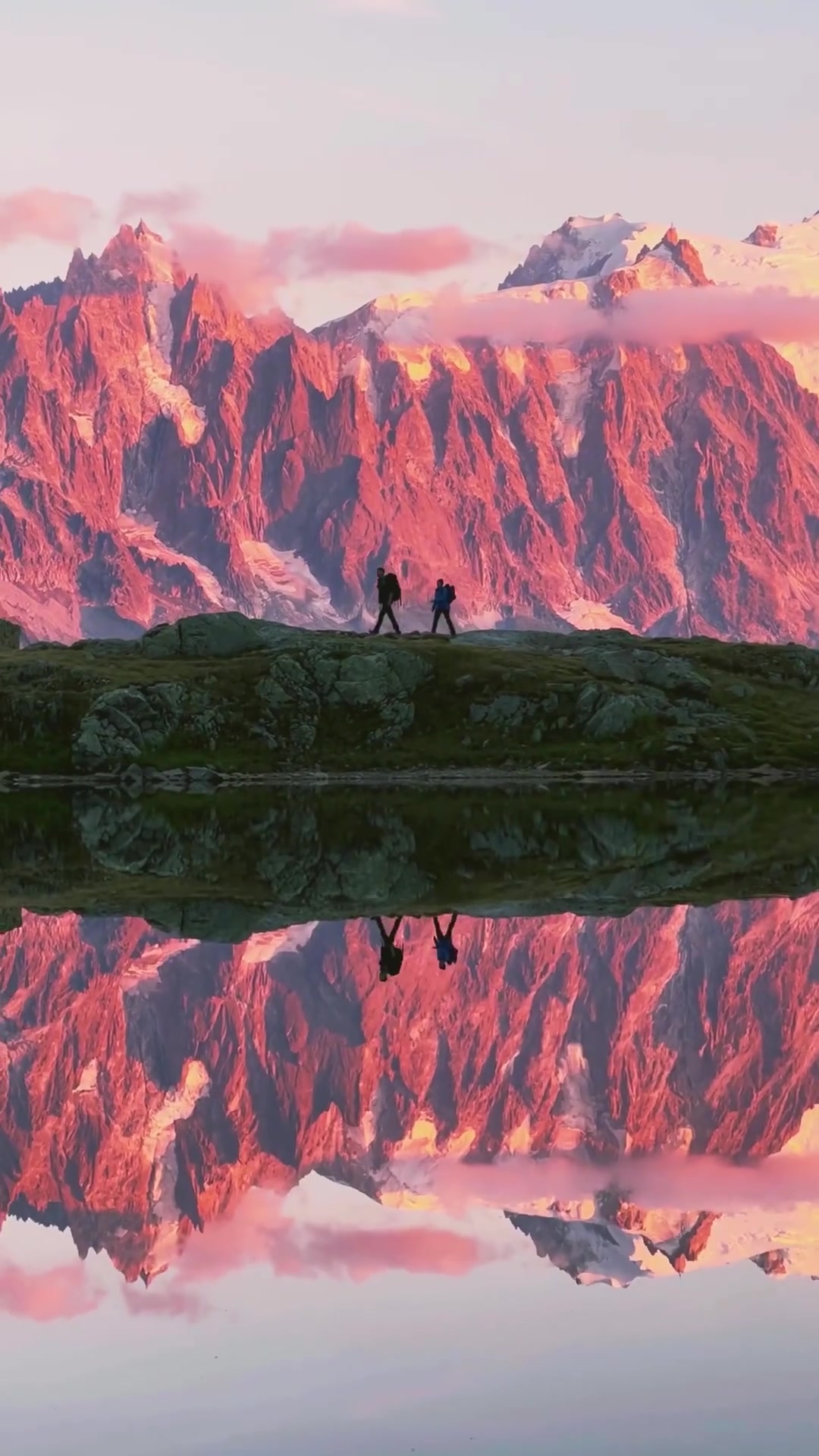
Symmetrical peaks stretched skyward, mirrored in a smooth lake below. Two hikers traversed a ridge, their figures small but vital against the vast backdrop. This mountain landscape orchestrated a sublime dance between earth, sky, and water.
Mirrored Magnificence
Mountain reflections are a hallmark of landscape photography. This visual effect results from calm water bodies, such as lakes or rivers, acting as a mirror. When a body of water is undisturbed, it creates a perfect mirror image of the surrounding landscape. On the water’s surface, the placid mountain range appears inverted, duplicating the grandeur above ground. The result is a scene framed by the sky and the landscape, equidistant from both horizons — a visually appealing symmetry. The sense of infinity this creates often lures photographers, and viewers, to the scene. The best conditions for capturing a reflection like this are during the “golden hours” shortly after sunrise or before sunset. The sun’s angle is low, casting warm, pinkish light across the landscape. The same warm tones illuminate both the mountains and their reflection on the mirror-like lake. The scene’s serene atmosphere contrasts starkly with the magnitude of the natural setting. The mountains are towering and imposing, dwarfing the two figures in the foreground. But the reflection tames them, offering a peaceful counterpart to their grandeur. The warm light wraps the entire landscape in a serene embrace, fostering a human connection to the immense natural beauty.
The Rarity of Human Scale
Mountain reflection photography is more than just a visual feast; it holds a deeper significance in the realm of nature appreciation. It reflects the rare intersection of natural grandeur with human experience. The presence of two people in the scene is not inconsequential. They provide context and scale. It is not common to find a landscape photograph with a sense of human scale, the real world often feels abstract and detached from our daily experiences. A photograph where these elements are not only included but accentuated is a delicate balance. The same photograph without humans in view could have been another image of a reservation of paradise. The photograph’s composition, framing, and lighting techniques all play a critical role in achieving a successful reflection image. The scene’s symmetry and the natural lighting contribute to its visual appeal. But the human element, though small, adds to the moment’s intimacy and relatability.
The Non-Verbal Emotional Chord
The Narrative of The Little
The small figures walking along a ridge at the mountain's foot anchor the viewpoint. The presence of people is a fundamental part of these photos. It serves to add a feeling of scale. Recall that many photographers and travellers have found it hard to capture the moment of a pure mountainside without the presence of real viewers, let alone expand upon it. It may seem counterintuitive, but the smallness of the figures serves to add to the photo's complexity. These figures are in fact compelling and the yearning to know more about them can hold viewers' attention. The figures convey a subtle narrative, adding a human element to the predominantly natural scene. Their presence invites viewers to marvel at the landscape like the figures did. It's as if the viewer is transported to the scene, walking along the ridge side by side with the hikers. The hikers demonstrate the landscape’s grandeur by being minuscule against it. The tension between large and small in this image doesn't just draw a contrast. It ignites a heartbeat of narrative.
The Geometric Masterpiece
The geometric layout of the scene is undeniable. The mountains stand neatly mirrored against the placid lake, creating a sense of harmony and balance. The symmetrical composition makes the scene visually striking. Mountain reflections capitalize on the idea that calm water acts as a mirror. The serenity of the scene is an essential ingredient. The lake's smoothness ensures that the reflection is crisp and unblemished. Reflections are nature's perfect mirror. Without the slight waves in the water, it’d be impossible to capture the vision. The reflection creates a sense of depth, inviting the viewer to explore the scene's layers. The true mountain and its reflection are interconnected, making the image a full-fledged three-dimensional optical art, even when it's photographed in 2D.
The Golden Glow
The golden hour light amplifies the scene's serene beauty. The warm hues soften the mountain range’s rugged edges, making them seem less formidable. This light bathes the scene in a dreamlike quality. It’s a kind of atmospheric artistry that is low on intensity yet rich on the nuance. The sun’s low angle during golden hours casts long, dramatic shadows. It provides the scene with a certain dynamism but in a subtle way. The light also adds to the reflection’s clarity, making the mirrored mountain range almost as vivid as the original. The combined effect of the natural lighting, the symmetrical composition, and the calm water creates a scene that is both dreamlike and real. It’s an aesthetic experience of harmonious balance. The scene commands attention, inviting viewers to linger and explore the myriad nuances of this natural wonder. Whether viewed in person or through a photograph, such scenes are a transcendent experience.
Place For Yourself in The Scene
Embrace the spirit of the mountains. Be sure to prioritize safety when hiking or exploring. Mountain reflection photography can be a rewarding experience.
- Choose the Right Moment: Aim to shoot during the golden hours, just after sunrise or before sunset. The soft, warm light enhances the reflection and adds a dramatic touch to the scene.
- Find Calm Waters: Look for calm, still bodies of water on hikes. Lakes and rivers with minimal surface disturbance produce the best reflections.
- Frame Your Shot: Consider the entire frame. Ensure that the reflection is symmetrical and unobstructed. Pay attention to the foreground, midground, and background to create depth and balance.
Questions readers ask
What causes the mirror effect in mountain landscape reflections?
The mirror effect in mountain landscape reflections is caused by calm bodies of water, like lakes or rivers, acting as natural mirrors. When the water's surface is undisturbed, it perfectly reflects the surrounding landscape, creating an inverted image of the mountains. This visual trick is what photographers and visitors alike find so captivating.
Why are the 'golden hours' best for capturing these reflections?
The 'golden hours'—shortly after sunrise or before sunset—are ideal for capturing mountain reflections because the sun's low angle casts a warm, pinkish light across the landscape. This soft, diffused light illuminates both the mountains and their reflection, creating a serene and visually appealing scene.
How do the human figures in the photograph contribute to the overall scene?
The human figures in the photograph provide a sense of scale and context, making the vast and imposing mountain landscape more relatable. Their presence adds a human connection to the natural beauty, making the scene feel more intimate and emotionally resonant.
Can I capture a similar reflection shot with my smartphone?
Yes, you can capture a similar reflection shot with your smartphone, especially during the golden hours. Just make sure the water is calm and the lighting is soft to get the best reflection. Smartphones have advanced cameras that can capture detailed landscapes, but a steady hand or a tripod will help achieve the best results.
What techniques can enhance the emotional impact of a mountain reflection photograph?
To enhance the emotional impact, focus on including human elements for scale and narrative. Use natural lighting and symmetry to create a visually appealing composition. The small figures walking along a ridge at the mountain's foot anchor the viewpoint and add a feeling of scale, making the photograph more relatable and emotionally resonant.
Why is it rare to find a landscape photograph with a sense of human scale?
It is rare to find a landscape photograph with a sense of human scale because it is challenging to include humans in a way that feels natural and adds to the scene. Most landscape photographs focus solely on the natural beauty, often making the real world feel abstract and detached from our daily experiences. Including humans in a meaningful way requires a delicate balance and thoughtful composition.
How does the presence of humans in the photograph affect the viewer’s emotional response?
The presence of humans in the photograph can evoke a subtle narrative, making viewers curious about the figures and their story. This smallness of the figures serves to add to the photo's complexity and intrigue, making the scene more relatable and emotionally engaging. The human element fosters a connection to the vast natural beauty, making it feel more intimate and personal.
Related deep dives
Similar reads based on topic and creator.


Recent articles
Fresh deep dives from the latest Reels we unpacked.

Comments
Be the first to comment.