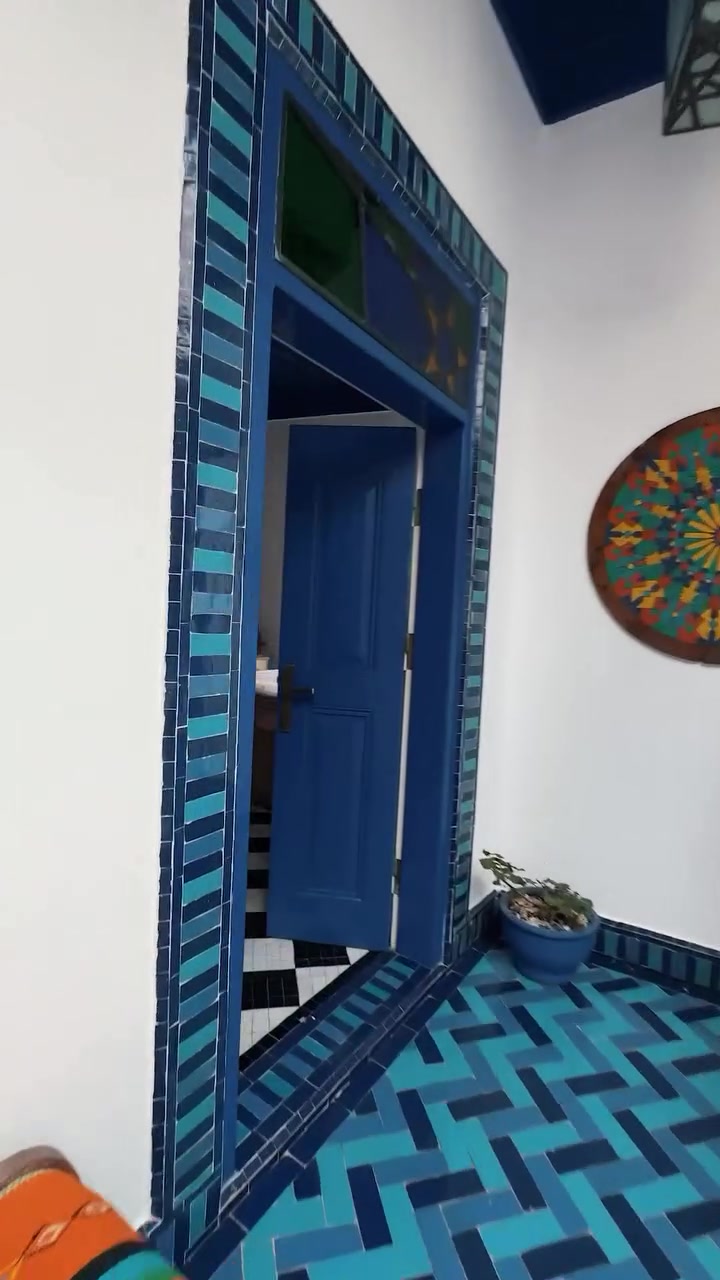
The Moroccan riad is a house type that is both a home and a monument in itself. It is also a quiet oasis in the bustling streets of Morocco. In a riad, each room speaks a story and comes together in a vibrant courtyard. In fact, the architecture is characteristically designed to make it feel like a maze, with many corridors, passageways, and interconnected spaces around this courtyard. For Moroccans, the riad isn't just a place to live; it's a sanctuary within the city.
Intense, bold, and deeply Moorish: The Moroccan riad
A riad is traditionally a single- or multi-story house or palace with a central courtyard. These ‘riads’ feature a traditional Moroccan courtyard design. You will find this space surrounded by the main rooms of the house. This courtyard is more than just a handy layout design. It is deliberate in being almost open to the sky. It lets in light and air. This courtyard, often decorated with a fountain, is the heart of the home. It is the gathering space of the household and, in many of these own traditional Moroccan riads. Inside and out, riads are marked by intricate geometric patterns and a palette of vibrant colours. These designs are inspired by Moorish and Islamic art. Morocco’s proximity to Europe and the Middle East. Architects have drawn from different cultures to create their buildings. According to National Geographic, Moroccan architecture incorporates elements like arches, columns, and ornate lamps. This blend can be seen in all aspects of the riad, from the ornate floor tiling, to the design of the ceiling. It makes for a pleasant and welcoming interior, softening the edges of the busy bustling cities. Riads are built of high-quality materials, including ribs, woodwork, and stone. They also use hand-painted tiles, marble, and silk cloths. The Moroccan riad, then, is a statement of cultural heritage, about artifacts and history. All of its parts — the courtyard, the use of tilework, and the ornate lamps — have their own story.
The riad as historic sanctuary and luxury retreat
The rias (plural of riad) were historically a prominent feature in Moroccan life. Riads have served as both private residences and communal gathering spaces for centuries. In the medina, or old city, this meant they were a quiet place of calm amidst the city. This interconnectedness and design gave people space for personal privacy, communal atmosphere, and even business. History has shown that merchants often used riads to store goods and conduct trade. Today, the Moroccan Riad is the quintessential luxury retreat in Morocco. Old riads have been carefully converted into luxury riads and boutique hotels. As tourism in Morocco grew, a new kind of Riad has emerged: the Riad Luxue (luxury riad). These riads, while maintaining traditional Moroccan design, come equipped with modern hotel facilities. These riads are often the choice for travelers, as they provide access to the country's rich cultural heritage.
Orientation to the courtyard
The riad's signature architecture is built around a central courtyard. This courtyard serves as the heart of the home or building. When you land on a riad, the courtyard is straight ahead. Around it, the house is designed. It's a practical way of designing a house to keep the warm air out and cooler air in, which can be a significant factor in Morocco's hot summers. The courtyard is striking. It usually features a water feature, like a fountain or pool, which also serves a practical purpose. The sound of trickling water can add serenity to the space, while the water itself helps to cool down the area, keeping the central part of the house cooler.
Themed Moroccan furnishings
Moroccan furniture are ornate, upholstered seating and colorful carpets, pillows, and fabrics. The vibrant colors and intricate patterns reflect the rich cultural heritage of Morocco. These elements are often seen in traditional Moroccan riads, and they add warmth and character to the space. The right furnishings are key. Moroccan furniture is deliberately designed to be a centerpiece and the statement piece in a room. These are both functional and decorative, and they are often hand-carved or hand-painted, which adds to their unique charm. Furniture items such as the traditional Moroccan marble tables, poufs, and bench can also be found in most traditional riads. They also often feature intricate carvings and ornate details. The use of ornate lamps, colors and patterns give the experience of luxury and opulence, making the space feel apart and special.
Views from the highest point
Riads sit on narrow streets and cul-de-sacs in Morocco. Riads were built “in” the medina or town. One of the most striking features of riads is the view from the balconies and the rooftop terraces. These are often the highest points in the riad. However, they still maintain a private and tranquil ambiance. From this point, one can see the bustling street life of medina, and the panoramic view of medina from the rooftop, with the ocean or mountains in the background. The balcony and the terrace are perfect for enjoying the Moroccan climate. These spaces offer breathtaking views and a peaceful environment. These spaces are often designed with comfortable seating and natural elements, such as plants and flowers. They can be a great place to enjoy a meal, or simply relax and enjoy the scenery.
How to experience a traditional Moroccan Riad
Traditional Moroccan riads are special. They give you an experience of Moroccan culture at its finest. There are a few places that match the classic Moroccan riad experience. There are some luxury riads that are also hotel accommodations. Many of these special hotels are converted riads:
- Stay in a luxury riad hotel: Big-name hotels may have riad features, but staying at luxury riad hotels gives you the opportunity to experience the lifestyle. They come in different styles and prices, but expect to stay in a room that reflects Moroccan architecture. They are both modern and luxury. They often include spas, on-site restaurants, and modern facilities.
- Visit a riad museum: If you are curious, but you do not want to spend a fortune, then you can consider visiting a riad museum. They are open to visitors, and often give a guided tour of its history and architecture. There are some notable ones to be found in the old cities, such as the Bahia Palace in Marrakesh.
- Enjoy a riad day tour: You can join a riad day tour and explore the historic riads in the old city. Additionally, you might be able to see some of the old riads-turns-hotels. You can also book private tours of riads and enjoy a riad-like ambiance. For centuries, the riad has been a quintessential Moroccan living space. Whether it is a personal home, a hotel or a museum, the riad is a beautifully intertwined and curated piece of Moroccan art.
Questions readers ask
What exactly is a riad and how does its design differ from other types of Moroccan homes?
A riad is a traditional Moroccan house or palace designed around a central courtyard, which is typically open to the sky. Unlike other Moroccan homes, riads are characterized by their maze-like layout, with corridors and interconnected spaces surrounding the courtyard. This design creates a unique sense of privacy and tranquility within the bustling city streets. The courtyard is not just a functional space but also the heart of the home, often decorated with fountains and serving as a gathering space for the household. The architecture of a riad is deeply Moorish and Islamic, with intricate geometric patterns, vibrant colors, and elements like arches, columns, and ornate lamps.
How does the interior design of a riad reflect Moroccan cultural heritage?
The interior design of a riad is a rich tapestry of Moroccan cultural heritage, incorporating elements from Moorish and Islamic art as well as influences from Europe and the Middle East. The use of high-quality materials like marble, silk, and hand-painted tiles, along with ornate lamps and intricate geometric patterns, all contribute to the unique aesthetic. Each element, from the courtyard to the tilework and lamps, has its own story and reflects the country's rich history and artistry. The vibrant colors and intricate designs soften the bustling city atmosphere, making the riad a sanctuary of calm and beauty.
Can you describe the history and evolution of riads in Morocco?
Riads have been a central part of Moroccan life for centuries, serving as private residences and communal gathering spaces, especially in the medinas or old cities. Historically, they provided a quiet sanctuary amidst the city's bustle, offering spaces for personal privacy, communal atmosphere, and even business. As tourism grew in Morocco, many old riads were converted into luxury riads and boutique hotels, offering modern amenities while preserving traditional design. These luxury riads, known as Riad Luxue, are popular among tourists seeking a cultural experience while enjoying modern comforts.
What are the key features that make a riad a unique luxury retreat in modern Morocco?
Modern riads in Morocco offer a blend of traditional design and luxury amenities, making them unique retreats. They maintain the classic features like central courtyards, intricate tilework, and ornate lamps, while also providing modern facilities such as air conditioning, Wi-Fi, and spa services. This combination allows guests to experience the rich cultural heritage of Morocco while enjoying contemporary comforts. The luxury riads are often located in historic medinas, offering a quiet and tranquil escape within the bustling city.
How does the layout of a riad, particularly the central courtyard, contribute to its functionality and charm?
The central courtyard is the defining feature of a riad, serving as both the heart of the home and a functional space. It is typically open to the sky, allowing natural light and air to flow through the building. This design creates a sense of openness and tranquility, while the maze-like layout of corridors and interconnected spaces around the courtyard provides privacy and a quiet sanctuary. The courtyard often features decorative elements like fountains, further enhancing its charm and serving as a gathering space for the household.
Related deep dives
Similar reads based on topic and creator.



Recent articles
Fresh deep dives from the latest Reels we unpacked.


Comments
Be the first to comment.