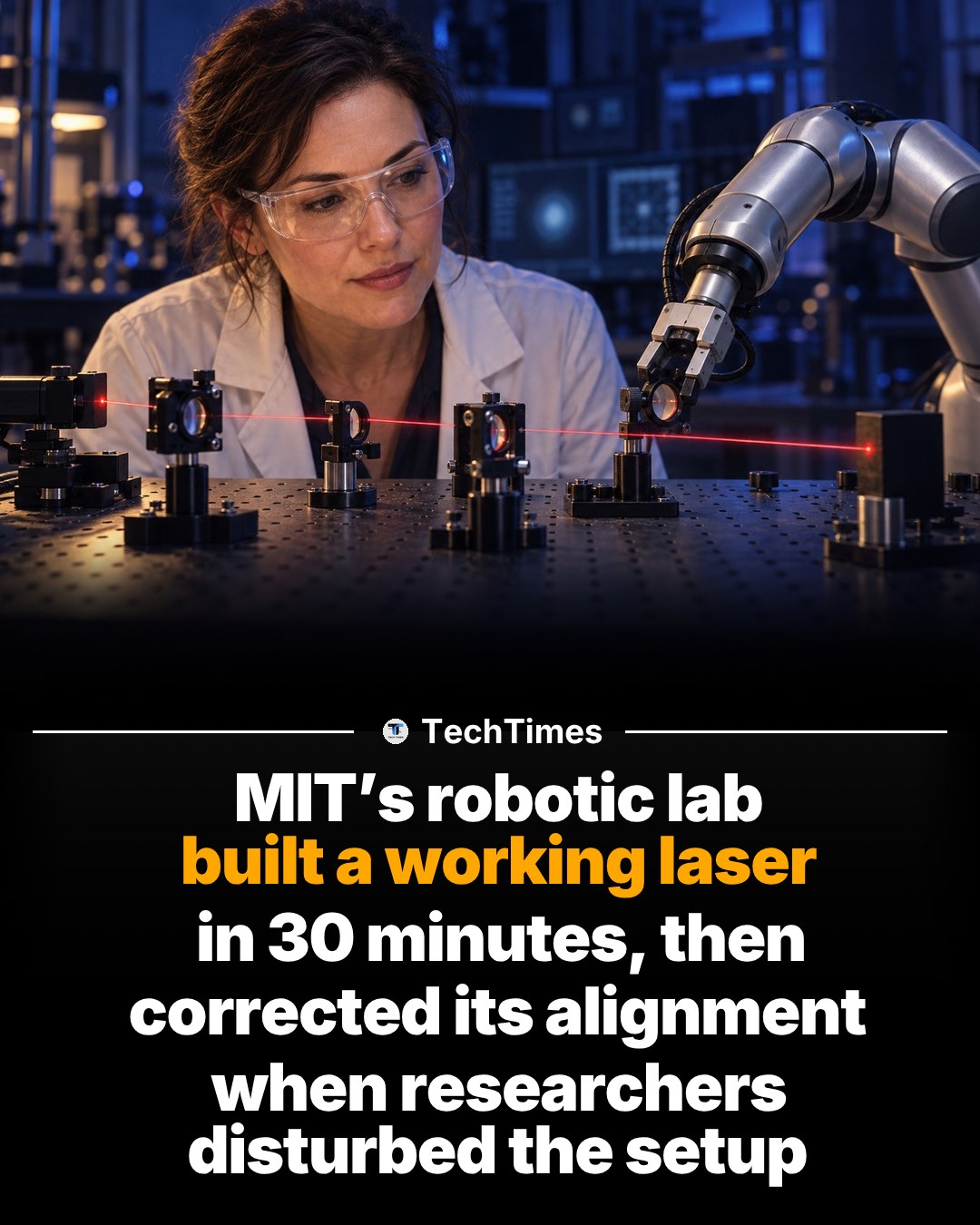
MIT's robotic lab rapidly engineered a functional laser, aligning it — and readjusting it on the fly. This isn't a laboratory curiosity; it is a breakthrough that could streamline high-precision manufacturing. The lab achieved this alignment in just 30 minutes, hiking up the stakes for automation's role in optical engineering.
The MIT Robot Arm Laser
The laser is an optical tool that creates a narrow beam of light, a tool that has been refined over decades. MIT’s robotic lab has demonstrated a laser alignment process that is impressively swift. The robotic arm in the video builds and aligns the laser in just 30 minutes, correcting its alignment on the fly. The MIT lab's example is the perfect illustration of automated alignment and the instantaneous correction of any errors. If a human engineer made a mistake, it would take significantly longer to correct. The ability to correct the alignment instantly is what makes tech such as the one demonstrated notable. The precise component of the laser — the beam itself — has to be straight. The robotic arm demonstrated astonishing speed and precision, highlighting a capability that will propel further research into automation in laser engineering.
Laser Alignment and Automation’s New Dawn
Automation promises to revolutionize precision engineering, which is crucial in fields like telecommunications, medicine, and manufacturing. The most precise instruments demand exactitude and efficiency. MIT’s demonstration suggests that automation can achieve greater precision and faster production times. This impacts the market for lasers, from industrial to consumer electronics. With a faster, more precise laser-building process, companies can produce more devices more quickly and at a lower cost. A laser must be aligned correctly before it can produce the expected output. Automation can simplify this by monitoring and correcting the laser's alignment in real-time. This reduces the need for human intervention, saving both time and resources. The laser's alignment is the only thing that matters — and automation can achieve that with increased accuracy.
The Workflow of Automated Laser Alignment
Robot Arm Precision in Laser Assembly
The robotic arm serves as the heart of this automation. Its primary function is to assemble and align the laser — every component put into place precisely. Using real-time sensors, the arm can detect any discrepancies in the alignment and make the necessary adjustments. The robotic arm's role is multifaceted, from precise handling to real-time correction, making it an indispensable tool in this process. The arm uses sensors to detect any misalignment in the laser.
Robust Feedback Loop
The arm doesn’t just halt and reset; it corrects continuously. A feedback loop allows the robotic arm to adjust the alignment as it works, as opposed to a check-in process. This means continuous checks and adjustments, ensuring that any deviation is corrected immediately. This corrective cycle is like treadmill, running not with incremental adjustments but continuous ones. The instant correction facilitates a speed that humans can’t match.
Laser Targets and Precision Fixes
The laser arm can hit a target with high precision. The arm's ability to align the laser beam perfectly ensures the beam reaches its intended target. This is crucial for applications where the laser beam needs to hit a specific point, like in laser surgery or manufacturing. Also, the arm can correct deviations — the same instant as it identifies them. For most people, hitting a target is difficult without technology. But the arm can do it — every time.
Potential Applications and Challenges
Surgical Equipment
Precision is vital in medical procedures, especially those relying on laser-guided instruments. The robotic arm could revolutionize everything from cataract surgery to highly-targeted cancer treatments. The automation could ensure that the laser beam is precise and reliable, reducing the risk of human error, which could lead to improved patient outcomes. Laser technology offers a wide range of medical uses, and automation could make these procedures faster, more accurate, and safer.
Telecommunications
Laser communication is essential for fiber-optic networks, where data signal paths require precise alignment. Automated laser alignment could lead to faster, more reliable data transmission — reducing signal interference. This would be a game changer for the internet. For fiber optics, precise laser alignment is crucial for transmitting data signals accurately. Automation ensures that the laser beam is always aligned correctly, enabling faster data transmission and reducing the risk of signal interference.
Manufacturing Precision
Precision manufacturing requires high-precision tools. Laser cutting, welding, and 3D printing all need precise laser alignment. Automation could help achieve greater precision, faster production times, and greater efficiency. Ultimately, this technology could transform manufacturing, enabling faster, more accurate, and more reliable production processes.
Here’s How to Get Started with Laser Alignment Automation
Read the Recent Studies: Look at up-to-date research to understand the latest advancements and best practices in laser alignment automation. Explore the Tech: Research equipment and software used in laser alignment automation. Look at different robotic arms and sensors used for this purpose. Understand their capabilities, limitations, and how they can be adapted to your specific needs. Consult with Experts: Talk to professionals in the field, including engineers, scientists, and industry experts. They can provide valuable insights and perspectives on the potential applications and challenges of laser alignment automation. Start Small: Begin with simple, low-stakes projects, such as laser cutting or welding, to gain experience and build confidence. Gradually, you can take on more complex projects, such as medical or telecommunications applications.
Questions readers ask
What exactly is a robotic laser alignment, and how does it differ from traditional methods?
Robotic laser alignment is a process where a robotic arm automatically assembles and aligns the components of a laser. Unlike traditional methods, which rely heavily on human intervention and can take much longer, robotic alignment corrects any misalignments in real-time, making it faster and more precise. This is a game-changer for industries that require high-precision laser tools.
How does the robotic arm achieve such precise and rapid alignment?
The robotic arm uses a combination of precise handling and real-time sensors to detect any misalignments. It continuously adjusts the laser's alignment as it works, thanks to a robust feedback loop. This means it doesn't just check for errors at the end of the process but corrects them instantly, ensuring a straight and precise laser beam.
Can this technology be applied to other precision engineering tasks beyond lasers?
Yes, the principles demonstrated by MIT's robotic lab can be applied to other precision engineering tasks. Automation that can correct errors on the fly and ensure high precision is valuable in fields like telecommunications, medicine, and manufacturing, where exactitude and efficiency are crucial. The same approach could be used for aligning other optical or mechanical components.
What are the potential cost benefits of using automation for laser alignment?
Automation can significantly reduce the cost of laser production. By speeding up the alignment process and reducing the need for human intervention, companies can produce more devices more quickly and at a lower cost. This efficiency can lead to cost savings that can be passed on to consumers or reinvested in further research and development.
What happens if the robotic arm encounters a problem it can’t correct?
The article does not specify what happens in such edge cases, but typically, advanced robotic systems have fail-safe mechanisms. These could include alerting human operators, pausing the process for manual intervention, or even rerouting the workflow to a different robotic arm if available. The key is to ensure that any issues are addressed promptly to maintain the high standards of precision required.
Is this technology already available for commercial use, or is it still in the experimental phase?
The article highlights a breakthrough by MIT's robotic lab, but it does not specify whether this technology is commercially available. Given the nature of research labs, it's likely that while the technology is advanced, it might not be widely available for commercial use yet. Companies interested in this technology would need to reach out to MIT or similar research institutions for licensing or collaboration opportunities.
How does the robotic arm's real-time correction capability benefit the laser's performance?
The ability of the robotic arm to correct the laser's alignment in real-time ensures that the laser beam remains straight and precise. This precision is critical for the laser's performance, as any misalignment can affect the quality of the output. By continuously monitoring and correcting the alignment, the robotic arm ensures that the laser operates at its optimal performance levels. This is particularly important in applications where even the slightest deviation can have significant consequences.
Related deep dives
Similar reads based on topic and creator.




Recent articles
Fresh deep dives from the latest Reels we unpacked.




Comments
Be the first to comment.