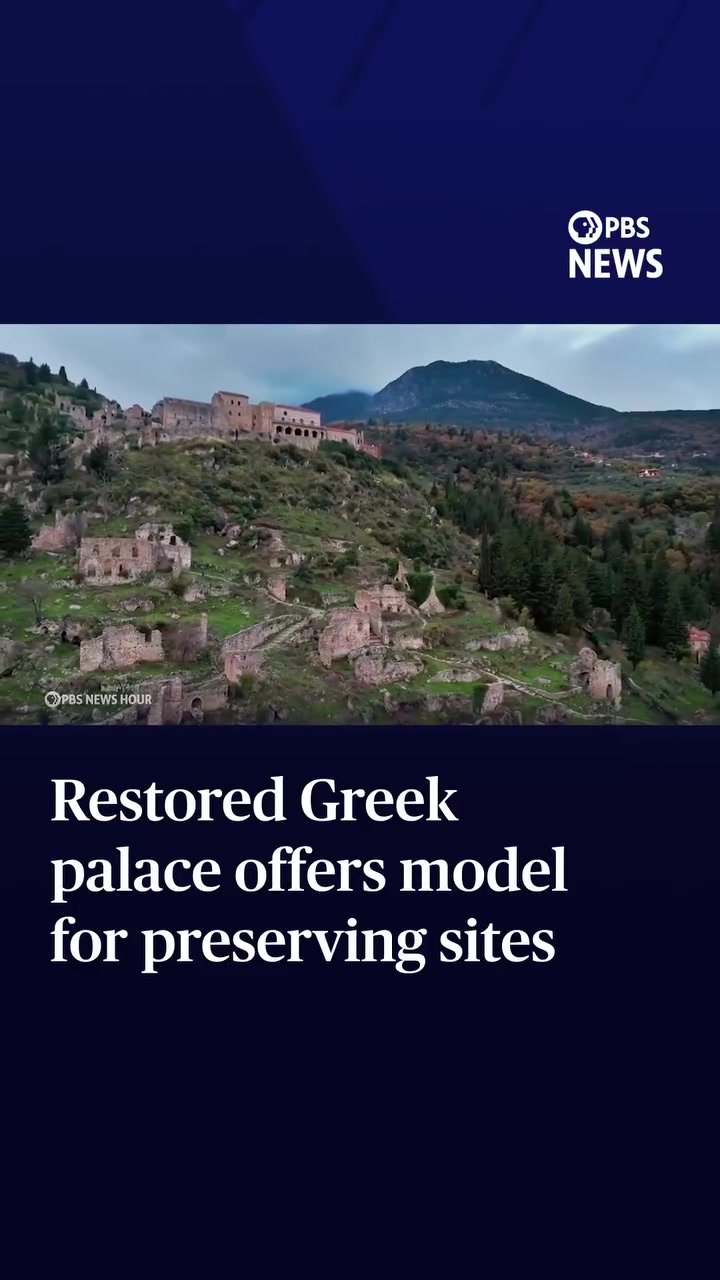
The Reborn Palace of Mistras
Nestled high in the Tigetus Mountains, above ancient Sparta, stands the once-ruined walled city of Mistras. Now, after 40 years of meticulous restoration, this UNESCO World Heritage Site stands ready for visitors. With high military-grade fire suppression systems installed, Mistras, a UNESCO World Heritage Site and the only remaining Byzantine palace in Greece, offers a unique glimpse into the luxurious Byzantine Empire, a continuation of the Roman Empire that thrived while the West collapsed.
A Byzantine Beacon
The palace at the heart of Mistras, known as the Palace of the Despots, is a Byzantine marvel. The Byzantine Empire, a Greek-Roman Christian entity, flourished in the Middle Ages, transforming Mistras into an art and culture hub. The palace complex and is now a crucial historical site that had been sealed off for decades, only reopening for public view in 2023. During its golden years, Mistras served as a key outpost for the Byzantine Empire, which was ruled from what is now Istanbul. The Byzantine Empire, a continuation of the Roman Empire, was centered in Greece and flourished while the western part of the Roman Empire was in decline. Mistras was a center for art and culture and a key outpost of the Christian Byzantine Empire. The site's renovations involved 40 years of painstaking work, with authorities investing in technology to create personalized routes and enhance the visitor experience.
Guarding against the Future
The palace's renovation was more than just a restoration project; it also future-proofed the site against modern threats, particularly wildfires. Mistras, surrounded by forests, faces significant risks from wildfires, earthquakes, and other environmental issues. The area, much like California, is a potential tinderbox, and fire suppression systems have been installed to protect the site. The archaeological site has been equipped with water tanks and the latest fire suppressant systems, pleasing Prime Minister Kyriakos Mitsotakis.
A Tour Through Time
Visitors to Mistras experience a journey back to the Byzantine era, complete with ghostly images projected onto stone walls and avatars of minstrels in the throne room. This blend of ancient history and modern technology ensures visitors are immersed in the past while enjoying contemporary amenities. The palace transports visitors back in time by projecting ghostly images onto the stone walls. Avatars of minstrels in the throne room provide a soundtrack as a Byzantine prince returns to the palace to the acclamation of his subjects. The throne room features avatars of minstrels, while other parts of the palace showcase ghostly images projected onto the stone walls, enhancing the visitor experience.
Guardians of the Past
Tour guides like Dmitrius Vlakakos are experts on Byzantine history and lead visitors through the restored palace. With 12 years of experience, Vlakakos provides insights into Byzantine culture and history. "The Byzantine Empire actually was the continuation of the Roman Empire to the east and became a Greek-Roman Christian Empire," Vlakakos explained. "So when everything was collapsing in the western part of the Roman Empire, here they were flourishing."
Innovative Protection
Greece has launched an initiative to protect 19 ancient monuments at high risk from climate change. These include the Knossos in Crete, which will receive a fire suppression network and lightning protection system. Scientists are also monitoring coastal erosion and rising sea levels around the island of Delos. The initiatives aim to safeguard cultural heritage, with climate change being a significant threat. The heat wave is maintained by the increase of the sea surface temperatures also, which follow the heating of the atmosphere by the greenhouse gases.
Revisiting Mistras
For those interested in delving into Byzantine history, Mistras offers an immersive experience. While the site is open to the public, visitors should be prepared for the steep gradient and 900 steps between the uphill and downhill routes. The palace visitors experience a journey back to the Byzantine era, complete with avatars of minstrels in the throne room and ghostly images projected onto stone walls. While access is still relatively new, the visitor experience includes the palace at the heart of the complex and a tour guide expert who can, at times, be difficult to understand. "We have the oldest palace in Greece, the only one remaining Byzantine palace in Greece and here in Mistras is the palace of the despots," Vlakakos said. "The Byzantine Empire actually was the continuation of the Roman Empire to the east and became a Greek-Roman Christian Empire."
Standing at the Edge of History
Mistras is part of an ongoing effort to protect Greek cultural heritage. It stands as a testament to the resilience of history and the power of restoration. Today visitors to Mistras cannot fail to feel the weight of history. The palace transports visitors back in time by projecting ghostly images onto the stone walls. "Protecting such irreplaceable treasures is not just a Greek responsibility, according to UNESCO's abiding principles, it is the duty of all humanity." Maltom Brabant, PBS NewsHour. Visitors to Mistras stand at the edge of history, where the past is preserved with modern innovation and where the echoes of ancient culture are protected for future generations. As the nation looks to the future, Mistras remains a beacon of Greece's rich cultural heritage. Mistras remains a beacon of Greece’s rich cultural heritage, offering visitors a unique glimpse into the Byzantine Empire, a continuation of the Roman Empire.
Questions readers ask
What makes Mistras Palace unique among Byzantine sites?
Mistras Palace is unique because it is the only remaining Byzantine palace in Greece, offering visitors a rare glimpse into the luxurious Byzantine Empire. Its restoration has preserved a key outpost of the Byzantine Empire, which was a center for art and culture during the Middle Ages.
How did the restoration of Mistras Palace address modern threats?
The restoration of Mistras Palace included the installation of military-grade fire suppression systems and water tanks to protect against wildfires, which are a significant risk due to the surrounding forests. This modern technology ensures the site is safeguarded against environmental threats, enhancing its longevity.
What kind of technology is used to enhance the visitor experience at Mistras Palace?
Visitors to Mistras Palace can enjoy a blend of ancient history and modern technology. Ghostly images are projected onto stone walls, and avatars of minstrels perform in the throne room, immersing visitors in the Byzantine era while providing a contemporary experience.
Related deep dives
Similar reads based on topic and creator.




Recent articles
Fresh deep dives from the latest Reels we unpacked.



Comments
Be the first to comment.