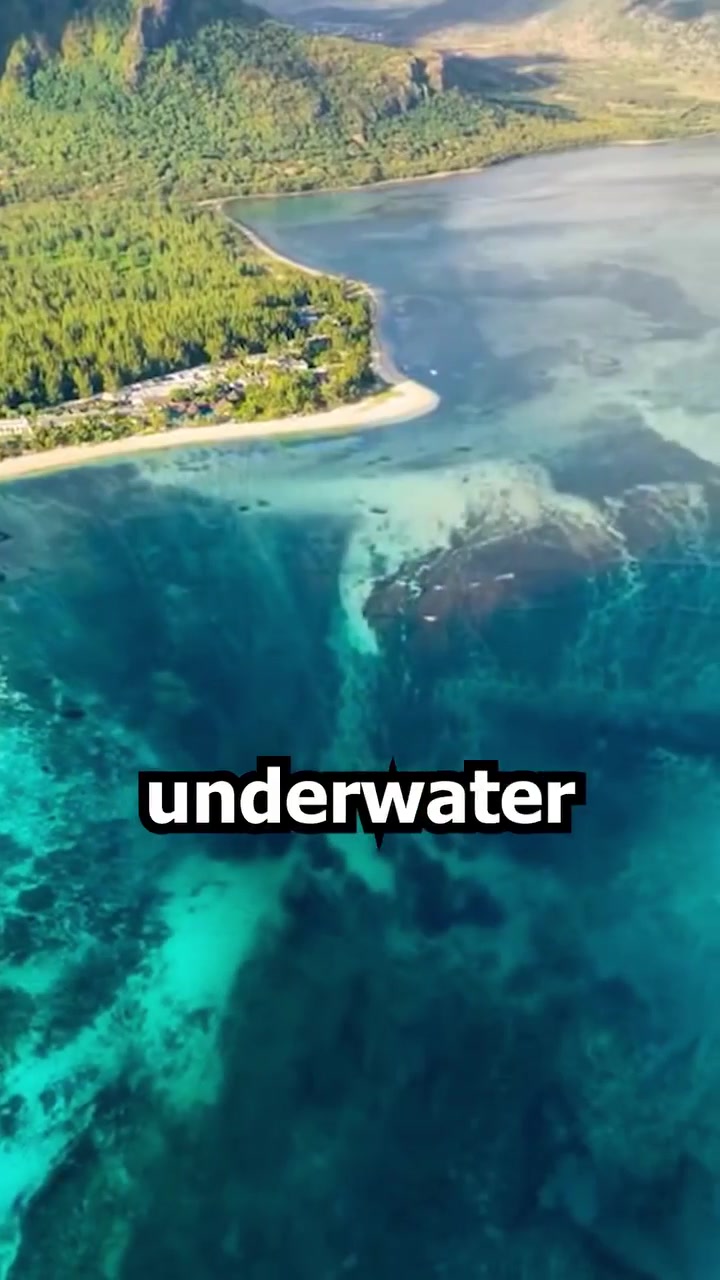
Off the coast of Mauritius, a natural marvel creates a visual illusion nearly 2.5 miles deep. This underwater sinkhole, also known as the Sand Bar, is not a waterfall at all, but a geological formation where sand and silt create the illusion of water cascading down from shallow turquoise to an abyss of a deep dark blue. Swimming and surfing over the drop are surprisingly safe.
The Nature of Mauritius’s Sand Bar
An underwater sinkhole, formally not a true waterfall, is a geological formation created by sediment erosion — this steep geological facade appears like an underwater waterfall from an aerial view — no noise, no splashing, no rushing of currents. The gradient slope, starkly contrasts the shallow waters and the deep sea — this creates an illusion for viewers. The eerie yet alluring deep blue hue originates from the ocean floor’s deeper sections. The sand and silt sediments are the real protagonists behind this natural phenomenon — you can see the blue body of water flowing from the deeper sections toward the shore, despite the slope and the drop. The transition from a shallow turquoise to a deep, dark blue as it descends into the sinkhole is visually arresting. From the island coastline, a gradual slope leads out to a sudden 2.5-mile drop to the ocean floor.
Deep Blue: the geography and dimensions
This natural marvel is located off the coast of Mauritius, an island nation in the Indian Ocean, east of Madagascar. The geographical coordinates are approximately 20.2349° S, 57.5935° E. The shark infested waters also host a variety of marine life, coral reefs, and lush green vegetation visible along the coastline. Mauritius, known for its tropical climate, diverse ecosystems, and rich biodiversity, provides a haven for an array of endemic and native species. The Indian Ocean Island also serves as a significant nesting site for many bird species, including seagulls and frigate birds. The Sand Bar is as unique and unusual as it is safe. Lucky swimmers and surfers can traverse the area without fear since the water is not falling into the abyss. Instead, the illusion of a waterfall is created by the sand and silt sediments sitting upon the underwater slope.
Breaking the fall
This geological marvel features a unique topography, with a steep slope of more than 2.5 miles beneath the surface. From the island's shore, a gradual slope leads out to a sudden drop, creating a dramatic depth contrast. This vast depth creates an illusion that water is cascading down into the ocean floor. The Sand Bar is unique, combining a deep ocean feature with a stunning underwater landscape. You can swim or surf on it, too. The Sand Bar is a one-of-a-kind geological marvel located off the island of Mauritius in the Indian Ocean. Swimmers and surfers are encouraged to explore the area if they can withstand the shark-infested waters, as the sand and silt sediments create a fascinating illusion of an underwater waterfall. This geographic wonder is a unique spot for adrenalin seekers due to its unique depth and turbulence.
A Historical Perspective
The Sand Bar is also known as the Peterberg Reef, named after the German geologist who discovered it. The underwater waterfall was first discovered in the late 18th century — and was visualized using sophisticated sonar equipment. Researchers estimate that the geological feature was formed millions of years ago due to volcanic activity, which created the steep slope and deep ocean trench. The underwater sinkhole has captivated scientists and tourists alike due to its unique characteristics and stunning visual appeal.
Making sense of the illusion
The illusion of an underwater waterfall is created by the contrast between the shallow and deep water. The deep blue body from the ocean floor contrasts with the shallower turquoise waters near the shore. This color transition creates a visually striking effect, making the Sand Bar one of the most unique and mysterious geological formations in the world.
Partake in the wonder
Adding the Sand Bar to a tropical getaway could be the perfect addition for divers and adventurers brave enough to swim close to the unprotected reef:
- Best Time to Visit: The best time to visit Mauritius is during the dry season, from May to December. This period offers clear skies, calm waters, and excellent visibility for swimming and surfing.
- Safety Precautions for Shark Infested Waters: To mitigate the dangers of the reefs, it is recommended to use a shark cage, wear a full-body wetsuit, and stay close to the shore. Always swim with a buddy and avoid swimming at dawn, dusk, or night.
- Gear and Access: Bring a mask, snorkel, and fins for exploring the underwater world. A dive kit, paired with reef shoes, is essential for visitors hoping to immerse themselves in the aquatic life.
- Channel the Spirt of Adventure: The Sand Bar is located off the coast of Mauritius, an island nation in the Indian Ocean, east of Madagascar. To reach the Sand Bar, you can join an organized tour or charter a boat from local operators.
Questions readers ask
What exactly is the Sand Bar off the coast of Mauritius?
The Sand Bar is an underwater geological formation that creates an illusion of a waterfall due to the way sand and silt sediments are distributed. It's a 2.5-mile deep plunge that is safe for swimmers and surfers despite its dramatic appearance.
How does the Sand Bar create the illusion of a waterfall?
The illusion is created by the contrast between shallow turquoise waters and the deep, dark blue of the ocean floor. The sand and silt sediments on the underwater slope give the appearance of water cascading down, even though the water itself is not moving in that way.
What makes the Sand Bar safe for swimming and surfing?
The Sand Bar is safe because the water isn't actually falling into an abyss. The illusion is purely visual, created by the sediment and the steep slope. There are no strong currents or dangerous water movements that would pose a risk to swimmers or surfers.
Are there any dangers associated with swimming at the Sand Bar?
While the geological feature itself is safe, the waters around the Sand Bar are known to be shark-infested. Additionally, the area's unique topography and depth can create turbulence, so swimmers and surfers should be experienced and cautious.
What kind of marine life can be found around the Sand Bar?
The waters around the Sand Bar are home to a variety of marine life, including coral reefs and lush green vegetation. The area is also a significant nesting site for many bird species, adding to the rich biodiversity of the region.
Who discovered the Sand Bar, and how did it get its name?
The Sand Bar is also known as the Peterberg Reef, named after the German geologist who discovered it. The name reflects the geological significance and the unique topography of the area.
Related deep dives
Similar reads based on topic and creator.

Recent articles
Fresh deep dives from the latest Reels we unpacked.
Comments
Be the first to comment.