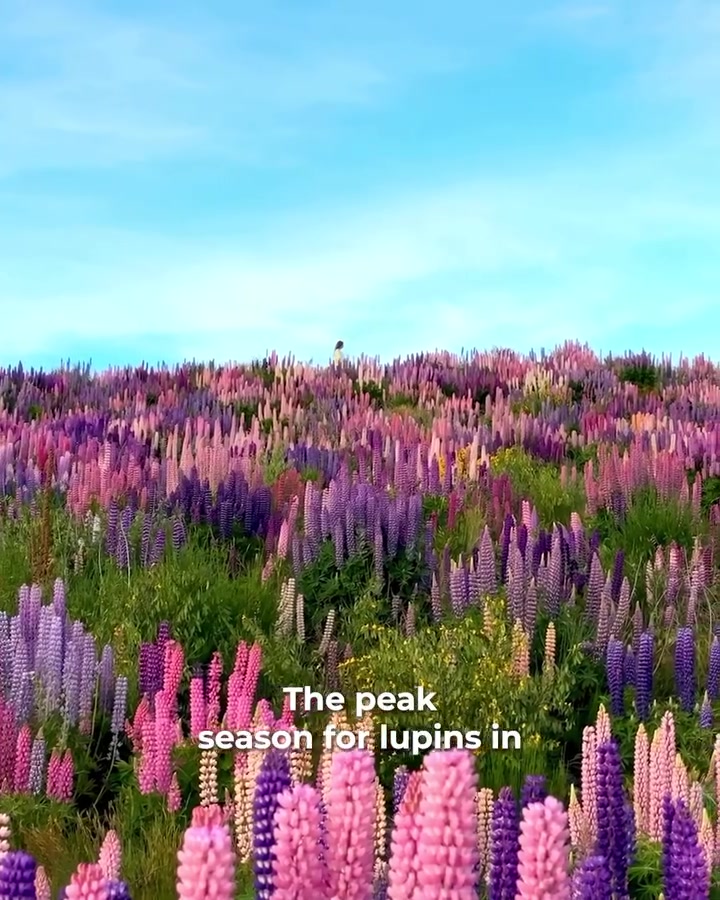
Lupins bloom in intense cobalt and magenta hues each year, transforming New Zealand landscapes into vivid paintings. The Mackenzie Country of the southern island becomes the world’s largest garden, with Lake Tekapo, Lake Pukaki, and Glenorchy at the center of it all. Peak lupin season is from mid-November to late February, with blooms metamorphosing from mere sprouts to a blanket of flowers over these months. This is New Zealand’s vibrant, albeit controversial, annual art project.
What’s the Luscious Lupine?
Lupins are a flowering plant from the legume family, originating from the Mediterranean. They arrive in New Zealand in the 1800s as a way to enrich the soil. New Zealand’s lupins are typically tall weeds called the “tall lupine” and the “bushy lupine”, and first noted around 1920. They grow to a height of 50–90 cm (1.5–3 feet) with a spread and height between 30–80 cm (1-2.6 feet). Lupin flowers from the purple species are the ones that paint the landscape. Lupin flowers can vary in color from white to pink, red, yellow, and blue. Lupin fields are a beloved tourist attraction, drawing visitors from around the globe for their breathtaking beauty, and an iconic symbol of New Zealand’s natural splendor. Lupins are an annual plant that produce flowers varying in color, lending a stunning array of hues to the landscape. They’re perfectly at home in the Mackenzie Country conditions, characterized by cold winters, hot summers, and low rainfall. The bloom season kicks off in mid-November, with late November being optimal. The vibrant carpets of purple, pink, and white flowers last until late February. The wild lupins in New Zealand don’t require human intervention — they’re a self-sustaining natural spectacle.
From Environmental Villain to Visual Hero
New Zealand’s lupins are a tale as invigorating as body-building. Lupins are non-native, invasive species. They compete with native plants for resources, altering local ecosystems and outcompeting native plants. This poses a threat to native biodiversity. Lupins can create a dense groundcover, making it difficult for native plants to thrive. Nevertheless, they keep the Mackenzie Country’s soil healthy; when the plants die, they’ll release nitrogen into the soil, improving its fertility. That said, the rich soil comes at the expense of native plants. Lupins also release cyanogenic glycosides, or cyanide, making them toxic to livestock, a risk to local livestock farmers. So, are they friend or foe? It’s not an easy answer. These vibrant blooms frame the public’s perception of New Zealand’s natural beauty. The New Zealand Department of Conservation (DOC) has a love-hate relationship with the plant. The DOC developed the Purple Pages to help identify these invasive plants, and seek public help in control and eradication efforts. The DOC is forced to walk a fine line when these plants are legally protected from eradication — they’re a cattle farmer’s worst nightmare, but a tourist’s best dream.
Lupin Landscapes: Why More Than Just Visual Beauty?
A Golden Tide of a Blooms
From the onset of spring, the rocky slopes of Lake Tekapo erupt in a vibrant show. The fields are a tapestry of argyle, blending into Lake Tekapo’s pristine waters. The sight from the summit of Mount John is breath-taking. You can see the entire lake and all of it’s lush, rolling fields—it’s like looking down at a painting of New Zealand. The process begins with the seeds sprouting from April, growing into grasses from May, and then flowering in June. In the heart of the Mackenzie Country, the lupins turn landscapes into dream-like, surreal scenes, making them a prime destination for photography and sightseeing. Vibrant fields become a backdrop for photographers, making it a haven for social media. + New Zealand’s lupin fields have become hugely popular on Instagram. The vibrant, rolling fields are the perfect backdrop for photographers from all over the world. There are even hundreds of published Instagram photos tagged as lupin. The crystal-clear, fire-blue lakes surrounding the fields complete the picture, mirroring the sky and creating a stunning panorama.
Lupins and Tourism
The land that lures photographers to the Mackenzie Country is the same that invites tourists. Tripadvisor includes a lupin drive through the Mackenzie Country as a must-do, and Lonely Planet calls out the lupins as a highlight of the South Island. Travel companies offer tours aimed at experiencing the lupin fields in all their glory, making them a key attraction. The lupin fields are extremely popular with tourists, driving business throughout the region.
The Lupin Life Cycle
The lupin has evolved into a prolific propagator: Lupins are annual plants, meaning they complete their entire life cycle (germination, flowering, and setting seed) in a single growing season. The lupins spread via seeds that are dispersed by wind, water, and animals. Fertilizers and pesticides are dangerous to the lupin fields.
Practical Planning
Making the most of the lupin season involves these practical tips:
- Timing: Plan a trip between mid-November and late February. For the peak season experience visit during November or December.
- Where: The Mackenzie Country, on the South Island. The Central Otago region and the Mackenzie Country around the lakes of Lake Tekapo, Lake Pukaki, Twizzel, Lindus Pass, Queenstown, and Glenorchy.
- Saving money: Bring your own water and food and avoid tourist traps. Do not take the lupins home with you. Lupins are a weed in New Zealand.
- Staying Safe: Stick to paths and signage to avoid accidents and protect the environment.
- Model your lupin tour on your interests or time constraints:
- Tourist Bunny: Stay in Lake Tekapo. Visit Mount John and night sky tours. Relax in the town.
- Self Driving Pro: Drive around Lake Tekapo and Twizzle, camping at nearby DOC sites.
- Wild Explorer: Hike the entire Mackenzie Basin range and visit lakes, rivers, and lookouts.
Questions readers ask
What makes lupins a controversial plant in New Zealand?
Lupins are controversial because they’re invasive, non-native species that outcompete native plants for resources, altering local ecosystems and posing a threat to native biodiversity. They also release cyanide, which can be toxic to livestock. Despite these issues, they’re beloved for their vibrant blooms and the way they enrich the soil.
Which types of lupins are typically found in New Zealand?
The lupins typically found in New Zealand are the 'tall lupine' and the 'bushy lupine.' These plants are often considered weeds and can be found in the Mackenzie Country and other areas of the southern island. They grow to a height of 50–90 cm (1.5–3 feet) and can spread up to 1-2.6 feet. The most visually striking are the purple species, which paint the landscape with vivid hues.
Why do lupins bloom in such vivid colors?
The vibrant colors of lupin flowers are a result of their genetic makeup. These flowers come in a variety of hues, including white, pink, red, yellow, and blue. The purple species, in particular, are known for their intense cobalt and magenta hues, which transform the landscape into a vivid painting each year.
How do lupins impact the soil in the Mackenzie Country?
Lupins have a significant impact on the soil in the Mackenzie Country. When the plants die, they release nitrogen into the soil, improving its fertility. However, this benefit comes at the expense of native plants, as lupins create a dense groundcover that makes it difficult for native species to thrive, which can alter local ecosystems and pose a threat to native biodiversity.
What is the peak season for seeing lupins in New Zealand?
The peak lupin season in New Zealand is from mid-November to late February. The blooms start as mere sprouts in mid-November and transform into a blanket of flowers by late November, lasting until late February. This period offers the best opportunity to witness the stunning array of hues that lupins bring to the landscape.
What role does the New Zealand Department of Conservation (DOC) play in managing lupins?
The New Zealand Department of Conservation (DOC) has a complex relationship with lupins. They developed the Purple Pages to help identify these invasive plants and seek public help in control and eradication efforts. However, lupins are legally protected from eradication in some areas, which can make management challenging, especially since they are a tourist attraction. The DOC must balance the environmental concerns with the plant's popularity among visitors.
Related deep dives
Similar reads based on topic and creator.




Recent articles
Fresh deep dives from the latest Reels we unpacked.



Comments
Be the first to comment.