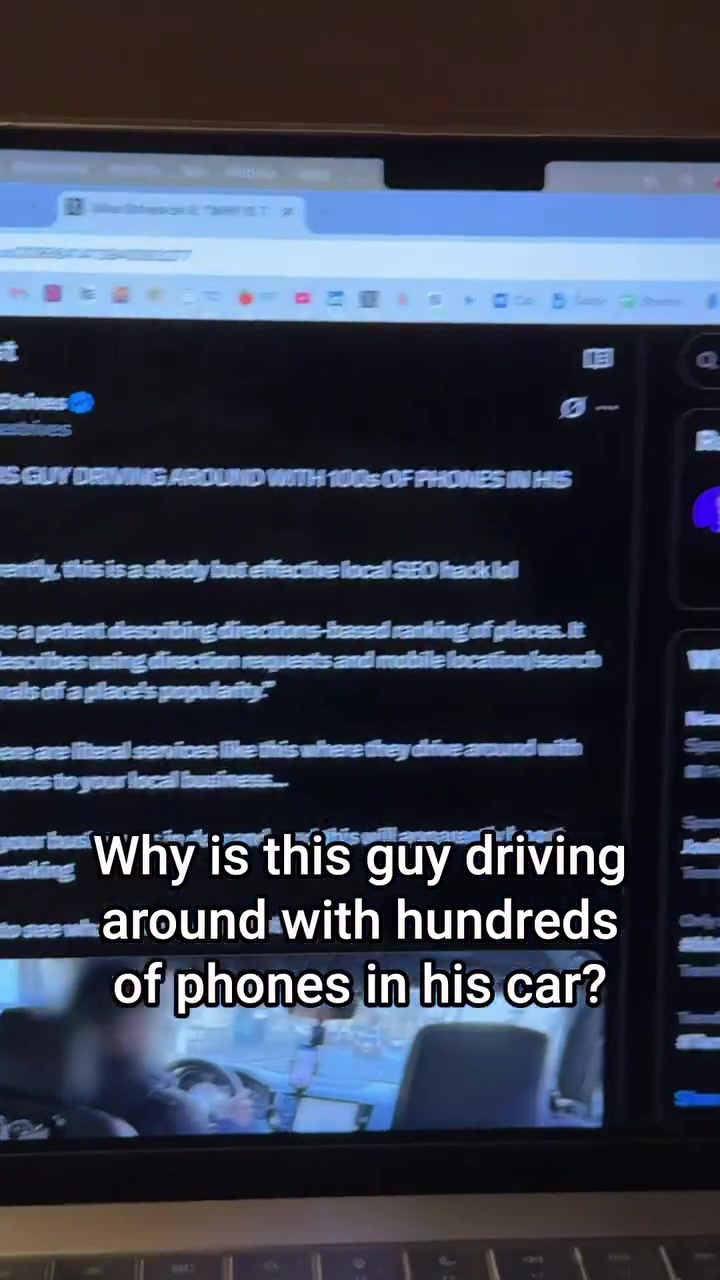
People are driving around with hundreds of smartphones in their cars. They aren't starting a new mobile phone craze, but instead, they are taking part in a controversial SEO tactic. The tactic is known as a "local SEO hack with phones" by content creators like Mike Strives on twitter and relies on a Google patent. Google's patent describes a system in which driving directions and mobile location search logs are used as signals for a place's popularity. The more people who use Google Maps to get directions to a particular location, the more popular (and relevant) that place seems to Google's systems. This results in better local rankings in Google search, Maps, and other Google services.
The SEO Hack with Over 100 Phones
One side of local SEO is identifying and optimizing the signals that Google uses to rank local businesses. There are white-hat strategies like optimizing your local listings and reviews, and then there are more aggressive tactics. The activity here is on the black-hat end of that spectrum. People drive around with hundreds of phones to simulate multiple direction requests to a business, which might make it seem in-demand, thereby boosting its local search rankings. The tactic exploits how Google processes location data and direction requests. The result is a dramatic demonstration of what happens when you combine modern smartphones (Samsung, pictured in the video) with enough fake demand to tip the scales. The phones are made to request directions to a business, as if they were all driven by a different person with a real-life need. When viewed from a certain perspective, it looks like the business is seeing a considerable spike in local demand. A spike which might move a small business up the ranks to a privileged local position. In some cases, people even offer services to perform these phone-based SEO hacks for businesses, making it clear that demand can be manufactured in this way. However, most SEO professionals recommend avoiding black-hat techniques. The methods are often short-lived and could potentially get a business penalized by Google.
Why This Is Trending
The driver of this tactic is the always-growing importance of local SEO. Local SEO optimizes online presence to attract within a defined geographical area, ensuring visibility on Google. It is essential for small businesses that rely on local customers, especially those with physical locations — driving a significant amount of foot traffic for local businesses. Local Search is defined by the product/service and the location. Google provides a few resources for optimizing a business for local search. Even the on-screen text names a few of the signals Google uses to rank local businesses: direction requests, mobile locations, and search logs. In contrast to these white-hat strategies, the phone hack is a black-hat tactic. Black-hat SEO is the use of unethical practices intended to manipulate search engines to artificially boost rankings. The most dangerous aspect of black-hat tactics, is the possibility of getting penalized by Google. Google in some cases can even remove a business from local search entirely.
The Google Patent Explained
The driving force behind this tactic is a Google patent which influences the local search results. The patent describes “directions-based rankings of places.” It explicitly describes using direction requests, mobile location data, and search logs as signals of a place's popularity. With the availability of The idea is that driving direction requests could be used as a ranking signal. If the web company finds that numerous mobile devices are asking for directions towards a specific location, this location would appear highly ranked. Google might even show it in the local pack or use the data to determine a 10x increase in local pack ranking.
The Hidden Dangers
Black-hat techniques like this could also have the opposite effect. Google has strong algorithms and human reviewers to detect unusual behavior from a website, app, or mobile device. This is to prevent SEO tactics from manipulating the rankings, and could result in a penalty. There is a very real possibility of getting a website report or even being penalized by Google. A penalty like this could take your ranking back to square one — if not worse — which would take a while to recover. The search algorithms are ever-changing, and you could be unprepared for future updates and penalties.
The Ethical Considerations
The ethical considerations of this tactic are equally important. The goal of most local SEO tactics is to improve a business's online visibility and attract more traffic. But if the tactics involve manipulating algorithms and falsifying demand, they are considered unethical. Black-hat SEO tactics often involve deceptive, and sometimes illegal, practices that can harm the credibility of a business. Ethical SEO focuses on creating a better user experience, engaging with the community, and providing value to consumers.
Steps to Enhance Local SEO
For businesses looking to enhance their local SEO, you should investigate the white hat tactics first. They are the most reliable and sustainable options for improving local rankings. Instead of trying to trick the system with a thousand phones and GPS signals to simulate traffic, consider doing your business the right way. If you want to climb the ranks, go to the first page and put your address on the map. Some of the most trustworthy methods to enhance your local rankings include:
- Optimize your Google My Business listing: Ensure your profile is complete and accurate, with high-quality images and detailed descriptions.
- Encourage and manage online reviews: Positive reviews can boost your rankings and build customer trust.
- Create high-quality, location-specific content: This can help you rank for local keywords and attract more local visitors.
- Build local backlinks: Partner with other local businesses or organizations to gain valuable backlinks.
Questions readers ask
What exactly is the 'local SEO hack with phones' tactic?
The 'local SEO hack with phones' is a black-hat SEO tactic where individuals drive around with hundreds of smartphones in their cars. The phones are used to request directions to a specific business, making it appear as though there is a high demand for that location. This manipulation aims to boost the business's local search rankings by exploiting how Google processes location data and direction requests.
How does this tactic exploit Google's patent?
The tactic takes advantage of a Google patent that uses driving directions and mobile location search logs as signals for a place's popularity. By simulating multiple direction requests, the tactic makes a business seem more popular, thereby improving its local rankings on Google services.
Can this tactic really improve a business's local search rankings?
Yes, the tactic can temporarily boost a business's local search rankings by creating the illusion of high demand. However, it's important to note that this method is considered black-hat SEO and can result in penalties from Google, potentially removing the business from local search entirely.
Is there a legal or ethical concern with this tactic?
There are significant ethical concerns with this tactic, as it involves manipulating search engine algorithms to artificially boost rankings. While it may not be illegal, it is against Google's guidelines and can lead to severe penalties, including the removal of the business from local search results.
Is this a sustainable strategy for improving local SEO?
No, this is not a sustainable strategy. Black-hat SEO tactics like this one are often short-lived and can result in penalties from Google. It's generally recommended to stick to white-hat SEO strategies, such as optimizing local listings and reviews, for long-term success.
What are the risks involved in using this tactic?
The primary risk is getting penalized by Google, which can range from a drop in rankings to being completely removed from local search results. Additionally, there's the ethical consideration of manipulating search algorithms, which can damage a business's reputation if exposed.
Related deep dives
Similar reads based on topic and creator.



Recent articles
Fresh deep dives from the latest Reels we unpacked.



Comments
Be the first to comment.