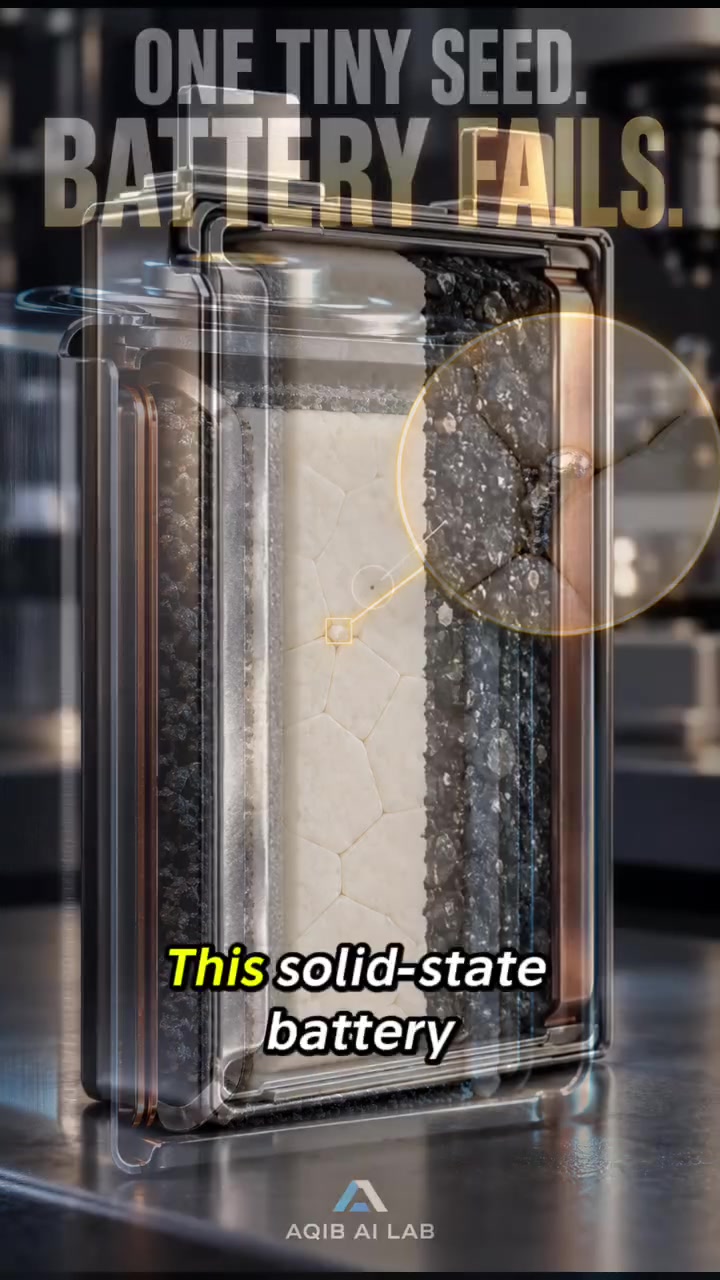
Solid-state batteries — sleek, efficient, and increasingly popular in everything from mobile phones to electric vehicles — rely on a delicate dance of chemistry and electricity. But an almost invisible flaw threatens stability: internal dendrite formation caused by electrical imbalances. This process can turn lithium-ion batteries into ticking time bombs.
The Silent Killers: Dendrites in Batteries
Dendrites are seed-like structures that form deep inside a battery's solid electrolyte. Tiny crystals form boundaries within the electrolyte. Some of those electrical boundaries develop electrical imbalances over time. The imbalance triggers a domino effect: lithium ions, essential for the battery's electrical current, become harder to move through the electrolyte. Meanwhile, electrons build up locally. The combination of stuck ions and building electrons creates tiny deposits of lithium metal along the already weak crystalline boundaries. Those tiny metal deposits? They’re the start of a dendrite. Over time, the dendrite can grow under the same conditions, building a path between the battery’s electrodes. This path becomes a shortcut for the electrical current. As more lithium metal accumulates, it short-circuits the cell. The result: a microscopic electrical imbalance becomes a full-blown battery failure.
The Future of Power: Dendrites
No battery lasts forever, but unexpected breakdowns are every engineer's nightmare. The risk becomes all the more pressing as electric vehicles and grid storage push lithium-ion batteries to their limits. AQIB AI LAB's visualization serves as an urgent reminder of the delicate balance within batteries.
The Microcosm of Failure
The formation of dendrites is key to lithium-ion battery failures. Dendrites are microscopic lithium metal deposits, which form tiny paths inside the battery. The internal journey of a dendrite — from seed to short-circuit — is a quick path to damage. Lithium-metal dendrites aren't new, but they remain hard to spot and stop.
The Layers of Lithium
Lithium-ion batteries are formidable, yet delicate. They are a sandwiched series of layers. Dendrites can form when lithium ions clump together at the boundary of the crystals. The imbalance can turn these ions into tiny deposits along the electrochemical path. "Ions must move between the cathode and anode through the electrolyte." Yet, electrons and ions meet at the solid electrolyte. If the ions concentrate due to the unevenness, it creates a blockage.
The Impact on the Battery
The accumulation of lithium metal buildup disrupts the flow of ions through the battery. The dendrite can grow long and spur the short-circuit, leading to a catastrophic failure. Once the dendrite creates a shortcut path, the battery is overwhelmed and shut down permanently. Thankfully, the growing metal is in the cross-section of the battery. That means engineers can pinpoint the failure and address it.
Breaking it Down: The Time It Takes
The Starting Point
Dendrites start tiny. A crucial element of battery design involves dealing with these tiny deposits. "The starting point is almost invisible,". While the process has a clear starting point, predicting the progression of dendrites remains challenging. Battery failures can occur unexpectedly.
The Internal Path
The formation of dendrites is an electrochemical process that has to do with handling lithium ions. The dendrites can grow fast and short-circuit the cell. The growing deposits act as an internal path for the electrons. They eventually form a bridge between the electrodes.
The Weak Region
The electricity isn't stable. The growing metal creates an electrical path between the two poles of the battery. That leads to a collision of electrons and ions. Lithium deposits accumulate at the weak point in the solid electrolyte.
The Handling of Solid-State Batteries
Although AQIB AI LAB does not offer specific solutions, there are some general strategies for dealing with dendrite formation.
- Electrolyte design: Proper design of solid electrolytes helps in preventing the formation of dendrites. This means finding the right balance between various materials and shapes.
- Material selection: Using materials that have low resistance and high stability in their contact with lithium metal helps in reducing the formation of dendrites. The materials should be stable and have a good conductive property.
- Temperature management: Batteries operating at high temperatures increase the dendrite formation due to temperature stress. It should be handled with care.
The Power of Knowing
Visualization of a battery’s internal process, like the one offered by AQIB AI LAB, is a powerful tool for understanding the tiny but critical issues that can lead to failure. It can also help researchers and engineers understand the exact process that results in a failure. It brings visual representation that aids in better handling of the problem. Dendrite formation is a cause for concern in lithium-ion batteries, but it's also an opportunity. This disruption within the battery wall is an Achilles' heel that engineers must watch. The solutions and research in this area could lead to a safer and more reliable battery technology.
Questions readers ask
What exactly are dendrites and how do they form in lithium-ion batteries?
Dendrites are tiny, crystal-like structures that form inside a lithium-ion battery. They start as lithium metal deposits along weak crystalline boundaries in the electrolyte. This happens when lithium ions have trouble moving through the electrolyte due to electrical imbalances, causing electrons to build up and form these deposits.
How do dendrites lead to battery failure?
Dendrites create a shortcut for the electrical current by forming a path between the battery's electrodes. As they grow, they can cause a short circuit, which overwhelms the battery and leads to catastrophic failure. The microscopic electrical imbalance caused by the dendrites can quickly escalate into a full-blown battery malfunction.
Can dendrites be detected and prevented before they cause significant damage?
Dendrites are notoriously difficult to detect because they start as almost invisible deposits. However, engineers can pinpoint the failure by examining the cross-section of the battery. Identifying dendrites early is crucial for preventing catastrophic failure, but current technology makes this challenging.
What makes solid-state batteries more susceptible to dendrite formation compared to traditional lithium-ion batteries?
Solid-state batteries rely on a delicate balance of chemistry and electricity, and small electrical imbalances can trigger dendrite formation. The issue becomes more pronounced in solid-state batteries due to the solid electrolyte, which can create boundaries where lithium ions clump together. The unevenness can cause blockages, leading to dendrite growth.
What are the implications of dendrite formation for the future of electric vehicles and grid storage?
Dendrite formation poses a significant risk to the stability and longevity of lithium-ion batteries, which are crucial for electric vehicles and grid storage. Unexpected breakdowns can be disastrous, and as these technologies push batteries to their limits, understanding and mitigating dendrite formation is essential for ensuring reliable performance and safety.
Related deep dives
Similar reads based on topic and creator.




Recent articles
Fresh deep dives from the latest Reels we unpacked.




Comments
Be the first to comment.