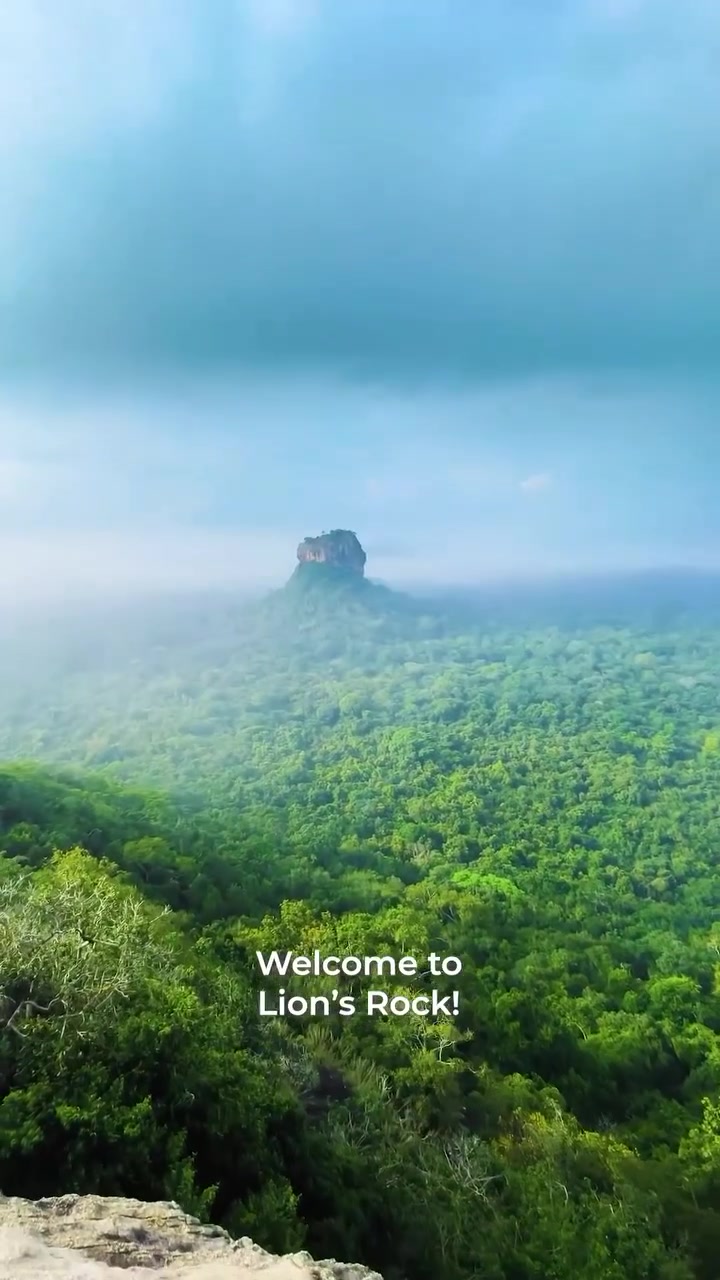
Lion’s Rock in Sigiriya, Sri Lanka, rises 200 meters above the jungle — a fortress built by King Kasyapa in the 5th century AD. For visitors, the climb to the summit isn’t a mere hike, but an ascent into history.
A Fortress in the Sky
Lion’s Rock is an ancient fortress carved into a colossal rock outcrop. King Kasyapa built it in the 5th century AD as a royal palace and a fortress. The summit at 200 meters (656 feet) above ground offers a commanding view of the surrounding landscape. It stands out for its unique architectural and engineering marvels, including a colossal sculpture of a lion, now long gone. At the entrance, a pair of massive lion’s paws were part of a giant stone lion statue. The rock itself sits surrounded by lush jungle, making it an oasis of history and beauty. A combination of fortress and palace, Lion’s Rock was one of many feats King Kasyapa constructed during his reign. Climbing to Lion’s Rock’s summit is a sensation of both battle and serenity. The fort has terraced gardens, royal chambers, a pool, and grilled trails; all make the journey up the rock a multi-sensory experience. At the top, ruins of an ancient palace stand among the foliage, and the view spans miles of lush greenery. This is a place where time seems to have stood still for centuries. The climb to the top of this ancient fortress is both the reward and the challenge. The rock, being a jagged granite rock formation, offers an unpredictable journey. Ancient staircases are carved into the rock. And also provide an insight into the craftsmanship of those times. Visitors must take care as the climb can be strenuous. Lion's Rock is a UNESCO World Heritage Site. Its height and prominent location make it a strategic fortress. Once a royal palace and fortress, it was frequently referenced in ancient texts like the Mahavamsa. The rock's isolated setting ensured that invaders had difficulty reaching it. King Kasyapa was known for his aggressive military actions. Until his death, he ruled from Lion’s Rock in the 5th century AD. The grandeur of his imperial palace was sustained for many years during his rule, until he was replaced by Kasyapa’s half brother.
A Leap into Ancient Sri Lanka
No longer a symbol of an empire, Lion's Rock is now a symbol of Sri Lanka's rich history and architectural marvels. The fortress represents the island’s rich cultural fabric and the technological advancement of the time. For travelers who want to travel back in time, Lion's Rock is a must-visit site. Lion's Rock is an important part of the cultural narrative. Today, Kasyapa’s royal seat and palace stand only in ruins. The rock’s carnage tells the tales of the vanquished kingdoms. This, and Lion's Rock’s many mysterious structures, twin staircases, moon rock, and spiral staircases, are all visible and accessible to visitors. For a country that is still in turmoil, Lion's rock is a monument to peace, tranquility, and resilience.
The Fortress Features
Journey to the Summit
The path to the summit of Lion’s Rock is a steep climb through the jungle. Lion’s routes are marked by three different paths one can follow—the eastern, western, and the lion’s paws routes. The lion’s paws route ascends directly up the rock face. The other two routes are less steep, but can be more challenging due to the overgrowth. As visitors ascend through the many steps, hewn from the stone itself, they pass ancient rock carvings and ruins of old buildings. The climb may be challenging, but the vista makes it worthwhile. The space invaders' song is a nudge to the historical importance of Sri Lanka. "I'm from outer space" the song says. Though it may not be clear what the reference to outer space is, one can assume that the song compliments the outer rim of the fortress.
The Lion’s Paws
The Lion's Paws are what set the fortress apart. What must have once been a grandeur entrance, now stands as ruins. The Lion’s Paws were once a display of royal power, welcoming visitors to the fortress. As visitors approach, they begin to understand how significant this structure must have once been. The Lion’s Paw staircase marks a midway climbing point and is a picture-perfect pause in the climb. Some visitors might be disappointed by the ruins, but there is a certain charm to the site's mysterious appeal — one that reminds you of the grandeur that once stood there.
The Footprints of History
The ruined pavilions inside the Lion’s Rock hide many secrets and unsolved mysteries. Ancient rock carvings can be seen in the ruins. The terraced gardens of Lion’s Rock were known for their beauty and complexity. Visitors can see the foundations of these gardens in the terraces and pathways built into the rock. There are many other half-hidden structures waiting to be explored, each one serving as a testament to the fort's history. The painting of the frescoes in "The Sigiriya Frescoes" is a notable example. The paintings on the walls display the colours of the past. The preserved piece of art speaks about the monarch’s rule. And also, the ancient paintings are one way to uncover the beautiful interior of Lion's Rock.
The Enigmatic Gardens
Lion’s Rock’s terraced gardens are a masterclass in ancient architecture. The gardens are made up of intricate terraces and pathways. Many of the ruins of the gardens remain. The remnants of these gardens still offer a sense of their former beauty. The gardens were more than just decoration — they were an integral part of the fort's design. By following the gardens, visitors unwind the fortress’s history, its architectural design, and its connection to nature. On either sides of the fortress are a water garden. The garden is adorned with fountain pools and small waterfalls. The water gardens are a marvel of engineering as they are built on a slope. The climb itself is a pleasant experience with the surrounding jungle and the breathtaking views. The fresh scent of rain mingled with the aroma of tropical earth and vegetation rises with the steam. Though the climb is steep, it is well worth the effort for the panoramic view from the top. As the path continues upward, the flora and fauna become more and more lush and verdant. This lush foliage is part of the allure of the fortress.
Getting to Lion’s Rock
Visiting the Rock Fort is easier than in its heyday — but you still need to navigate the jungle. The rock fort can be reached by trekking along the western rim of the Sigiriya plateau. There are three routes along the rim. 1. The Pinnacle Path starts at the base of the rock and is a direct ascent. This is the most challenging route. You can use this if you are looking for some adventure. 2. The Lion’s Paws route is a bit easier but equally exhilarating, though this is not the original path visitors would have taken to access the fortress. 3. The Twin Stairs route is the easiest, and the original route to the rock. It starts at the base of the rock and runs along the eastern rim. Lion’s Rock, located in Sri Lanka, is accessible by road and train. The nearest major city is Kandy, which is an hour’s drive from Sigiriya. Plan to stay at least a full day to climb the rock and explore the surrounding area.
Greening The Heard Rock
Lion’s Rock stands as a testament to ancient architecture and history. The fortress, though in ruins, still commands the landscape. The best way to experience Lion’s Rock is to walk the trail. As you climb, you'll feel an energy that's both calming and invigorating. This energy will overwhelm you from the inside out. Many people visit Sigiriya. While most are in awe of the rock’s beauty, some visitors link the rock to the ancient past. The journey through the rock takes you through the history of Sri Lanka’s kings, who once lived in the fortress. Starting on the ground, you climb the rock and are taken through the heights of history.
Related deep dives
Similar reads based on topic and creator.




Recent articles
Fresh deep dives from the latest Reels we unpacked.




Comments
Be the first to comment.